
Every year as temperatures drop, my patients start telling me the same thing: “My knees know a storm is coming before the weather forecast does.” Cold weather joint pain is one of the most common complaints in a pain practice from late fall through early spring, and it is not your imagination. While scientists are still debating exactly why it happens, after 17 years as a double board-certified pain physician and anesthesiologist I have seen enough to know two things for certain: the experience is real for many people, and there is a lot you can do about it.
In this article, I will walk through what the research does and does not say about weather and pain, the most likely reasons cold makes joints ache, who tends to be most affected, and the practical steps — at home and in the clinic — that help.
Is Cold Weather Joint Pain Real?
Ask a room full of people with arthritis whether weather affects their joints, and many hands will go up. Ask researchers, and the answer is more complicated. Some studies have found links between pain and factors such as temperature, humidity, and barometric pressure; others have found weak or no connection. Part of the challenge is that pain is personal — one person’s knees may react to falling pressure, while another person’s hands react to cold and damp, and averaging large groups together can blur those individual patterns.
Here is how I explain it to patients: the science on cold weather joint pain is still unsettled, but your experience is still valid. Whether the cause is the weather itself, the way we change our habits in winter, or a combination, the pain is real and it deserves treatment. And the most useful treatments work regardless of which theory turns out to be right.
Why Cold Weather Makes Joint Pain Worse: The Leading Theories
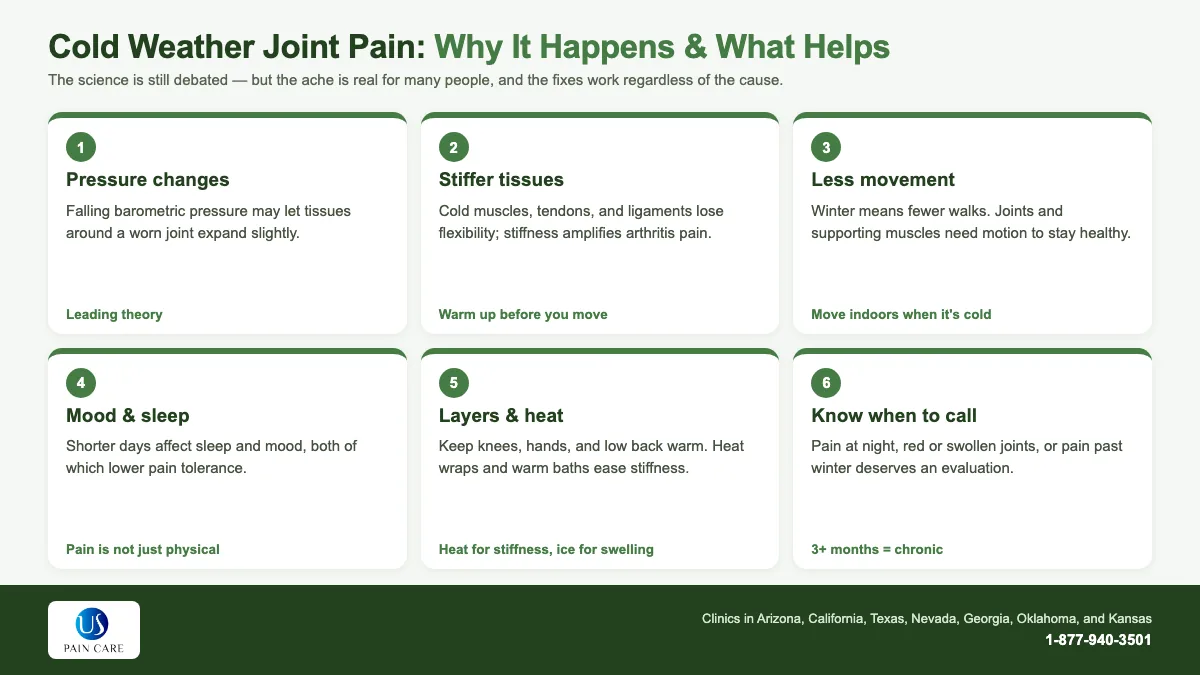
Researchers have proposed several explanations, and more than one may be at work in the same person.
Barometric pressure changes
Air pressure often falls before a cold front or storm. One theory is that lower outside pressure allows tissues around a joint to expand slightly. In a healthy joint, that is unnoticeable. In a joint with worn cartilage, inflammation, or scar tissue, those small changes may irritate nerve endings that are already sensitive.
Stiffer tissues and thicker joint fluid
Cold can make muscles, tendons, and ligaments feel tighter and less flexible. Some researchers have suggested that the fluid lubricating the joints may also behave differently in the cold. Either way, many people feel stiffer in the morning and after sitting, and stiffness tends to amplify arthritis pain.
Muscle guarding
When we are cold, we tense up — shoulders hunched, hands clenched, steps shortened. That sustained muscle tension adds strain to joints and can trigger pain on its own.
Less movement
This may be the biggest factor of all. Winter usually means fewer walks, less gardening, and more time on the couch. Joints rely on movement to stay nourished and supple, and the muscles that support them weaken with inactivity. Less movement often means more pain, which leads to even less movement.
Mood, sleep, and shorter days
Shorter days and less sunlight affect mood and sleep for many people. Both low mood and poor sleep are well known to lower pain tolerance. Pain is not just physical, and winter affects the whole person.
US Pain Care — 1-877-940-3501.
Who Feels Cold Weather Joint Pain the Most?
Anyone can feel achy in the cold, but cold weather joint pain tends to be most noticeable in people with:
- Osteoarthritis, especially of the knees, hips, hands, and spine.
- Rheumatoid arthritis and other inflammatory joint conditions.
- Old injuries or prior surgery, such as a repaired knee, a healed fracture, or a joint replacement.
- Fibromyalgia and other conditions in which the nervous system is more sensitive to pain.
- Chronic back and neck pain related to arthritic facet joints or disc degeneration.
If you are not sure what is driving your joint pain, our chronic pain conditions page outlines many common sources. The MedlinePlus osteoarthritis resource is also a reliable plain-language overview of the most common cause of aching joints.
Do your joints hurt more every winter?
Our physician-owned team finds the cause and builds a conservative-first plan to keep you moving all year.
Or call 1-877-940-3501
Clinics in Arizona, California, Texas, Nevada, Georgia, Oklahoma, and Kansas
What Helps: Practical Steps at Home
The best home strategies for cold weather joint pain share a theme: keep joints warm, keep them moving, and keep the rest of you healthy.
- Dress in layers. Keep hands, knees, and the lower back warm with gloves, long underwear, or knee sleeves. Warm joints tend to feel looser.
- Warm up before activity. A warm shower or a few minutes of gentle range-of-motion exercise before heading out can ease morning stiffness.
- Use heat strategically. Heating pads, warm baths, and heat wraps can relax stiff muscles and ease achy joints. Avoid sleeping on a heating pad and protect your skin from burns.
- Move indoors when it is cold out. Indoor walking, a stationary bike, a warm-water pool, or a home exercise routine keeps joints moving when the weather does not cooperate.
- Keep your strength up. Strong thigh and hip muscles take load off the knees; strong core muscles support the spine.
- Protect your sleep and mood. Regular sleep hours, daylight exposure in the morning, and staying socially connected all help pain tolerance.
- Stay hydrated and eat well. People often drink less water in winter. A balanced diet also supports a healthy weight, which reduces load on weight-bearing joints.
Over-the-counter options such as topical anti-inflammatory gels, acetaminophen, or oral anti-inflammatories can help some people during flares, but check with your clinician first — especially if you have kidney, stomach, heart, or blood pressure concerns, or take blood thinners.
A simple 10-minute morning routine
Many patients find their worst stiffness comes in the first hour after waking on cold mornings. A short, gentle routine before the day starts can make a real difference. Here is a sample I often suggest, adjusted to each person’s abilities and any guidance from their physical therapist:
- Warm first: a warm shower or a few minutes with a heat wrap on the stiffest joint.
- Ankle pumps and knee bends: while sitting on the edge of the bed, flex and point the feet, then slowly straighten and bend each knee ten times.
- Hand opening: gently make a loose fist and open the fingers wide, ten times per hand.
- Shoulder rolls and gentle neck turns: slow, comfortable movements, never forced into pain.
- Sit-to-stand: rise from a sturdy chair and sit back down slowly, five to ten times, to wake up the hip and thigh muscles.
The goal is not a workout. It is to tell stiff joints that it is time to move, so the rest of the day starts on a better footing. If any movement causes sharp or lasting pain, stop and ask your clinician for a modified version.
When Cold Weather Joint Pain Needs a Doctor
Seasonal achiness that eases with warmth and movement is common. But it is time for a professional evaluation if:
- The pain lasts most of the day or keeps you awake at night.
- A joint is red, hot, or noticeably swollen.
- You are limiting walking, work, or daily activities because of pain.
- Pain continues well after the weather warms up.
- Home measures and over-the-counter medications are no longer enough.
Pain that has lasted three months or more is considered chronic, and it usually responds best to a planned approach rather than waiting for spring. Our chronic pain definition guide explains why that threshold matters.
Clinical Treatments for Persistent Joint Pain
When joint pain persists, a pain physician can help pinpoint the source and offer treatments beyond what you can do at home. Depending on the diagnosis, a plan might include:
- Physical therapy focused on strength, flexibility, and joint-friendly movement.
- Medication adjustments, including topical options and nerve-calming medicines when appropriate.
- Joint injections to reduce inflammation in a specific arthritic joint.
- Nerve-targeted procedures, such as radiofrequency ablation, which can interrupt pain signals from arthritic spine joints and, in some cases, knees, after diagnostic testing confirms the target.
- Behavioral health support for the sleep, stress, and mood effects that chronic pain brings with it.
These options are part of our interventional pain management approach, used after conservative care has been tried and when testing points to a clear pain generator. You can see the full range in our chronic pain treatment options overview.
A Winter Plan for Achy Joints
The patients who do best through the colder months usually plan ahead rather than react. Before winter sets in, think about where you will exercise when it is cold, which warm layers and heat tools you will keep handy, and when you will check in with your physician if pain climbs. Cold weather joint pain does not have to mean a lost season. With warmth, movement, and the right medical support, most people can stay active straight through to spring.
Don’t wait for spring to feel better.
Physician-led joint pain care — careful diagnosis, conservative treatment first, and advanced options when you need them.
Or call 1-877-940-3501
Clinics in Arizona, California, Texas, Nevada, Georgia, Oklahoma, and Kansas

Frequently Asked Questions
Why do my joints hurt more when it’s cold?
The exact reason is still being studied. Leading theories include changes in barometric pressure, stiffer muscles and tissues in the cold, muscle tension, and reduced activity during winter. For many people it is likely a combination. People with arthritis or prior joint injuries tend to notice it most.
Can weather actually predict joint pain?
Many people report that their joints ache before a storm or cold front. Research results are mixed — some studies find a connection and others do not. Individual patterns vary, so tracking your own pain alongside the weather can help you see whether it applies to you.
Is heat or ice better for cold weather joint pain?
For stiffness and aching related to cold, heat is usually more soothing because it relaxes muscles and improves flexibility. Ice is generally better for acute injuries or a joint that is hot and swollen. If you are unsure, ask your clinician which fits your situation.
Should I move to a warmer climate for my arthritis?
Some people do feel better in warmer, drier places, but there is no guarantee — pain can still flare with pressure changes or other triggers anywhere. Before making a major move, it is usually worth trying a structured treatment plan first. To talk with a physician about your options, call 1-877-940-3501.
— Dr. Paul Lynch is a double board-certified pain physician and anesthesiologist. US Pain Care is a physician-owned national pain care network. Connect with him on LinkedIn.
This article is for educational purposes only and is not medical advice. It does not replace an evaluation by a qualified clinician who can examine you and review your history. If you have severe, sudden, or rapidly worsening symptoms — or a hot, red, swollen joint with fever, new weakness, or pain after major trauma — seek medical care immediately.
Related Posts
-
Pain Relief Reinvented – Non-Drug and Non-Opioid Strategies That Work
-
From Struggle to Strength – Exploring Addiction Recovery Options
-
Your Path to Pain-Free: Exploring Back Pain Rehabilitation Programs
-
Your Roadmap to Relief: Top Recommendations for Lower Back Pain Treatment
-
From Aches to Action: Effective Treatments for Lumbar Spine Disc Herniation