
Table of Contents
- Musculoskeletal Conditions:
- Aesthetic and Dermatological Uses:
- Post-Surgical and Recovery Applications:
- Step 1: Blood Draw
- Step 2: Centrifugation (Spinning Process)
- Step 3: PRP Injection
- Immediately After PRP Injection:
- First Few Days:
- Long-Term Recovery:
- Expected Outcomes by Condition:
- Long-Term Benefits:
- Limitations:
Platelet-Rich Plasma (PRP) Therapy: Healing with Your Own Blood
Platelet-rich plasma (PRP) therapy is an injection made from a small sample of your own blood, concentrated so it carries more platelets and growth factors than usual, and placed into an injured tendon, ligament or joint. It may help adults with chronic tendon problems or mild to moderate knee osteoarthritis who want an option beyond medication and rest. Pain specialists at US Pain Care evaluate whether PRP fits your condition and explain realistic expectations before treatment.
1. Background
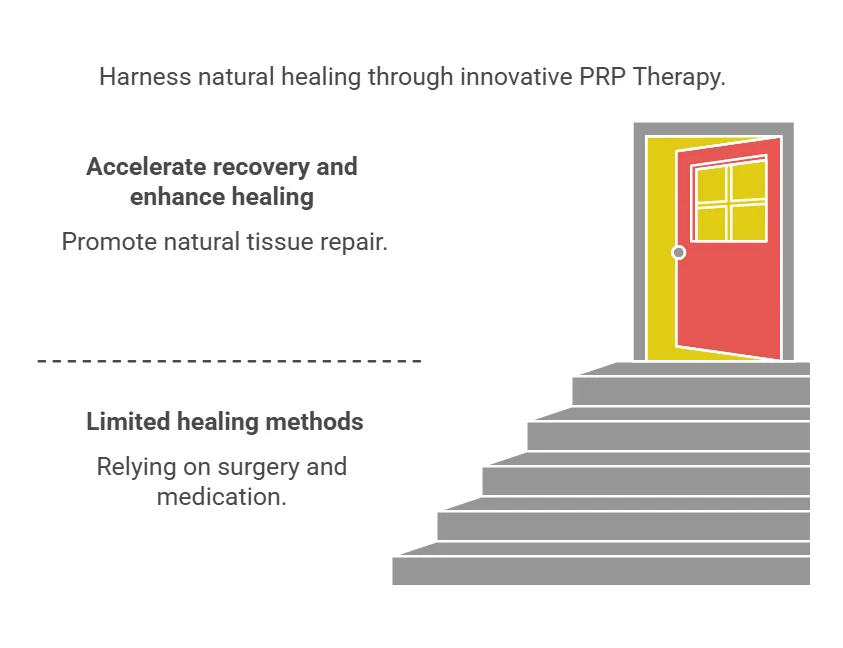
The human body has an incredible ability to heal itself. When you get a cut or an injury, your blood carries healing factors to the affected area to repair the damage. But what if we could harness and enhance this natural healing power? That’s where Platelet-Rich Plasma (PRP) Therapy comes in.
PRP Therapy is a regenerative treatment that uses a patient’s own blood to accelerate healing. By concentrating platelets and growth factors, PRP promotes tissue repair, reduces inflammation, and stimulates cell regeneration. It’s widely used in orthopedics, sports medicine, dermatology, and even hair restoration.
Athletes like Tiger Woods and Rafael Nadal have used PRP to recover from injuries, and many people turn to it as a natural alternative to surgery or long-term medication. But how effective is it? Let’s explore the research, mechanism, and real-world benefits of PRP Therapy. According to the American Academy of Orthopaedic Surgeons, the platelet concentration in PRP can be 5 to 10 times greater than in normal blood.
2. Research
The Arthritis Foundation notes that several studies show relief of knee pain and stiffness, while long-term effectiveness is still being studied. Because results vary, your physician will discuss whether your condition is one where PRP has reasonable support. If knee arthritis is your main concern, our osteoarthritis guide covers the full range of options.
3. Mechanism of Action for Pain Relief
PRP Therapy works by harnessing platelets and growth factors to stimulate healing. Here’s how:
- Platelet Activation – Platelets contain growth factors (like PDGF, VEGF, and TGF-beta) that trigger tissue repair.
- Inflammation Reduction – PRP decreases inflammation, which helps reduce pain and swelling.
- Cell Regeneration – Growth factors stimulate collagen production and cell regeneration, essential for tissue repair.
- Blood Supply Improvement – PRP enhances blood flow, delivering oxygen and nutrients to damaged areas for faster healing.
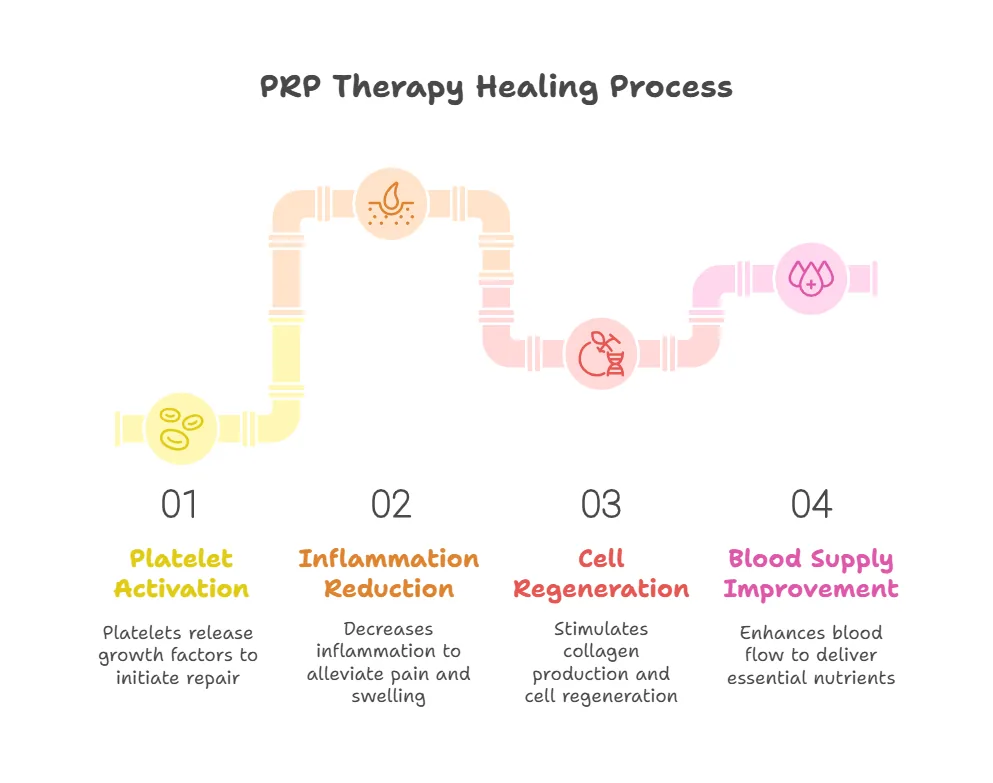
Unlike painkillers, which only mask symptoms, PRP addresses the root cause by repairing damaged tissues and promoting natural recovery.
4. Medical Necessity – Indications for PRP Therapy
PRP Therapy is used for a variety of medical and cosmetic conditions, including:
Musculoskeletal Conditions
✅ Osteoarthritis (knees, hips, shoulders) ✅ Tendon injuries (tennis elbow, Achilles tendinitis) ✅ Ligament sprains and tears (rotator cuff, ACL injuries) ✅ Muscle strains (hamstring injuries)
Aesthetic and Dermatological Uses
✅ Hair Loss Treatment (androgenic alopecia, thinning hair) ✅ Skin Rejuvenation (wrinkles, scars, acne scars) ✅ PRP Facials (“Vampire Facial”) for anti-aging benefits
Post-Surgical and Recovery Applications
✅ Accelerating post-surgical healing (joint surgeries, fractures) ✅ Chronic pain management (back pain, joint degeneration)
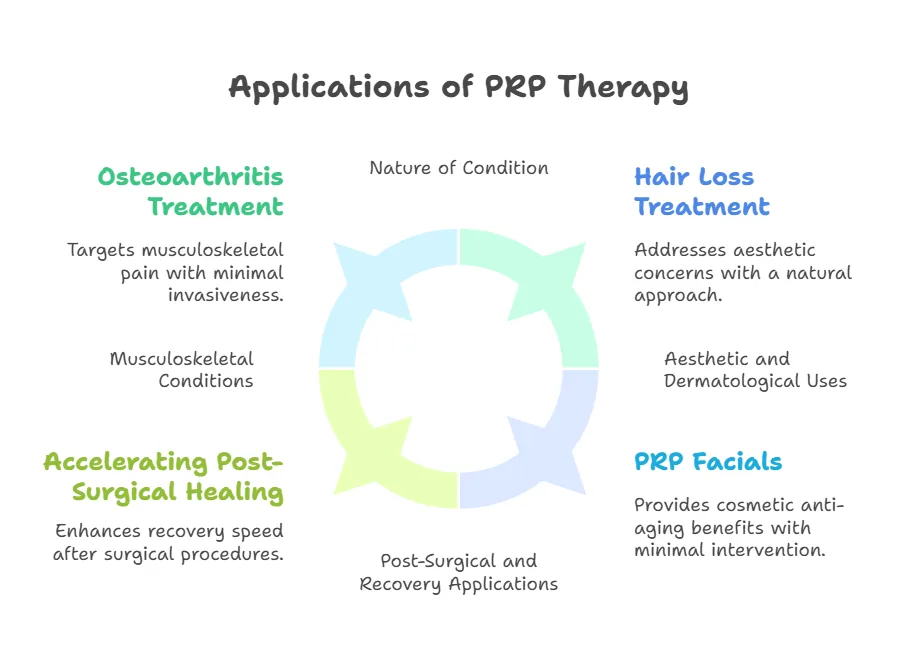
PRP is ideal for patients seeking a natural, minimally invasive alternative to surgery or long-term medication. For elbow tendon pain specifically, see our guide to managing elbow pain.
5. Description of Procedure
PRP Therapy is a simple, outpatient procedure that takes about 30-60 minutes. Here’s what to expect:
Step 1: Blood Draw
- A small amount (usually 10-30 mL) of blood is drawn from the patient’s arm.
Step 2: Centrifugation (Spinning Process)
- The blood sample is placed in a centrifuge, which spins at high speed to separate platelets and plasma from other blood components.
- This process concentrates the healing factors, creating Platelet-Rich Plasma (PRP).
Step 3: PRP Injection
- The PRP is injected directly into the affected area (e.g., knee joint, tendon, scalp for hair loss).
- Ultrasound guidance may be used for precision.
- Some patients experience mild discomfort, but the procedure is generally well-tolerated.
6. Post-Procedure Instructions and Recovery
Recovery is quick, and patients can return to normal activities within a day. However, proper aftercare is crucial for optimal results.
Immediately After PRP Injection
✅ Mild swelling, redness, or soreness at the injection site is normal. ✅ Avoid NSAIDs (like ibuprofen) for 48 hours, as they may reduce PRP’s effectiveness. ✅ Stay hydrated to support the healing process.
First Few Days
✅ Limit high-impact activities (e.g., running, heavy lifting) for 48-72 hours. ✅ Apply ice packs if needed for swelling (avoid excessive icing). ✅ Follow the doctor’s instructions for stretching and rehabilitation exercises.
Long-Term Recovery
✅ Most patients see improvement within 2-6 weeks. ✅ Multiple sessions (2-3 injections over several months) may be needed for chronic conditions. ✅ Physical therapy may enhance recovery for musculoskeletal issues.
Risks and Side Effects
The orthopaedic academy describes the risks of PRP as minimal and reports that rates of infection, tissue damage and nerve injury appear no different from cortisone injections. Common effects include:
- Increased pain at the injection site for the first week or two
- Mild swelling, redness or bruising
- A delay of several weeks before benefit appears
Tell your doctor if you take blood thinners or anti-inflammatory medicine, and call your care team if you develop fever, spreading redness or severe pain after treatment.
7. Prognosis
PRP Therapy has high success rates, but results vary based on age, health status, and condition severity.
Expected Outcomes by Condition
✔️ Joint pain relief (50-80% improvement in osteoarthritis patients) ✔️ Tendon and ligament healing (faster recovery for sports injuries) ✔️ Hair regrowth (noticeable results after 3-6 months) ✔️ Improved skin texture and elasticity (after PRP facials)
Long-Term Benefits
🔹 Natural healing without drugs or surgery 🔹 Reduced inflammation and pain 🔹 Tissue regeneration for long-term relief 🔹 Minimal downtime compared to surgery
Limitations
🔸 PRP may not work for severe arthritis requiring joint replacement 🔸 Results take time and require multiple sessions for optimal benefits 🔸 Not all insurance plans cover PRP therapy
Getting Care at US Pain Care
US Pain Care is a physician-led network of affiliated pain management practices in Arizona, California, Nevada, Texas, Oklahoma, Kansas and Georgia. Your pain specialist will review your history and imaging, confirm the source of your pain and explain whether PRP, a corticosteroid injection or another approach such as joint injections is the better fit. Because PRP is often not covered by insurance, your care team will also help you understand costs before you decide. Find a location near you on our locations page, book your appointment online, or call 1-877-940-3501.
Frequently Asked Questions
Does a PRP injection hurt?
Most patients feel a pinch and pressure during a PRP injection, and some soreness afterward. The orthopaedic academy notes that pain at the injection site may increase for the first week or two before improving. Your physician may use a local anesthetic for the skin and can suggest ways to manage soreness that will not interfere with the treatment.
How many PRP injections will I need?
The number of PRP injections depends on your condition and how you respond. Some patients receive a single injection, while others have a short series, such as one injection a week for three weeks, as described by the Arthritis Foundation. Your physician will reassess your progress before recommending additional sessions.
How long does it take for PRP to work?
PRP usually works gradually rather than immediately. Many patients notice improvement over several weeks as the treated tissue responds, and some continue improving for months. Because early soreness is common, it is important to follow your aftercare instructions and give the treatment time before judging results with your care team.
Is PRP covered by insurance?
Coverage for PRP varies widely and is often limited. The orthopaedic academy notes that few insurance plans provide even partial reimbursement, so it is wise to check with your carrier before treatment. Your care team can explain expected costs and discuss covered alternatives if PRP is not a practical option for you.
Is PRP better than a cortisone shot?
PRP and cortisone shots work differently and suit different situations. Cortisone typically reduces inflammation quickly, while PRP aims to support healing and may take weeks to help. For some tendon problems and mild to moderate knee arthritis, PRP may offer longer relief. Your physician will help you compare the two based on your diagnosis and goals.
Final Thoughts
PRP Therapy is a groundbreaking regenerative treatment that taps into the body’s natural healing power. Whether you’re dealing with chronic pain, sports injuries, hair loss, or skin aging, PRP offers a safe, drug-free, and minimally invasive solution.
If you’re considering PRP, consult with a qualified medical professional to determine if it’s the right treatment for you. Your body has the power to heal—PRP just gives it a boost!