
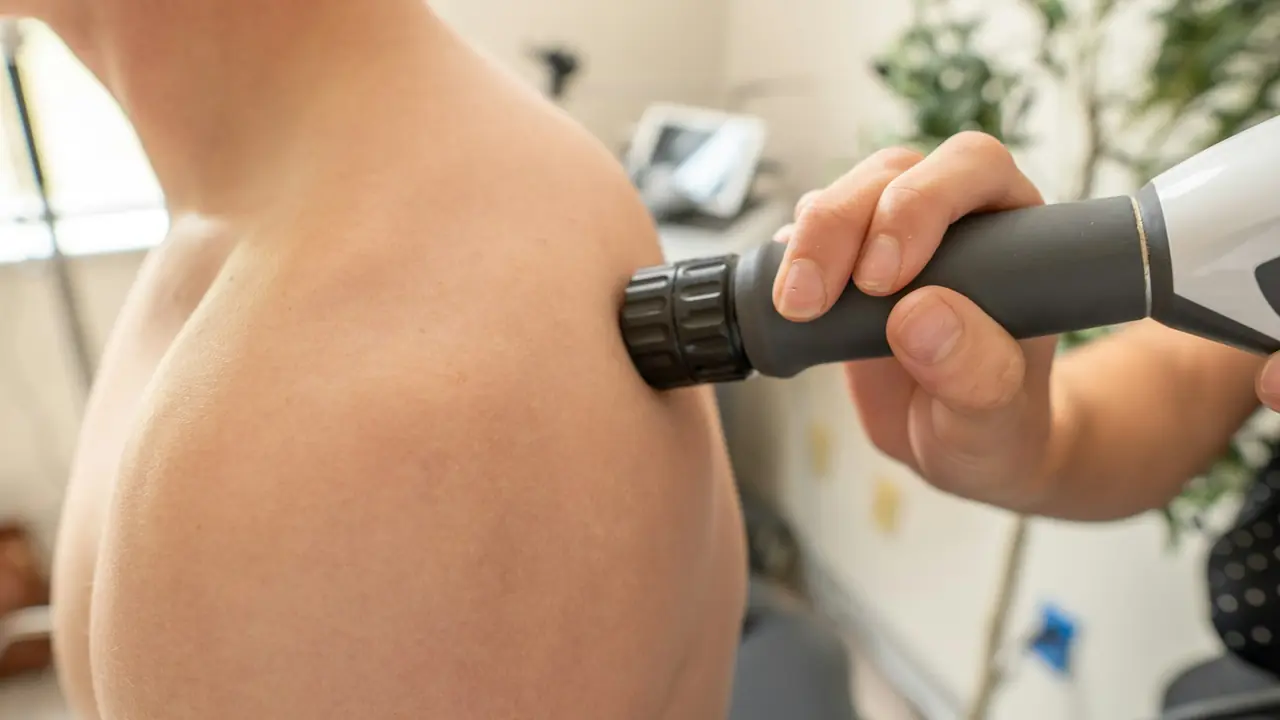
Some muscle pain behaves like an unwelcome tenant. A tight, tender knot sets up in your upper back, neck, or low back, and no amount of stretching, massage, or heat seems to evict it. For many of these stubborn knots, trigger point injections offer a quick, in-office way to calm the muscle and break the cycle of pain and tightness. After 17 years as a double board-certified pain physician and anesthesiologist, I consider them one of the simplest and most practical tools in pain medicine — not a cure-all, but a genuinely useful option when they are used for the right problem and paired with the right follow-up.
This guide explains what trigger points are, how the injections work, what the visit actually feels like, who tends to benefit, the risks worth knowing about, and how to make the relief last. If you have been living with a knot that refuses to let go, this is the conversation I would want you to have before deciding on treatment.
What Is a Trigger Point, Exactly?
A trigger point is a small, hyperirritable spot within a tight band of skeletal muscle. When you press on it, it is usually tender, and it may send pain to another area — a pattern called referred pain. A trigger point in the upper trapezius muscle, for example, can produce an ache that travels up the side of the neck toward the temple and contributes to tension-type headaches. A trigger point in a muscle of the low back or buttock can send pain into the hip or down the back of the thigh.
Clinicians often describe two kinds:
- Active trigger points cause pain on their own, even at rest, and produce the familiar referred-pain pattern.
- Latent trigger points do not hurt unless they are pressed, but they can still contribute to stiffness, limited range of motion, and muscle fatigue.
When trigger points are a major driver of someone’s pain, the condition is often called myofascial pain syndrome. It is one of the most common reasons people experience persistent neck, shoulder, and back pain, and it frequently travels alongside other diagnoses. The exact biology of trigger points is still being studied, but the leading explanations involve a localized area of sustained muscle contraction, reduced blood flow, and a buildup of chemical irritants that sensitize nearby nerve endings.
Why do trigger points form?
Common contributors include repetitive strain (hours at a keyboard or steering wheel), sustained poor posture, a sudden overload or injury, poor sleep, emotional stress that keeps muscles braced, and compensating for pain elsewhere — for instance, guarding a sore hip or an arthritic spine. Trigger points are also common in people with conditions such as fibromyalgia, arthritis, and other chronic pain conditions, where muscles may tighten in response to an underlying problem.
How Trigger Point Injections Work
Trigger point injections deliver a small amount of medication — or sometimes no medication at all — directly into the knot. The goal is to interrupt the cycle in which a tight muscle causes pain, pain causes more tightening, and the knot becomes self-sustaining.
Several mechanisms are thought to contribute to relief:
- The needle itself. Mechanically disrupting the tight band appears to help the muscle fibers release. This is the same principle behind dry needling, which uses a needle without injecting anything.
- Local anesthetic. Medications such as lidocaine or bupivacaine numb the area, quiet the irritated nerve endings, and make the procedure itself more comfortable. Relief from the anesthetic often begins within minutes.
- Corticosteroid (sometimes). Some physicians add a small dose of steroid when inflammation is suspected. Many do not, because the anesthetic and the needle often do the work on their own, and steroid exposure is best kept modest.
Once the muscle relaxes and the pain eases, you can usually stretch and strengthen it in ways that were not possible before. That window of reduced pain is where much of the long-term benefit comes from.
Who Is a Good Candidate for Trigger Point Injections?
Trigger point injections tend to help most when a physical exam confirms that a specific, tender knot is reproducing your familiar pain. They are commonly considered for:
- Myofascial pain of the neck, upper back, and shoulders
- Low back and buttock muscle pain, including the quadratus lumborum and gluteal muscles
- Tension-type headaches driven by tight neck and shoulder muscles
- Muscle pain that accompanies other conditions, such as fibromyalgia, whiplash, or spinal arthritis
- Persistent knots that have not responded to stretching, physical therapy, massage, and over-the-counter medication
They are usually not the right primary treatment when pain comes from a pinched nerve, a joint, or a structural problem. Shooting pain down a leg with numbness or weakness, for example, points toward a nerve-root issue that may call for a different approach, such as an epidural steroid injection. Pain that worsens when you lean back or twist may point to the small joints of the spine, where a medial branch block is the more appropriate test. Many patients have more than one pain source, and part of a good evaluation is sorting out how much of the pain is muscular.
When to be cautious
Your physician will want to know if you take blood thinners, have a bleeding disorder, have an allergy to local anesthetics, are pregnant, have poorly controlled diabetes (if steroid is being considered), or have any skin infection over the area. None of these automatically rules you out, but each changes the plan. An active infection at the injection site is generally a reason to wait.
Tired of the knot that won’t let go?
A careful exam can tell whether trigger points are driving your pain — and whether a quick in-office treatment makes sense.
Or call 1-877-940-3501
Clinics in Arizona, California, Texas, Nevada, Georgia, Oklahoma, and Kansas
What to Expect During Trigger Point Injections
One reason patients appreciate this treatment is how straightforward the visit is. The procedure is typically done in the office, and the injections themselves usually take only a few minutes.
Before the injection
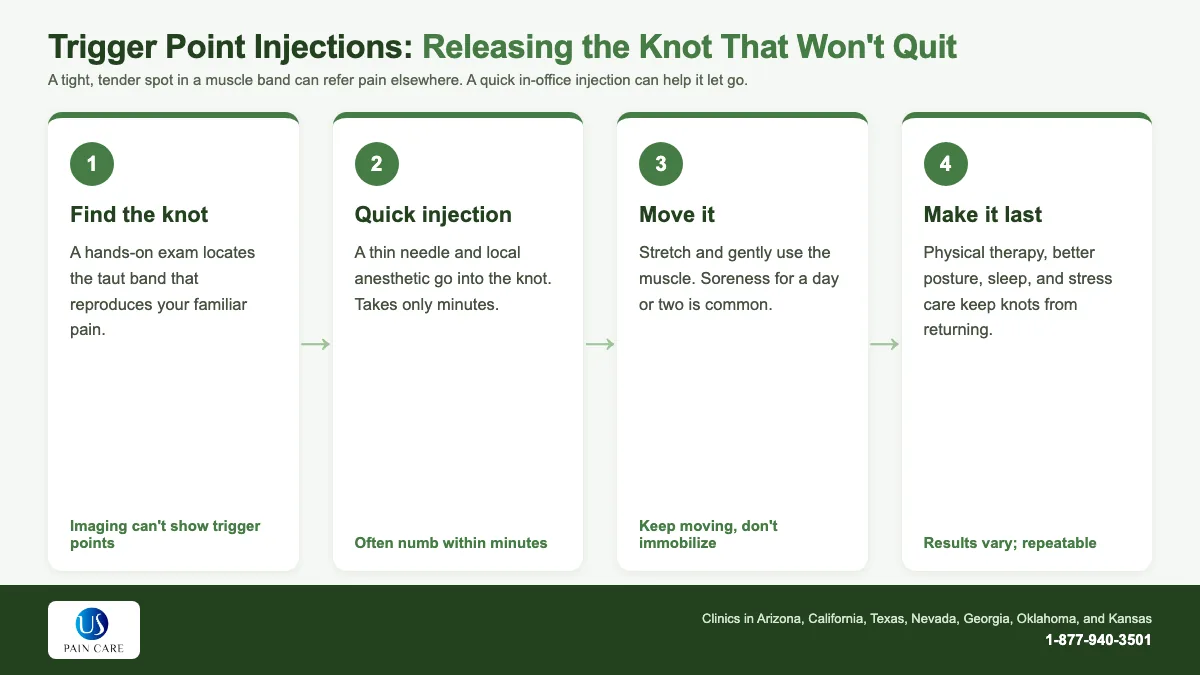
Your physician will review your history, ask where the pain travels, and examine the muscles with their fingers to find the taut bands and tender spots that reproduce your pain. This hands-on exam is the heart of the diagnosis. Imaging does not show trigger points, so the skill of the examiner matters a great deal. Wear comfortable clothing that allows easy access to the area, eat normally unless told otherwise, and bring a list of your medications.
During the injection
The skin is cleaned, and a thin needle is inserted into the trigger point. You may feel a brief pinch, a deep pressure, or a quick twitch of the muscle — the “local twitch response,” which many physicians view as a sign the needle has found the right spot. Most people describe the sensation as uncomfortable but brief. Several trigger points may be treated in one visit. In areas close to the chest wall or other sensitive structures, some physicians use ultrasound guidance for added precision.
Right after
Many people notice that the area feels looser and less painful within minutes, largely due to the local anesthetic. Your physician may ask you to move the area through its range of motion before you leave. Most patients drive themselves home and resume light activity the same day.
Recovery, Side Effects, and Risks
Trigger point injections are considered low risk when performed by a trained clinician, but every procedure involves tradeoffs. Common, usually short-lived effects include:
- Soreness or a bruised feeling at the injection site for a day or two
- Temporary numbness from the anesthetic
- Minor bleeding or bruising, particularly in people who take blood thinners
Less common but important risks include infection, an allergic reaction, a temporary rise in blood sugar if steroid is used, and — when injecting muscles over the chest wall — a rare risk of the needle reaching the lung. That is one reason technique and experience matter. Call your clinic promptly if you develop fever, spreading redness, warmth, increasing swelling, or shortness of breath after an injection.
For the soreness, most physicians suggest gentle movement, heat or ice (whichever feels better), and simple pain relievers if appropriate for you. Avoid heavy, strenuous use of the treated muscle for a day or two, but do not immobilize it — keeping the muscle moving is part of the treatment.
How Long Do Trigger Point Injections Last?
Results vary widely. Some people experience relief that lasts weeks to months, and some find that one or two sessions resolve a knot for good, especially when the underlying cause is addressed. Others notice shorter relief and need a broader plan. In my experience, the biggest factor is not the injection itself but what happens afterward.
To give the relief the best chance of lasting:
- Start stretching soon. Your physician or therapist can show you gentle stretches for the treated muscle, usually beginning within a day or two.
- Strengthen what is weak. Knots often form in muscles that are overworked because neighboring muscles are underperforming. A physical therapist can identify and correct that imbalance.
- Fix the setup. Adjust your workstation, steering position, pillow, or lifting habits — whatever loaded the muscle in the first place.
- Address sleep and stress. Muscles that are braced all day and never fully rest tend to knot up again. Support for stress and mood, like the services described in our chronic pain behavioral health resources, is a legitimate part of muscle pain care.
- Use heat and self-massage for maintenance, such as a foam roller or massage ball, as your therapist recommends.
Injections can be repeated when they help, but most physicians limit how often — particularly when steroid is included. If you find yourself needing frequent repeat injections for the same spot, that is a signal to look harder for an underlying cause rather than simply repeating the procedure.
Trigger Point Injections vs. Other Options
Patients often ask how this treatment compares with alternatives. Here is a practical way to think about it:
- Physical therapy and exercise remain the foundation. Injections are most valuable as a way to make therapy possible, not as a replacement for it.
- Dry needling uses a needle without medication and is offered by some physical therapists and physicians. It can work on similar principles, though it may be more sore afterward without the anesthetic.
- Massage and myofascial release can be helpful for maintenance and for milder knots.
- Medications such as anti-inflammatories or muscle relaxants may help for short periods, but they act on the whole body rather than the specific spot.
- Botulinum toxin injections are sometimes considered for certain stubborn cases, though coverage and appropriateness vary, and they are not a first-line option for most muscle pain.
At US Pain Care, a physician-owned network, our approach is conservative-first and whole-person. These injections fit naturally within a broader plan of interventional pain management and the wider set of chronic pain treatment options we offer: the right test or treatment for the specific pain generator, combined with movement, rehabilitation, and attention to the mental-health side of chronic pain. For a plain-language overview of muscle-related back pain and its causes, the National Institute of Arthritis and Musculoskeletal and Skin Diseases back pain page is a reliable resource.
When to See a Pain Specialist About Muscle Knots
Most muscle knots respond to time, stretching, heat, and better posture. Consider an evaluation if:
- A knot or band of tight muscle has lasted more than a few weeks despite home care
- Muscle pain is causing frequent headaches or disrupting your sleep
- Pain is spreading or recurring in the same place again and again
- You are not sure whether your pain is muscular, nerve-related, or coming from a joint
- Muscle pain is making it hard to work, exercise, or participate in physical therapy
Seek urgent care for pain accompanied by fever, unexplained weight loss, new weakness or numbness, chest pain or shortness of breath, or loss of bowel or bladder control. Those symptoms are not typical of muscle knots and need prompt evaluation.
Get to the source of your muscle pain.
Hands-on diagnosis, conservative care first, and targeted treatment when it will truly help.
Or call 1-877-940-3501
Clinics in Arizona, California, Texas, Nevada, Georgia, Oklahoma, and Kansas

Frequently Asked Questions
Do trigger point injections hurt?
Most people feel a brief pinch and a deep pressure or muscle twitch as the needle reaches the knot. The discomfort is usually short-lived, and the local anesthetic often makes the area feel better within minutes. Some soreness for a day or two afterward is common.
How quickly does the relief start?
Many patients notice relief within minutes because of the anesthetic. As that wears off, some soreness may return briefly, and the fuller benefit often becomes clear over the following days as the muscle relaxes and you begin stretching.
How many injections can I have?
It depends on your response and whether steroid is used. Physicians generally space sessions out and limit how often the same area is treated. If relief is short each time, your physician will likely look for an underlying cause and adjust the broader plan.
Is this treatment covered by insurance?
Many insurance plans cover them when they are medically necessary, but coverage and out-of-pocket costs vary by plan. Our team can help you understand what your plan requires. To discuss whether this treatment fits your pain, call 1-877-940-3501.
— Dr. Paul Lynch is a double board-certified pain physician and anesthesiologist. US Pain Care is a physician-owned national pain care network. Connect with him on LinkedIn.
This article is for educational purposes only and is not medical advice. It does not replace an evaluation by a qualified clinician who can examine you and review your history. If you have severe, sudden, or rapidly worsening symptoms — or any loss of bowel or bladder control, new weakness, fever, chest pain, shortness of breath, or pain after major trauma — seek medical care immediately.