
Table of Contents
- Before the Procedure:
- During the Procedure:
- After the Procedure:
- First 24 Hours:
- First Week:
- Long-Term Recovery:
- What If the Pain Returns?
- Final Thoughts
Radiofrequency ablation (RFA) is a minimally invasive outpatient procedure that uses controlled heat to quiet the small sensory nerves that carry pain signals from an arthritic or injured joint, such as the facet joints of the spine, the sacroiliac joint or the knee. It may help adults with chronic joint pain who got good but temporary relief from a diagnostic nerve block. Pain specialists at US Pain Care evaluate candidates, perform RFA under image guidance and follow your results over time.
Radiofrequency Ablation
1. Background
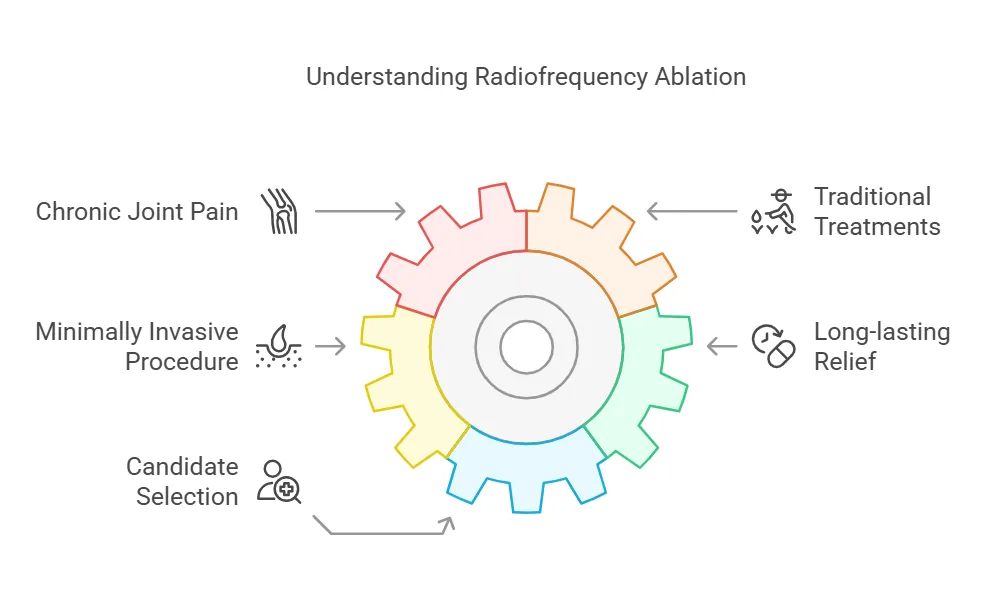
Chronic joint pain can be relentless, affecting mobility, sleep, and overall quality of life. Whether caused by arthritis, nerve damage, or previous injuries, this pain often resists traditional treatments like medications, physical therapy, and even injections.
For those who need longer-lasting relief without resorting to surgery, radiofrequency ablation (RFA) is an effective solution. This minimally invasive procedure targets the nerves responsible for pain by using heat to disrupt their ability to send pain signals. Unlike temporary pain relief methods, RFA provides relief that can last from six months to several years. Cleveland Clinic reports that relief typically lasts six to 12 months, and a few years for some people.
But how does RFA work, and who is a good candidate for this procedure? Let’s explore the science, procedure, and benefits of this innovative pain management technique.
2. Research
Facet joints are a meaningful source of spine pain. A clinical review from the American Society of Regional Anesthesia and Pain Medicine (ASRA) estimates that facet joints account for about 10% to 15% of low back pain and 49% to 60% of chronic neck pain that does not radiate into the arm.
3. Mechanism of Action for Pain Relief
Radiofrequency ablation works by disrupting nerve function, preventing the transmission of pain signals to the brain. Here’s how it provides relief:
- Identifying the Pain Source – Before the procedure, doctors perform diagnostic nerve blocks, such as a medial branch block for spine pain, to confirm the exact location of the pain-causing nerves.
- Applying Controlled Heat – A radiofrequency current is delivered to the nerve tissue, heating it to about 80°C (176°F).
- Interrupting Pain Signals – The heat damages the nerve fibers, stopping them from sending pain messages to the brain.
- Preserving Motor Function – Unlike surgeries that can affect movement, RFA only targets sensory nerves, so patients retain normal muscle function.
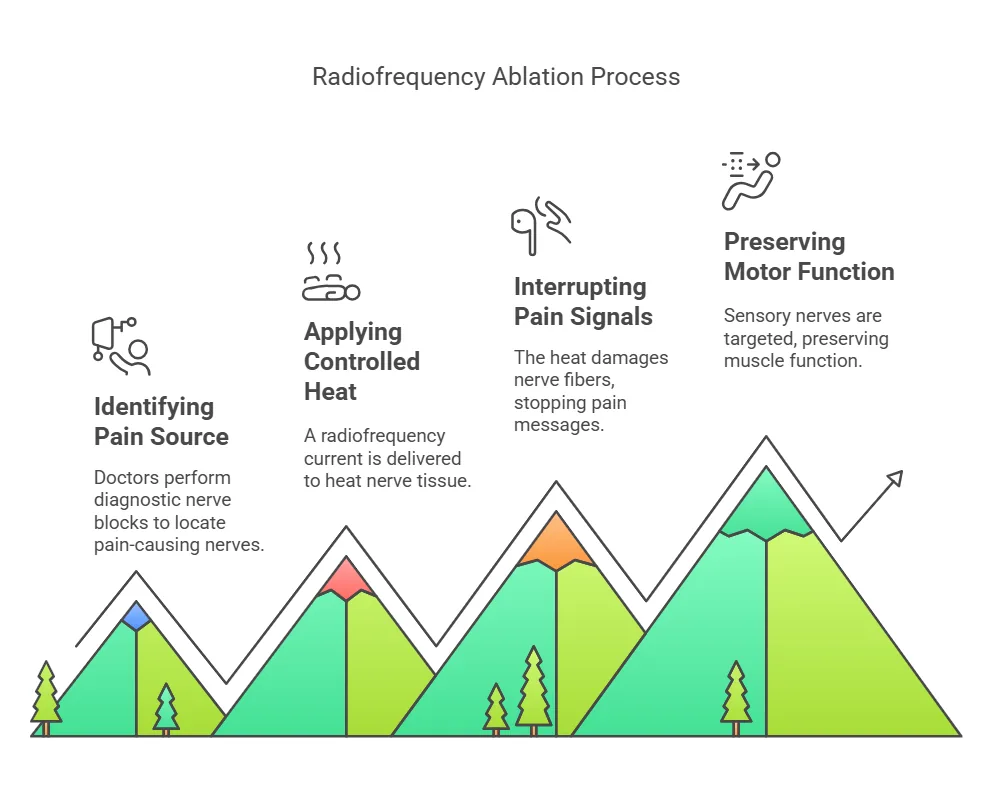
The treated nerve does not regenerate quickly, meaning pain relief can last anywhere from six months to two years.
4. Medical Necessity – Indications for Procedure
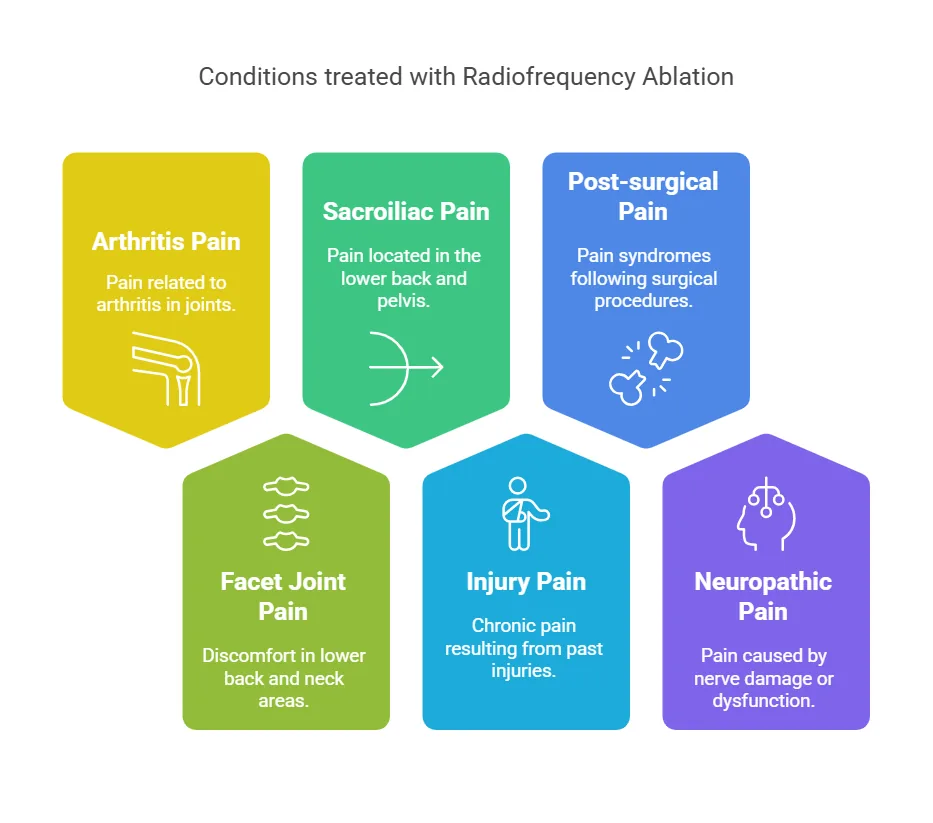
Radiofrequency ablation is recommended for patients with chronic joint pain who have not found relief through other treatments. Common conditions treated with RFA include:
- Arthritis-related joint pain (especially in the knee, hip, and shoulder)
- Facet joint pain in the lower back and neck
- Sacroiliac joint pain (pain in the lower back and pelvis); learn more about SI joint pain
- Chronic pain from previous injuries
- Post-surgical pain syndromes
- Neuropathic pain (nerve-related pain)
Candidates for RFA typically have already tried medications, physical therapy, and injections without success. If a diagnostic nerve block provides temporary relief, RFA is usually the next step.
5. Description of Procedure
Radiofrequency ablation is a quick outpatient procedure, typically lasting 30-60 minutes, though Cleveland Clinic notes it can take from 15 minutes to two hours depending on how many nerves are treated. Here’s what to expect:
Before the Procedure
- The patient lies on an exam table in a position that allows access to the painful area.
- A local anesthetic is applied to numb the skin.
- The doctor uses fluoroscopy (real-time X-ray) to guide the placement of the RFA needle.
During the Procedure
- A thin, insulated needle is inserted near the targeted nerve.
- A small electrical current is sent through the needle to confirm the correct nerve (patients may feel mild tingling).
- The radiofrequency energy is applied for 60-90 seconds, generating heat to disable the nerve’s pain signals.
- The procedure may be repeated for multiple nerves if necessary.
After the Procedure
- The patient is monitored for a short period before being discharged.
- Some patients feel immediate relief, while others notice improvement over a few weeks as inflammation decreases. Cleveland Clinic describes relief that is immediate for some people, arrives within 10 days for others and takes up to three weeks for some.
6. Post-Op Instructions and Recovery
One of the biggest advantages of RFA is the minimal downtime. Here’s what recovery looks like:
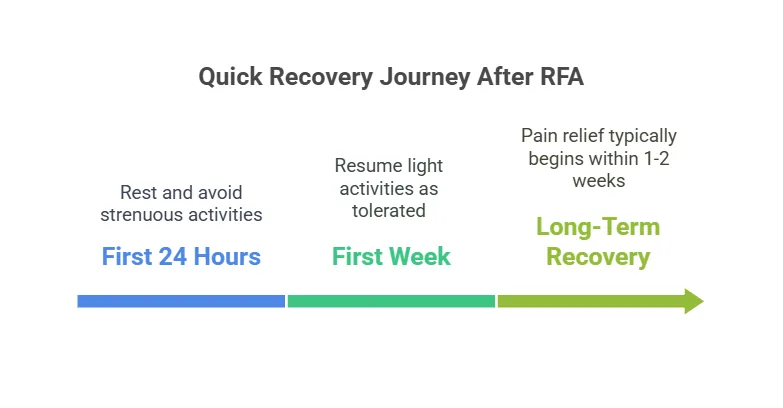
First 24 Hours
- Rest and avoid strenuous activities.
- Apply ice packs if mild soreness occurs.
- Avoid driving for the first day (especially if sedation was used).
First Week
- Resume light activities as tolerated.
- Avoid high-impact exercises until cleared by a doctor.
- Watch for any swelling, redness, or unusual pain (though side effects are rare).
Long-Term Recovery
- Pain relief typically begins within 1-2 weeks.
- Continue physical therapy and strengthening exercises if recommended.
- If pain returns over time, the procedure can be repeated if necessary.
While some patients experience soreness for a few days, most return to normal activities quickly and enjoy significant pain relief.
Risks and Side Effects
Cleveland Clinic describes the risk of complications from RFA as very low, but no procedure is risk-free. Possible side effects include:
- Temporary soreness, bruising or swelling where the needle was placed.
- Temporary numbness or unusual skin sensations near the treated area, which ASRA describes as usually minor and self-limiting.
- A temporary flare of pain or nerve irritation (neuritis) in the weeks after treatment.
- Rarely, infection, bleeding, or lasting nerve damage or pain; in some people the original pain may get worse.
Tell your care team about blood thinners, diabetes, pacemakers or other implanted devices, and any allergies before the procedure so your plan can be adjusted safely.
7. Prognosis
The success rate of RFA varies, but studies show that 70-80% of patients experience significant pain relief lasting between 6 months and 2 years. The exact duration depends on factors like:
- The underlying condition (arthritis-related pain often returns as the disease progresses).
- The accuracy of nerve targeting (proper diagnosis is crucial for success).
- Individual healing responses (some people’s nerves regenerate faster than others).
What If the Pain Returns?
- If pain relief lasts less than six months, the doctor may repeat the procedure or explore alternative treatments.
- If the procedure is successful but temporary, RFA can be safely repeated as needed. The treated nerve can regrow, usually about six to 12 months later, and ASRA notes that repeat treatment appears to provide relief comparable to the first procedure.
- For some, RFA provides such long-term relief that additional treatments aren’t necessary for years.
Getting Care at US Pain Care
US Pain Care is a physician-led network of affiliated pain management practices in Arizona, California, Nevada, Texas, Oklahoma, Kansas and Georgia. Your care team reviews your history and imaging, examines the painful area and, when appropriate, performs diagnostic nerve blocks to confirm which nerves are responsible. If you respond well, your pain specialist can explain whether RFA fits your goals and how it can be combined with physical therapy to protect your progress.
If joint or spine pain keeps returning despite medications and injections, find a location near you on our locations page, call 1-877-940-3501, or book your appointment online.
Frequently Asked Questions
Does radiofrequency ablation hurt?
Most patients describe pressure and brief discomfort rather than sharp pain. The skin is numbed with local anesthetic, and some practices offer light sedation. You may feel tingling or muscle twitching while the physician tests the needle position. Soreness at the treatment site for a few days afterward is common and usually eases with ice and rest.
How long does it take to recover from RFA?
Many people return to their normal activities within a day or two. Cleveland Clinic advises avoiding driving and strenuous activity for 24 hours. Pain relief may begin right away or build over one to three weeks as the treated nerves stop transmitting signals and any post-procedure soreness settles.
Why do I need a nerve block before RFA?
A diagnostic nerve block uses a small amount of numbing medicine to temporarily quiet the nerves your physician plans to treat. If your pain eases substantially during the block, those nerves are likely carrying your pain, which makes RFA more likely to help. If the block does not help, your pain specialist can look for another source.
Is radiofrequency ablation the same as a steroid injection?
No. A steroid injection delivers anti-inflammatory medicine to calm irritated tissue, and its effect wears off as the medicine is absorbed. RFA treats the sensory nerves themselves with heat so they stop sending pain signals for a longer period. The two are often used at different stages of the same treatment plan.
Can RFA be repeated if my pain comes back?
Yes. Because treated nerves can regrow over time, pain may return months or years later. Cleveland Clinic notes that RFA can be repeated if needed, and published reviews suggest repeat treatments may provide relief similar to the first one. Your pain specialist will confirm that the same nerves are still the source before repeating it.
Who should not have radiofrequency ablation?
RFA may not be appropriate if you have an active infection, an uncontrolled bleeding problem, or did not get meaningful relief from a diagnostic block. Pregnancy and certain implanted electrical devices may require special planning or a different approach. Your pain specialist will review your health history to determine whether RFA is safe for you.
Final Thoughts
Radiofrequency ablation offers a safe, effective, and minimally invasive solution for chronic joint pain, especially when other treatments fail. By disrupting pain signals at their source, RFA allows patients to move more freely, sleep better, and regain their quality of life—without the risks of surgery or long-term medication use.
If chronic joint pain is affecting your daily life, talk to your doctor about whether RFA is right for you. It could be the breakthrough treatment that helps you finally get back to doing what you love with less pain.