Patients ask me about food almost every week. Is there something they should stop eating? Something they should add? Will changing their diet make the pain go away? The honest answer is that an anti-inflammatory diet for pain is not a cure, and it will not replace physical therapy, a correct diagnosis, or targeted treatment. But in my 17 years as a double board-certified pain physician and anesthesiologist, I have seen that what people eat can meaningfully affect inflammation, body weight, sleep, energy, and mood — all of which shape how much pain you feel and how well you cope with it.
This is a realistic, step-by-step walkthrough. No extreme rules, no expensive powders, no promise that one superfood will fix everything. Just a practical way to build a plate that supports your body while you work on the rest of your pain plan.
Why an Anti-Inflammatory Diet for Pain Matters
Inflammation is the body’s natural response to injury and infection. In the short term, it helps you heal. But in many chronic conditions — osteoarthritis, rheumatoid arthritis, some forms of back pain, and metabolic problems such as diabetes and obesity — a low-grade inflammatory state can persist and may contribute to ongoing pain and stiffness.
Research on diet and pain is still developing, and results vary from person to person. Still, several themes show up consistently:
- Eating patterns built around whole foods — vegetables, fruits, legumes, whole grains, nuts, olive oil, and fish — are associated with lower markers of inflammation in many studies.
- Diets heavy in ultra-processed foods, sugary drinks, and refined carbohydrates tend to move in the opposite direction.
- Body weight matters for joints. Extra weight increases the load on knees, hips, and the lower spine, and fat tissue itself can release inflammatory signals.
- Food affects sleep, energy, and mood, and each of those has a strong relationship with pain.
Think of an anti-inflammatory diet for pain as one supporting pillar of a larger plan — alongside movement, sleep, stress management, and medical care — rather than a standalone treatment. Pain is not just physical, and neither is the solution.
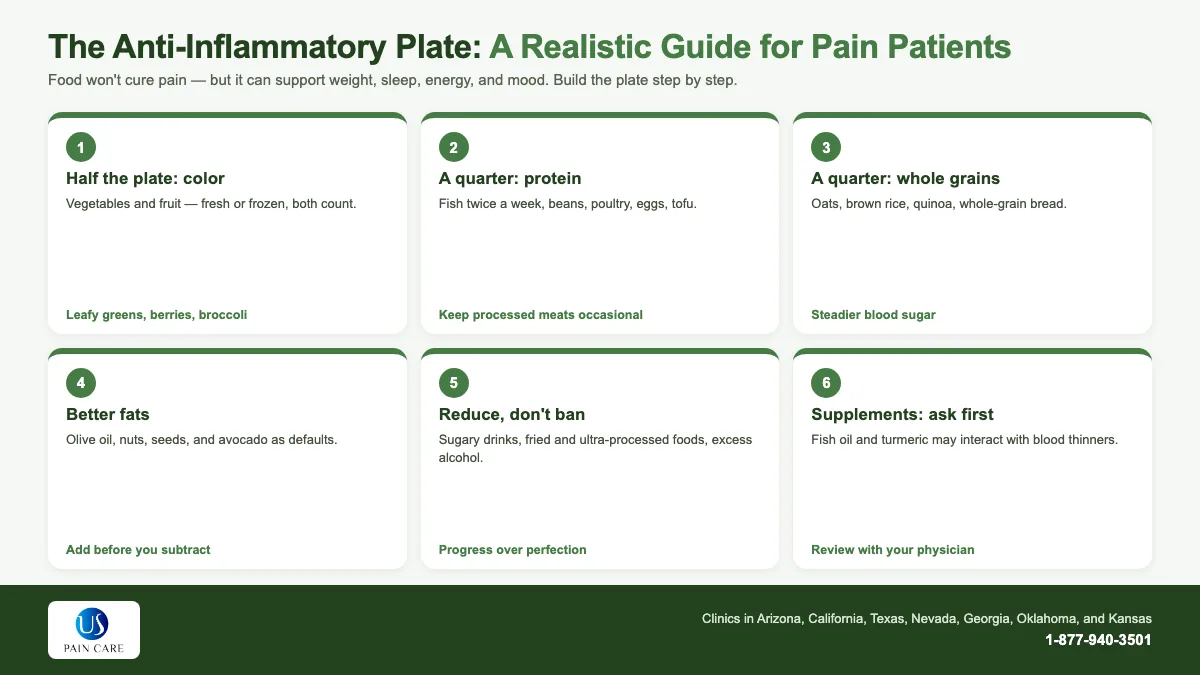
Step 1: Start With Half a Plate of Color
Nearly every eating pattern studied as an anti-inflammatory diet for pain is built on plants, so that is where we begin.
If you change only one thing, make it this: fill about half of your lunch and dinner plate with vegetables and fruit. Color is a helpful shortcut, because different colored plants carry different natural compounds, including antioxidants and polyphenols that are being studied for their effects on inflammation.
- Leafy greens: spinach, kale, romaine, collards, arugula
- Cruciferous vegetables: broccoli, cauliflower, Brussels sprouts, cabbage
- Deep reds and oranges: tomatoes, red peppers, carrots, sweet potatoes
- Berries and cherries: fresh or frozen, both count
- Onions, garlic, and leeks for flavor and variety
Realistic tip: frozen vegetables and fruit are just as nutritious as fresh, cost less, and do not spoil. Pre-cut vegetables and bagged salads are worth the extra cost if chopping is hard on your hands or back.
Step 2: Choose Protein That Works for You
Next, fill about a quarter of the plate with protein. Protein helps maintain muscle, which supports your joints and spine. The type of protein matters as well as the amount.
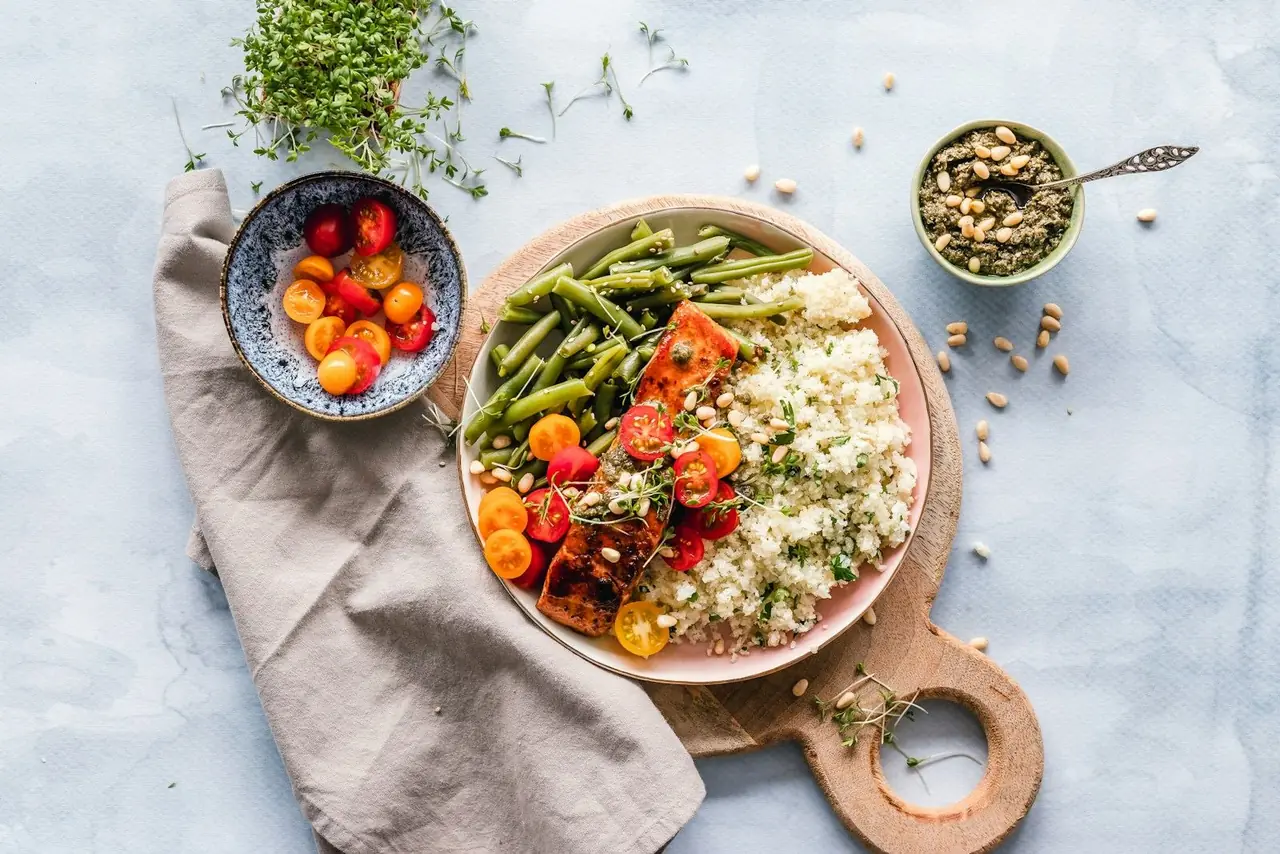
- Fatty fish such as salmon, sardines, trout, and mackerel provide omega-3 fatty acids, which are among the most studied nutrients for inflammation. Many guidelines suggest fish a couple of times a week.
- Beans, lentils, and chickpeas bring protein plus fiber, and they are inexpensive and shelf-stable.
- Poultry, eggs, tofu, and Greek yogurt are flexible, familiar options.
- Red and processed meats such as bacon, sausage, hot dogs, and deli meats are best kept occasional rather than daily.
Realistic tip: canned salmon, sardines, and tuna packed in water or olive oil make fish easy and affordable. Toss them into salads, pasta, or rice bowls.
Step 3: Upgrade Your Grains and Your Fats
Swap refined grains for whole ones
The final quarter of the plate is for whole grains or starchy vegetables. Whole grains digest more slowly than refined ones, which helps keep blood sugar steadier — and large blood sugar swings are linked with inflammation and energy crashes.
- Oats, brown rice, quinoa, barley, farro, and whole-wheat pasta
- 100% whole-grain bread instead of white bread
- Potatoes and sweet potatoes with the skin on
Realistic tip: you do not need to give up bread or pasta. Trading half your usual portion for extra vegetables, or switching to a whole-grain version, is a meaningful step.
Make olive oil, nuts, and seeds your default fats
Fat is not the enemy. The type of fat is what counts. An anti-inflammatory diet for pain leans on unsaturated fats and limits the heavily processed fats common in fried and packaged foods.
- Extra-virgin olive oil for cooking and dressings
- Nuts such as walnuts, almonds, and pistachios — a small handful makes a good snack
- Seeds such as ground flaxseed, chia, and pumpkin seeds sprinkled on yogurt or oatmeal
- Avocado on toast, in salads, or in place of mayonnaise
Realistic tip: keep a jar of mixed nuts at eye level in the pantry and move the chips somewhere less convenient. Small changes to your environment often work better than willpower.
Step 4: Reduce the Foods That Fuel Inflammation
Notice the word reduce, not ban. Strict rules tend to fail, especially when you are already tired and in pain. Aim to make these the exception rather than the routine:
- Sugary drinks — soda, sweet tea, energy drinks, and large specialty coffees
- Ultra-processed snacks and sweets — packaged pastries, candy, and many chips
- Fried foods and fast food
- Processed meats
- Excess alcohol, which can disrupt sleep, interact with pain medications, and contribute to inflammation
A useful way to make these changes stick is the “add before you subtract” approach. Rather than starting with a long list of forbidden foods, focus first on adding vegetables, beans, fish, and whole grains. As those foods take up more room on your plate and in your cart, there is naturally less space for the processed options. An anti-inflammatory diet for pain that feels like constant deprivation rarely lasts; one that feels like an upgrade often does. Reading labels helps, too: a long ingredient list full of added sugars and words you do not recognize is a reasonable signal that a food is heavily processed.
Water is the simplest drink choice. Unsweetened tea and coffee are fine for most people, though caffeine late in the day can interfere with sleep — and poor sleep is one of the most reliable ways to make pain feel worse.
Looking for a whole-person pain plan?
Accurate diagnosis, conservative care first, and support for the habits that help you feel better every day.
Or call 1-877-940-3501
Clinics in Arizona, California, Texas, Nevada, Georgia, Oklahoma, and Kansas
Step 5: Put It Together — A Sample Day and Grocery List
Here is what an anti-inflammatory diet for pain can look like on an ordinary day. Adjust portions and choices to your appetite, budget, cultural preferences, and any medical guidance you have received.
A sample day
- Breakfast: oatmeal cooked with milk or a fortified plant milk, topped with frozen berries, ground flaxseed, and a few walnuts
- Lunch: a big salad with mixed greens, chickpeas, cherry tomatoes, cucumber, and canned salmon, dressed with olive oil and lemon
- Snack: plain Greek yogurt with cinnamon, or an apple with a small handful of almonds
- Dinner: roasted chicken or tofu, a sheet pan of broccoli and sweet potato tossed in olive oil, and a side of brown rice
- Drinks: water throughout the day; herbal tea in the evening
A simple grocery list
- Freezer: mixed vegetables, broccoli, spinach, berries, fish fillets
- Pantry: oats, brown rice, whole-grain pasta, canned beans, lentils, canned fish, olive oil, nuts, seeds, herbs and spices
- Fridge: eggs, Greek yogurt, leafy greens, carrots, peppers, lemons
- Counter: apples, bananas, onions, garlic, sweet potatoes
Low-energy days
Pain flares make cooking hard. Plan for them. Keep a few “flare meals” ready that need little standing or chopping: a frozen vegetable stir-fry with pre-cooked rice, canned lentil soup with added frozen spinach, or whole-grain toast with avocado and an egg. Cook double batches on good days and freeze half. Sit on a stool while you prepare food. These are not shortcuts — they are pacing strategies.
Step 6: Be Careful With Supplements, and Track What You Notice
Supplements are heavily marketed to people in pain. Some — such as fish oil, vitamin D for people who are deficient, and turmeric or curcumin — have been studied, with mixed results. Others have little evidence behind them. Important cautions:
- Supplements can interact with medications. Fish oil and turmeric, for example, may increase bleeding risk in people who take blood thinners.
- Quality varies. Supplements are not reviewed for effectiveness the way prescription drugs are.
- Food first. Nutrients from whole foods come packaged with fiber and other compounds that a pill cannot replicate.
Always review supplements with your physician or pharmacist before starting them, especially if you take prescription medications or are scheduled for a procedure.
Finally, pay attention to your own body. Some people notice that certain foods seem to coincide with their flares. A simple journal — what you ate, how you slept, your pain level — can reveal patterns over a few weeks. Be cautious about cutting out entire food groups on your own, though. If you suspect a specific food is a problem, discuss it with your physician or a registered dietitian so you do not lose important nutrients. For general, reliable nutrition guidance, the MedlinePlus nutrition page is a helpful starting point.
Where Diet Fits in Your Pain Treatment Plan
Food is most powerful when it is part of something larger. In practice, the patients who feel the biggest difference usually combine better eating with regular gentle movement, better sleep, and treatment aimed at the actual source of their pain. At US Pain Care, a physician-owned network, we take a conservative-first, whole-person approach: we start by understanding your diagnosis — whether that is arthritis, a spine problem, nerve pain, or one of many other chronic pain conditions — and then build a plan from the full range of chronic pain treatment options.
For some patients, that plan includes targeted procedures through interventional pain management, which can reduce pain enough to make exercise and lifestyle changes possible. For others, emotional health is a major piece: stress and depression can drive both pain and eating habits, and our chronic pain behavioral health support addresses that side directly. If you are still sorting out what kind of pain you have, our guide to the definition of chronic pain is a good place to start.
The goal of an anti-inflammatory diet for pain is not perfection. It is progress you can sustain: a little more color, a little less sugar, more meals cooked at home, and a few smart swaps that become habits over time.
Food helps. A real diagnosis helps more.
Talk with a pain physician about the cause of your pain and a plan that fits your life.
Or call 1-877-940-3501
Clinics in Arizona, California, Texas, Nevada, Georgia, Oklahoma, and Kansas
Frequently Asked Questions
How long does it take for diet changes to affect pain?
It varies. Some people notice better energy and sleep within a few weeks, while changes in joint pain or stiffness, if they occur, may take longer. Consistency over months matters more than any single meal.
What is the best anti-inflammatory diet for pain?
There is no single best plan. Eating patterns similar to the Mediterranean style — rich in vegetables, fruit, legumes, whole grains, olive oil, nuts, and fish — are among the most studied and are flexible enough for most people to follow long term.
Should I cut out gluten, dairy, or nightshades?
Not without a reason. People with celiac disease or a diagnosed intolerance need to avoid specific foods, but there is limited evidence that most people with chronic pain benefit from eliminating these groups. Talk with your physician or a dietitian before removing entire food categories.
Can losing weight reduce joint pain?
For many people with knee, hip, or back pain, reducing excess weight lowers the load on joints and may ease pain and improve function. Even modest changes can help. Your care team can help you find a safe, realistic approach. To start the conversation, call 1-877-940-3501.
— Dr. Paul Lynch is a double board-certified pain physician and anesthesiologist. US Pain Care is a physician-owned national pain care network. Connect with him on LinkedIn.
This article is for educational purposes only and is not medical advice. It does not replace an evaluation by a qualified clinician who can examine you and review your history. Talk with your physician before making major diet changes or starting supplements, especially if you have diabetes, kidney disease, or take prescription medications. If you have severe, sudden, or rapidly worsening symptoms, seek medical care immediately.