Why Treatment for Low Back Pain Physiotherapy Works
Treatment for low back pain physiotherapy is a proven, non-surgical approach to managing one of today’s most common health problems. Key treatments include:
- Core strengthening exercises: Pelvic tilts, bridges, and planks to stabilize your spine.
- Flexibility training: Hamstring, knee-to-chest, and rotational stretches.
- Aerobic conditioning: Walking, swimming, or biking to improve circulation.
- Postural training: Ergonomic education and body mechanics correction.
- Manual therapy: Spinal mobilization and soft tissue techniques.
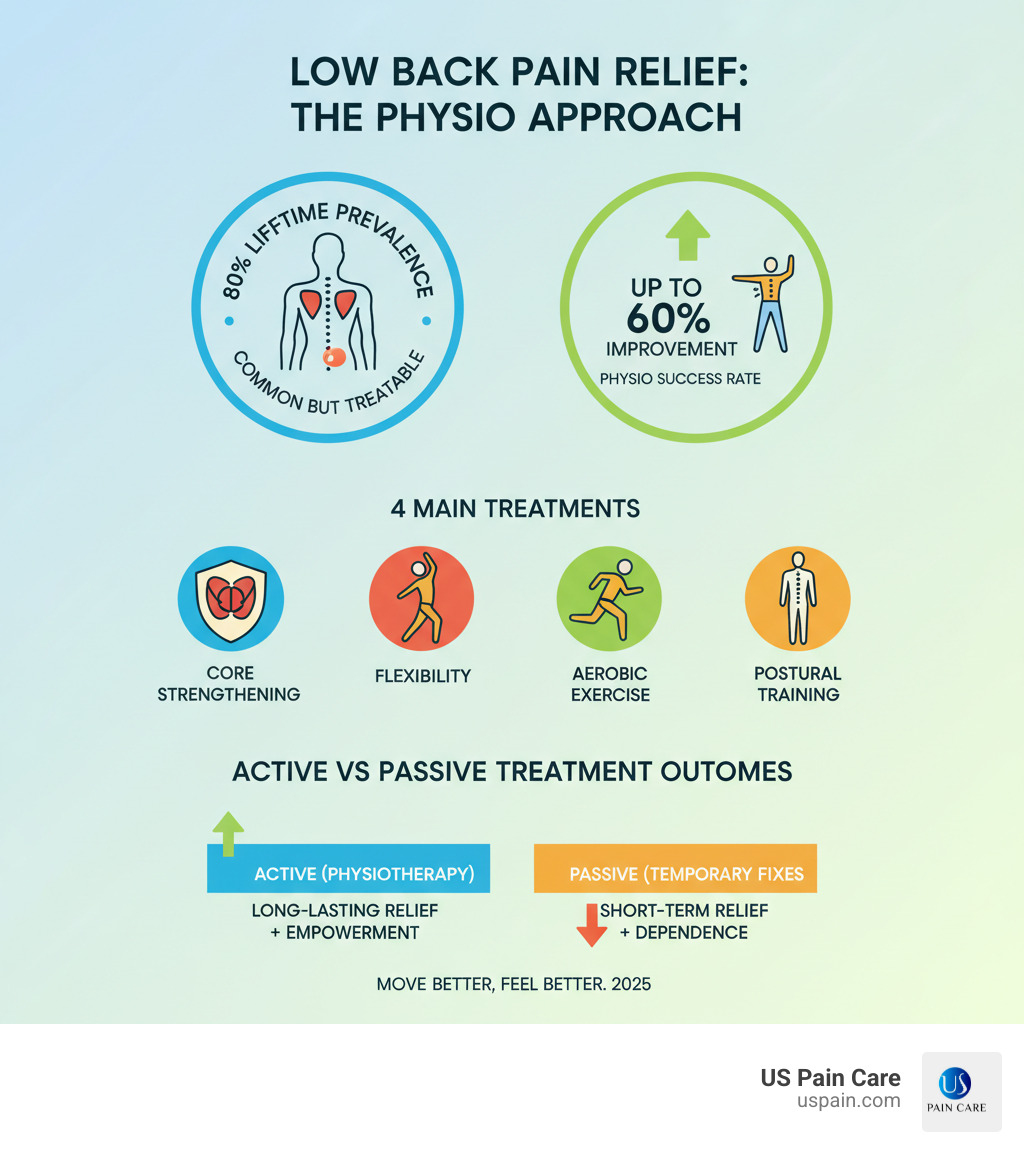
Over 80% of adults experience low back pain, and research shows physical therapy can improve symptoms by up to 60%, helping you avoid surgery and reduce medication dependence. Unlike passive treatments, physiotherapy provides active, long-term strategies by focusing on core strength, flexibility, aerobic exercise, and posture to address the root causes of pain.
I’m Dr. Paul Lynch, and as a double board-certified pain management physician with 17 years of experience, I’ve seen how effective treatment for low back pain physiotherapy can be. My holistic approach combines evidence-based physical therapy with comprehensive pain management for lasting relief without over-reliance on medications.
Glossary for treatment for low back pain physiotherapy:
Understanding Your Low Back Pain: The First Step to Relief
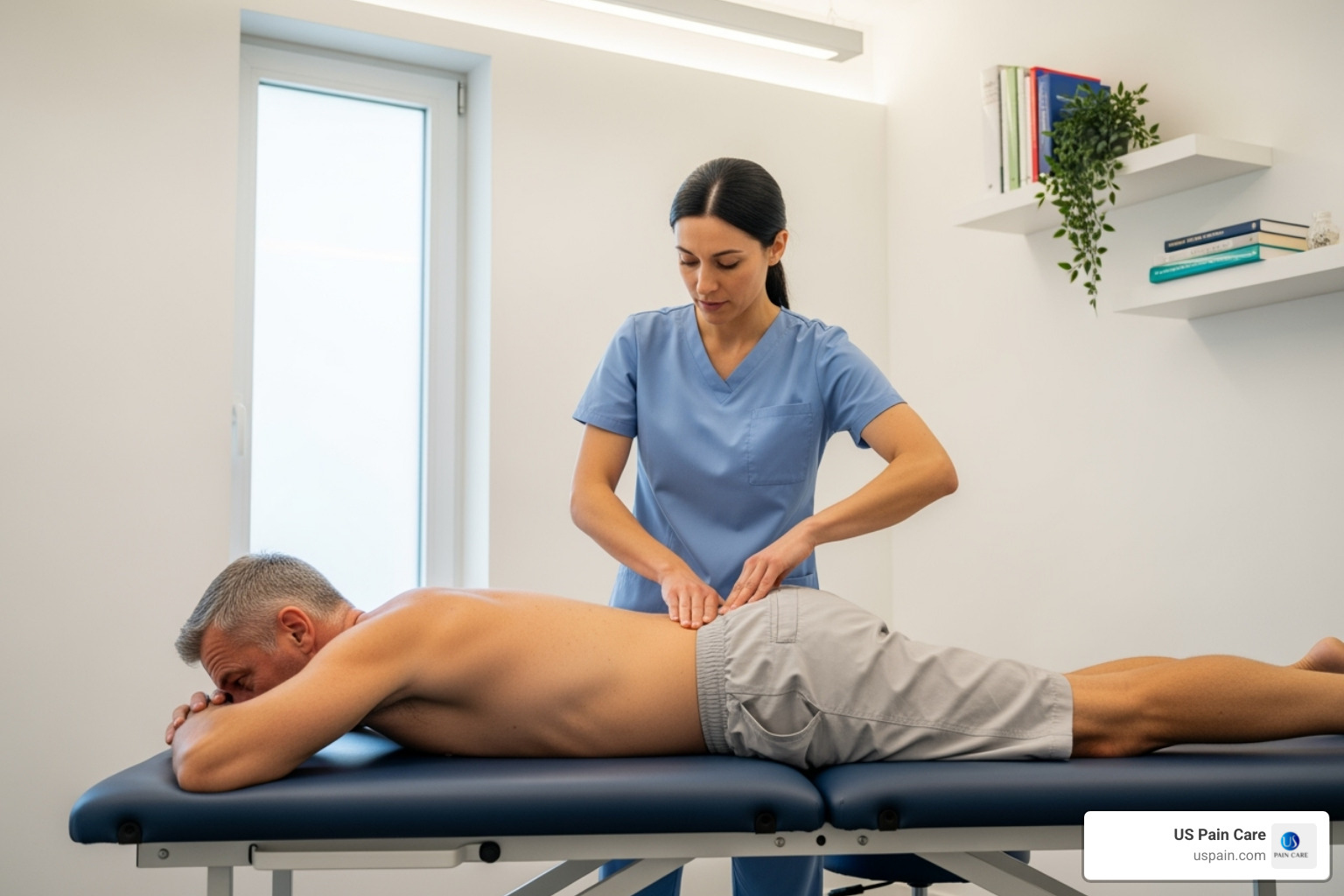
Before creating an effective treatment for low back pain physiotherapy plan, we must understand what’s causing your discomfort. Low back pain affects 60-80% of people, but the good news is that over 90% of cases are “non-specific,” meaning there’s no serious underlying condition.
Common culprits include muscle strain from heavy lifting, poor posture from sitting for long hours, a herniated disc pressing on nerves, or age-related degenerative disc disease.
The timeline of your pain is also a key clue. Acute pain lasts less than 6 weeks, sub-acute pain for 6 to 12 weeks, and chronic pain persists beyond 12 weeks. Chronic pain affects up to 23% of adults and accounts for most back-related healthcare costs, highlighting the need for early, effective treatment. Understanding these differences helps us tailor your physiotherapy plan. For more details, see our guide on Understanding Low Back Pain Causes and Treatments.
What Happens During a Physiotherapy Assessment?
Your first visit is a thorough investigation. We’ll discuss your pain history, lifestyle, and goals during the subjective history. The physical examination involves observing your movement, checking for tender spots, and performing range of motion and strength tests to identify limitations or weaknesses.
A neurological screening checks reflexes and sensation for nerve involvement. This is part of our diagnostic triage to ensure physiotherapy is the right approach and to screen for serious conditions. We also consider psychosocial factors like stress or fear of movement, as addressing them improves outcomes. Finally, we work on goal setting and a functional movement analysis to see how pain impacts daily activities.
When to Seek Immediate Medical Help
While most back pain responds well to physiotherapy, some “red flag” symptoms require immediate medical attention. These are rare but important to recognize.
Cauda equina syndrome, a serious condition involving severe nerve compression, requires emergency treatment. Symptoms include numbness in both legs, loss of bladder or bowel control, and numbness in the groin or saddle area.
Other warning signs include unexplained weight loss, fever, or severe pain that doesn’t improve with rest and worsens at night. Any numbness in the groin or saddle area also warrants an urgent evaluation.
If you have a history of cancer, recent trauma, or use immune-suppressing medications, your back pain should be evaluated promptly. Our initial assessment always includes screening for these conditions to ensure you receive the right care. For more on the diagnostic process, visit our page on Low Back Pain Diagnosis.
The Core Components of Treatment for Low Back Pain Physiotherapy
Physiotherapy for back pain is a comprehensive, evidence-based approach that addresses the underlying causes of your discomfort. Our primary goals are pain reduction, improved function, increased flexibility, patient education, and prevention of recurrence.
We achieve this by focusing on four interconnected exercise categories: core strengthening, flexibility training, aerobic conditioning, and postural training. This well-rounded approach addresses every aspect of your spinal health for lasting relief.
Core Strengthening: The Foundation of Treatment for Low Back Pain Physiotherapy

Your core is the muscular powerhouse surrounding your midsection. When these muscles—abdominals, back, diaphragm, and pelvis—work together, they provide crucial spinal support. A weak core leads to unequal weight distribution, straining your spine. Strong core muscles provide lumbar stabilization, absorbing shock and maintaining proper alignment.
We use gentle yet effective exercises to build this support. Pelvic tilts teach you to engage deep core muscles. The bird-dog exercise challenges stability and coordination. Bridges activate your glutes and core, while planks build foundational strength. These exercises align with methods like the McKenzie Treatment for Low Back Pain, which uses specific movements to restore normal spinal function.
Flexibility and Mobility: Restoring Your Range of Motion

Muscle tightness in your hips, hamstrings, or hip flexors can pull your pelvis out of alignment, straining your lower back. Addressing this tightness not only improves flexibility but also helps activate and strengthen these muscles, improving coordination between your hips and spine.
Key stretches include:
- Hamstring stretches: To prevent the pelvis from being pulled out of alignment.
- Hip flexor stretches: To restore proper pelvic position and reduce spinal compression.
- Lower back rotational stretch and cat-cow stretch: To gently mobilize the entire spinal column.
Research from institutions like the Mayo Clinic confirms that regular stretching can significantly improve back pain. 3 simple stretches to do daily are the knee-to-chest stretch, the lower back rotational stretch, and the cat-cow stretch. Hold each for 20-30 seconds to lengthen tight muscles and promote healthy spinal movement.
Aerobic Conditioning: Energizing Your Spine
Low-impact exercise like brisk walking, swimming, or stationary biking is a healing boost for your spine. It increases blood flow, delivering oxygen and nutrients to damaged tissues. It also triggers endorphin release, your body’s natural painkillers.
Swimming and aquatic therapy are particularly beneficial, as the water’s buoyancy reduces stress on your joints while you build strength. Stationary biking is another great option, offering support in a seated position. The goal is to get your blood flowing without jarring your spine. For more on incorporating these exercises, visit our page on Back Pain Physical Therapy.
Postural Training and Ergonomics: Building Better Habits
The poor posture impact on your spine is significant, limiting movement and causing pain. However, small changes in how you sit, stand, and move can bring dramatic relief.
Ergonomic adjustments at your workspace are a great start. Ensure your screen is at eye level, your chair provides lumbar support, and your feet are flat on the floor. We also focus on proper lifting techniques and body mechanics education to prevent pain episodes. Learning to bend at your hips, carry items close to your body, and avoid twisting while lifting protects your back.
We’ll practice movements like seated squats to strengthen your legs and glutes while protecting your back. When these new patterns become automatic, you’ll maintain better posture naturally. This is crucial for conditions like disc problems, as detailed in our guide to Conservative Treatment for Lumbar Disc Herniation.
Your Physiotherapy Journey: What to Expect
Starting treatment for low back pain physiotherapy is a step toward lasting relief. We treat a wide spectrum of conditions, from localized axial back pain (from muscle strain or disc wear) to the shooting leg pain of sciatica.
Our approach is custom to your diagnosis. For axial pain, we focus on core strength and flexibility. For sciatica, we may use specific directional exercises and techniques to reduce nerve inflammation. We also guide post-surgical rehabilitation, helping you regain strength safely after spine surgery.
Recovery timelines vary. Acute pain often improves within weeks, while chronic conditions require more patience. A structured program typically runs 6-8 weeks, with 1-3 sessions per week. The real progress, however, comes during the maintenance phase, where you use a personalized home exercise program and prevention strategies to take ownership of your health.
Custom Treatment for Low Back Pain Physiotherapy: Acute vs. Chronic Pain
Your pain’s timeline dictates our approach. What works for a new injury may not be right for chronic pain.
Feature
Acute Low Back Pain (0-6 weeks)
Chronic Low Back Pain (12+ weeks)
Primary Goal
Rapid pain relief, restore normal activity
Long-term pain management, functional improvement, self-efficacy
Activity Level
Stay active, avoid bed rest (passive methods not recommended)
Graded activity, progressive exercise
Exercise Focus
Gentle movement, mobility exercises
Strength, endurance, motor control, flexibility, aerobic conditioning
Pain Relief Modalities
Ice/heat, gentle manual therapy, short-term medication (if needed)
Pain neuroscience education, psychological interventions, manual therapy
Education
Reassurance, importance of staying active
Biopsychosocial model of pain, self-management strategies
Psychosocial Factors
Screen for “yellow flags” (fear avoidance)
Directly address “yellow flags,” incorporate psychological programs
Typical Duration
Weeks
Months to ongoing maintenance
Acute pain management emphasizes one message: keep moving. Bed rest can make things worse. We focus on gentle movement, reassurance, and education to distinguish between hurt and harm. For more, see our guide: What are good treatments for acute lower back pain?.
Chronic pain management is different. The nervous system can become oversensitive, so we use pain neuroscience education to help you retrain your pain system. Graded exercise gradually builds strength and confidence, while we address psychological factors like fear of movement.
Combining Physiotherapy with Other Treatments
Combining treatment for low back pain physiotherapy with other approaches can accelerate recovery. Our multidisciplinary approach at US Pain Care uses every available tool.
- Manual therapy, including spinal mobilization and manipulation, restores joint movement and reduces pain, especially when paired with exercise.
- Massage therapy relaxes tense muscles and improves blood flow, helping you participate more fully in your exercise program.
- Heat and cold therapy offer simple support: ice for acute inflammation and heat for chronic muscle tension.
- Medication management can play a supporting role during flare-ups, but the goal is always to minimize dependence as your function improves. Learn more in our Back Pain Medication guide.
This integrated strategy addresses the physical, emotional, and psychological aspects of your pain for the best possible outcome.
Frequently Asked Questions about Physiotherapy for Low Back Pain
Is walking good for lower back pain?
Yes, absolutely. Walking is a fantastic low-impact aerobic exercise for your lower back. It strengthens the muscles that support your spine, improves blood flow to promote healing, improves flexibility, and helps you maintain a healthy weight, all of which reduce stress on your back. Studies show that exercise can significantly decrease the risk of low back pain. The best part is its accessibility—all you need are comfortable shoes. Start with 10-15 minutes and gradually build up to 30 minutes daily.
When is physical therapy NOT recommended for back pain?
While treatment for low back pain physiotherapy is highly effective, it’s not appropriate for certain “red flag” conditions that require immediate medical intervention. These serious but rare issues include spinal fractures, infections, tumors, or cauda equina syndrome (a medical emergency involving severe nerve compression).
Warning signs include unexplained weight loss, fever, loss of bowel or bladder control, or progressive weakness or numbness in your legs. If you experience these, seek urgent medical evaluation. Our physiotherapists are trained to screen for these conditions during your initial assessment to ensure you receive the safest, most appropriate care.
How long does it take for physiotherapy to work for low back pain?
The timeline for relief varies based on the cause and severity of your pain and how long you’ve had it. Many people feel gradual but steady improvement within a few weeks. A typical structured program for sub-acute or chronic pain often runs 6 to 8 weeks, with manual therapy sometimes involving up to nine sessions over 12 weeks.
However, the initial phase is just the beginning. The key to long-term success is the home maintenance program that follows. Consistency and adherence to your personalized exercises are the most critical factors in achieving significant, lasting improvement. Physiotherapy is about building long-term strength and healthy habits, not just quick fixes.
Taking Control of Your Back Pain

Imagine gardening for hours or lifting your grandchild without a stab of pain. This is the reality that treatment for low back pain physiotherapy can help you achieve. By combining core strengthening, flexibility, aerobic conditioning, and postural education, this active approach empowers you to take control of your recovery.
Physiotherapy’s effectiveness lies in its personalized care. Your exercises and adjustments are chosen based on your unique assessment and goals. This focus on your specific needs leads to long-term relief. The strength you build and the healthy habits you develop become permanent tools in your pain management toolkit, making you stronger and more resilient.
At US Pain Care, we believe in a whole-person approach. We understand that back pain affects every part of your life. By strengthening your body and understanding its mechanics, you can move from a cycle of pain to a future of strength and activity. Every exercise and adjustment is a step toward reclaiming the active, pain-free life you deserve.
Ready to find a lasting solution for your low back pain? Explore our comprehensive lower back pain and treatment options.