
For a long time, chronic pain care in America leaned heavily on opioids. We now know that approach caused enormous harm, and that for most long-term pain it was never the most effective option to begin with. The good news is that non-opioid pain treatment has grown into a deep, well-studied toolkit — medications, movement, mind-body care, and precise interventional procedures. After 17 years as a double board-certified pain physician and anesthesiologist, I can say with confidence that most patients with chronic pain have meaningful options that do not involve opioids at all.
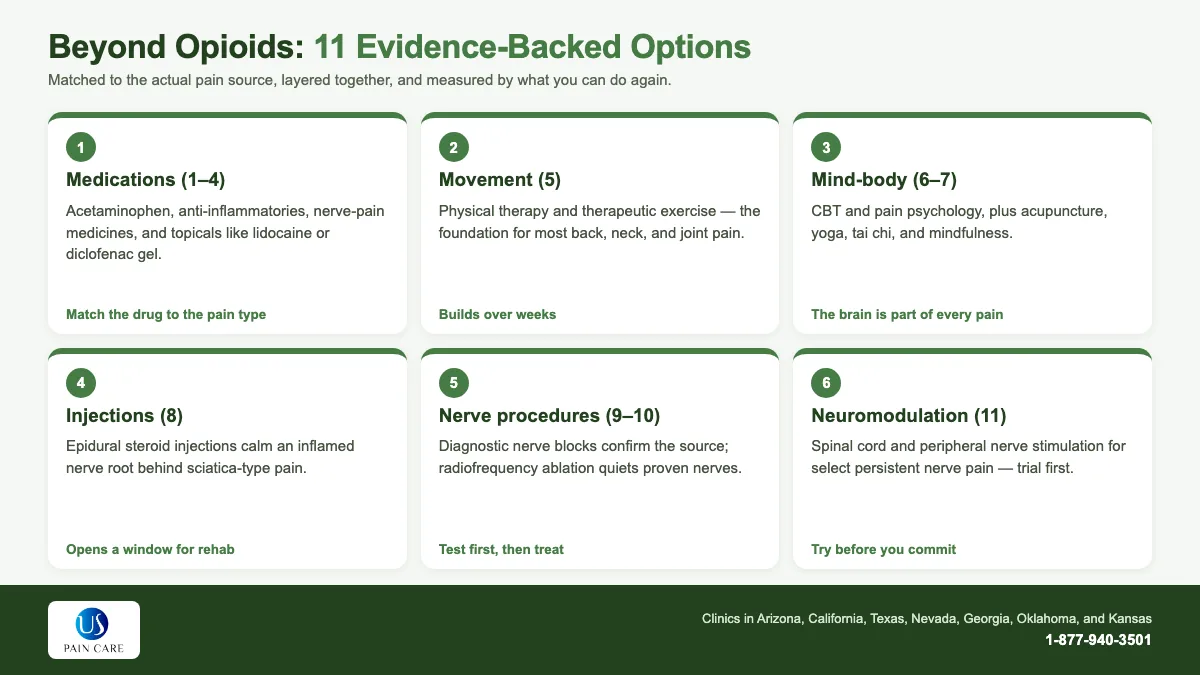
Below are 11 evidence-supported options, how each one works, and who tends to benefit. No single item on this list works for everyone. The real power comes from combining the right two or three for your specific diagnosis — which is what a good pain physician helps you do.
Why Non-Opioid Pain Treatment Comes First
Opioids still have a place — after major surgery, for severe acute injuries, and in some cancer and end-of-life care. But for chronic pain, current national guidance, including the CDC’s 2022 clinical practice guideline for prescribing opioids, encourages clinicians to maximize non-opioid approaches first. Long-term opioid use carries risks of tolerance, dependence, overdose, and, in some people, a paradoxical increase in pain sensitivity. Many patients on long-term opioids also report that their function — the ability to work, sleep, and move — does not improve as much as they hoped.
At US Pain Care, a physician-owned network, our philosophy is conservative-first and whole-person: diagnose the actual pain generator, treat it with the least invasive effective tool, and support the mental health side of chronic pain along the way. Every non-opioid pain treatment below fits somewhere in that philosophy. For an independent overview of non-drug approaches, the National Center for Complementary and Integrative Health chronic pain resource is a reliable read.
Medication-Based Non-Opioid Pain Treatment (Options 1–4)
1. Acetaminophen
Acetaminophen is modest but useful, especially for mild arthritis pain and as a building block in combination plans. It is gentle on the stomach compared with anti-inflammatories, but the daily maximum matters — it is hidden in many cold and combination products, and too much can damage the liver. Ask your clinician what daily limit is right for you.
2. Anti-inflammatory medications (NSAIDs), oral and topical
Ibuprofen, naproxen, and prescription NSAIDs reduce inflammation and pain, and they are often helpful for arthritis, tendon problems, and flares of back pain. Oral NSAIDs can affect the stomach, kidneys, heart, and blood pressure, so they are not right for everyone or for indefinite use. Topical NSAID gels, such as diclofenac, can be a good option for knees and hands with much less of the drug reaching the bloodstream. The MedlinePlus pain relievers page summarizes the common options and their cautions.
3. Nerve-pain medications
Some pain comes from irritated or damaged nerves — sciatica, diabetic neuropathy, shingles pain. These conditions often respond poorly to standard pain relievers but better to medications that calm nerve signaling, such as gabapentin and pregabalin, or certain antidepressants used for pain, such as duloxetine and low-dose tricyclics. When these antidepressants are used for pain, it is not because we think the pain is “depression”; it is because they affect the nerve pathways that regulate pain signals.
4. Topical treatments
Lidocaine patches and creams, capsaicin, and other topicals can help localized pain with fewer whole-body side effects. They are especially useful for older adults or anyone who takes many other medications.
Looking for pain relief without opioids?
Our physician-owned team builds conservative-first plans around your diagnosis — not a prescription pad.
Or call 1-877-940-3501
Clinics in Arizona, California, Texas, Nevada, Georgia, Oklahoma, and Kansas
US Pain Care — 1-877-940-3501.
Movement and Mind-Body Options (Options 5–7)
5. Physical therapy and therapeutic exercise
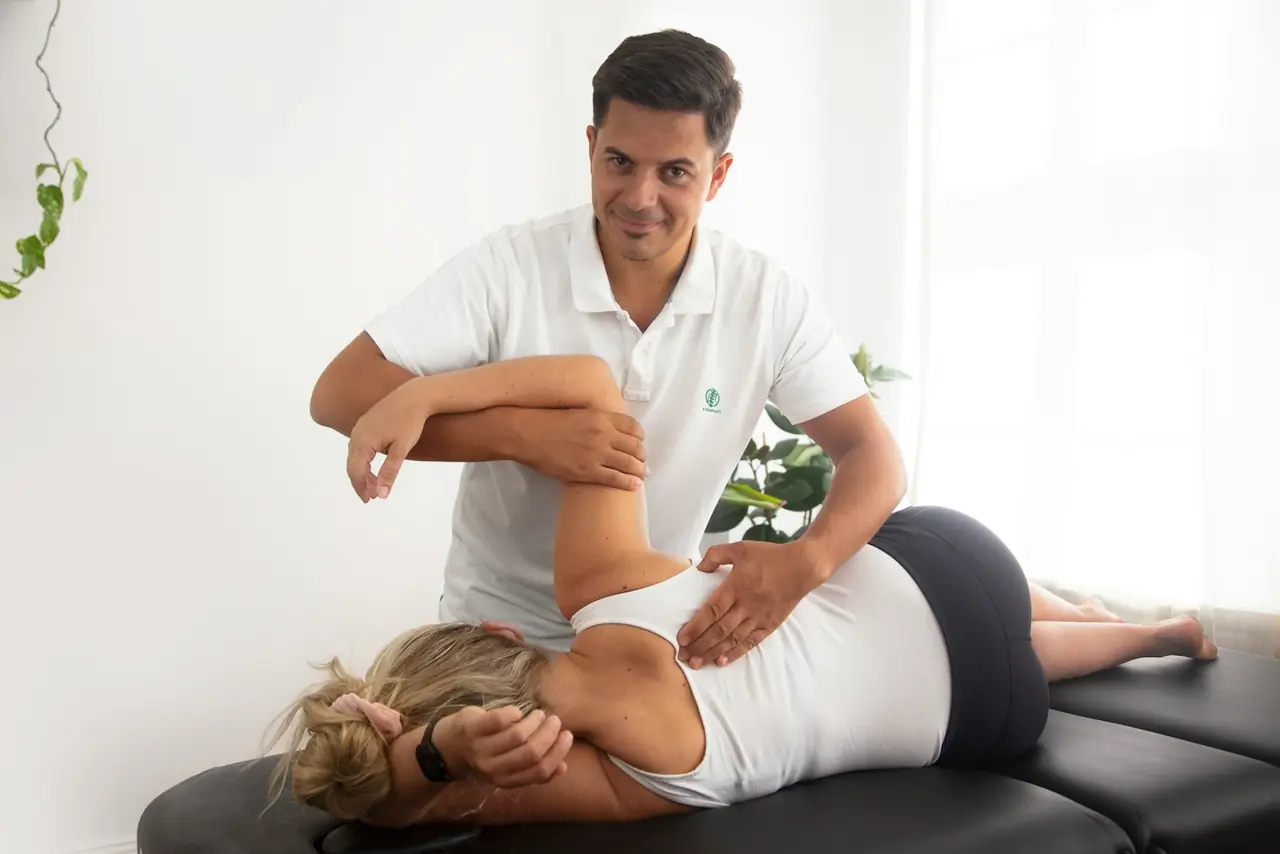
For most chronic back, neck, and joint pain, structured exercise is a foundation of non-opioid pain treatment. Physical therapy builds strength and flexibility, retrains movement patterns, and — just as important — teaches the nervous system that movement is safe. Results tend to build over weeks, so consistency matters more than intensity.
6. Cognitive behavioral therapy and pain psychology
Chronic pain changes the brain’s alarm system, sleep, mood, and stress response. Cognitive behavioral therapy (CBT), acceptance and commitment therapy, and pain reprocessing approaches help many patients reduce pain intensity and, often even more, reduce how much pain controls their lives. This is not the same as saying the pain is psychological. It means the brain is part of every pain experience, so it is part of the treatment. We build this into care through our chronic pain and behavioral health services.
7. Acupuncture, yoga, tai chi, and mindfulness
Several complementary approaches have reasonable evidence for some chronic pain conditions, particularly low back pain, neck pain, and osteoarthritis. They tend to work best as part of a larger plan, are generally low-risk when performed by qualified practitioners, and give patients something active they can do for themselves.
Interventional Non-Opioid Pain Treatment (Options 8–11)
When a specific structure is the clear pain generator, targeted procedures can deliver relief that medications cannot. These are the core of interventional pain management, and they are usually considered when conservative care has not been enough.
8. Epidural steroid injections
For pain that shoots down an arm or leg from an irritated nerve root — sciatica from a herniated disc, for example — an epidural steroid injection places anti-inflammatory medication right where the nerve is inflamed. Relief varies; for many patients it calms a flare enough to let physical therapy work.
9. Diagnostic and therapeutic nerve blocks
Nerve blocks place numbing medicine on specific nerves. A medial branch block, for example, tests whether the small facet joints of the spine are the source of back or neck pain. Blocks are often as valuable for the answer they give as for the relief they provide.
10. Radiofrequency ablation
When blocks confirm that particular nerves are carrying the pain signal, radiofrequency ablation uses targeted heat to interrupt those nerves for months at a time. It is commonly used for arthritis-related spine pain and some knee pain, and it can be repeated if pain returns as nerves regrow.
11. Neuromodulation (spinal cord and peripheral nerve stimulation)
For carefully selected patients with persistent nerve-related pain — including some cases of ongoing pain after spine surgery — small implanted devices can change how pain signals travel to the brain. Patients typically complete a temporary trial first, so they can see whether the therapy helps before committing to a permanent implant.
How to Combine Options Into a Plan That Works
The most common mistake I see is treating these options as a menu where you try one, it “fails,” and you move on. Non-opioid pain treatment works best as a layered plan. A typical example for chronic low back pain might combine a daily movement program, a topical or anti-inflammatory for flares, sleep and stress support, and — if testing points to a specific joint or nerve — a targeted procedure that lowers pain enough for exercise to stick.
A few principles guide good combinations:
- Match the tool to the pain type. Joint pain, nerve pain, muscle pain, and centralized pain respond to different things.
- Measure function, not just pain scores. Sleeping through the night, walking farther, and returning to work are the outcomes that matter.
- Give each option a fair trial. Many treatments take weeks to show their full effect.
- Review regularly. Keep what works, adjust what helps partially, and stop what does not.
For a broader look at how these approaches fit across different diagnoses, see our chronic pain treatment options overview.
Questions to Ask at Your Next Appointment
Patients who get the most from their care tend to arrive with good questions. Consider bringing these:
- What do you think is actually generating my pain? A joint, a nerve, a disc, muscles, or a sensitized nervous system — the answer shapes everything else.
- Which options fit my diagnosis, and in what order? A sensible sequence usually starts with the least invasive choices.
- How will we know if something is working? Agree on a function goal, such as walking for 20 minutes or sleeping through the night.
- What are the risks for someone with my health history? Kidney function, stomach problems, blood thinners, and heart conditions all affect which medications and procedures are safest.
- Who else should be on my team? Physical therapists, behavioral health clinicians, and primary care all play a role in long-term pain care.
Bring a list of every medication and supplement you take, a short history of what you have already tried, and how each one worked. That simple preparation helps your physician avoid repeating treatments that failed and move faster toward the ones most likely to help.
What If You Are Already Taking Opioids?
If you currently take opioids for chronic pain, please do not stop suddenly on your own. Abrupt discontinuation can cause withdrawal and can be dangerous. Any change should be gradual, individualized, and supervised by your prescriber. Adding effective non-opioid pain treatment often makes it more comfortable to reduce opioid doses over time when that is the right goal — and for patients who also struggle with substance use, compassionate, judgment-free support is part of whole-person pain care.
Want a plan built on more than one option?
From physical therapy to targeted procedures to behavioral health — one physician-led team, conservative care first.
Or call 1-877-940-3501
Clinics in Arizona, California, Texas, Nevada, Georgia, Oklahoma, and Kansas

Frequently Asked Questions
What is the strongest non-opioid pain treatment?
It depends on the cause of the pain. Nerve-related leg pain may respond best to an epidural injection or nerve-pain medication; arthritic spine pain may respond to radiofrequency ablation; widespread pain often responds best to exercise, sleep repair, and pain psychology. The “strongest” option is the one matched to an accurate diagnosis.
Are non-opioid treatments as effective as opioids?
For many common types of chronic pain, research suggests non-opioid approaches can be as effective as or more effective than long-term opioids, with fewer serious risks. Results vary by condition and by person, which is why a tailored plan matters.
Is a non-opioid pain treatment covered by insurance?
Many options — physical therapy, common medications, and established interventional procedures — are covered by many insurance plans when they are medically appropriate, though coverage, prior authorization rules, and out-of-pocket costs vary by plan. Our team can help you understand your options when you call.
How long does it take for non-opioid treatments to work?
Some, such as nerve blocks, work within minutes to hours. Others, such as exercise programs, nerve-pain medications, and therapy, build over several weeks. Radiofrequency ablation often reaches full effect over two to four weeks. Patience during the first month is part of the plan. Questions? Call 1-877-940-3501.
— Dr. Paul Lynch is a double board-certified pain physician and anesthesiologist. US Pain Care is a physician-owned national pain care network. Connect with him on LinkedIn.
This article is for educational purposes only and is not medical advice. It does not replace an evaluation by a qualified clinician who can examine you and review your history. Do not start, stop, or change any medication without talking to your prescriber. If you have severe, sudden, or rapidly worsening symptoms — or any loss of bowel or bladder control, new weakness, fever, or pain after major trauma — seek medical care immediately.