 By Dr. Paul Lynch, double board-certified pain physician and anesthesiologist
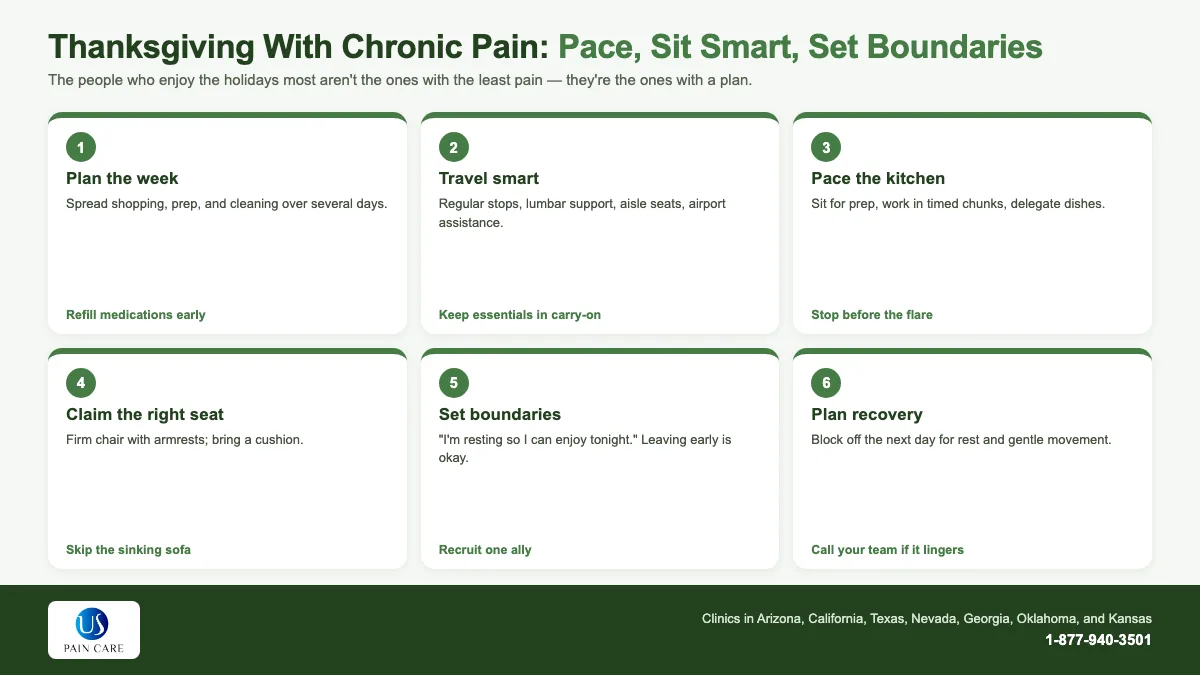
Getting through the holidays with chronic pain usually takes a plan more than willpower. Spreading tasks over several days, pacing yourself, choosing supportive seating, setting clear boundaries and scheduling a recovery day can make Thanksgiving more manageable.
For many people with long-lasting pain, Thanksgiving also means long drives, hours on hard chairs, a kitchen marathon, late nights and questions about how you are “really” doing. You deserve to enjoy the day too, and you are allowed to do it differently than you used to.
Here is a step-by-step guide, from the week before to the day after. Take what fits your life and leave the rest.
Holidays with Chronic Pain Explained
The holidays pile up many things that can aggravate pain at once: a broken routine, long sitting or standing, travel, rich food and alcohol, short sleep and pressure to keep up with everyone else.
According to the MedlinePlus overview of chronic pain, chronic pain is pain that lasts longer than three months or past the time you should have healed. MedlinePlus also notes that mood and stress can make chronic pain worse, and that depression or stress may intensify it.
That helps explain why a stressful day can bring on a flare even when you did nothing physically unusual. In my practice as a double board-certified pain physician and anesthesiologist, I often see people surprised by a post-holiday flare that started with stress and poor sleep rather than one heavy lift.
There is an emotional layer, too. Holidays can highlight what pain has changed, like the dishes you used to cook or the trips you used to take. That sense of loss is real, and our guide to chronic pain behavioral health explains how mental health support fits into pain care.
What Pacing Really Means
Pacing is the single most useful holiday skill. The Arthritis Foundation’s guide to pacing yourself describes it as planning a “just right” amount of activity balanced with short rest breaks.
The goal is to avoid the pattern of overdoing it on a good day and then losing several days to recovery. The Arthritis Foundation is clear that pacing does not take pain away, but it can help you stop before pain gets out of control.
Pacing works best with a few habits:
- Plan the day before it starts
- Do your hardest task at your best time of day
- Take short breaks before you need them
- Let go of tasks that matter less
- Expect setbacks and start again
When patients ask me how to handle a big day, I suggest treating the holiday like a long hike: plan the rest stops in advance instead of waiting until you are exhausted.
If pain is making every holiday harder than the last, a pain specialist can help you find the cause and update your plan. Book an evaluation or call 1-877-940-3501.
Plan the Week Before
Most holiday flares build in the days leading up to the event, not on the day itself. A little planning spreads the load so the week does not end in a crash.
A simple pre-holiday checklist:
- Write a realistic task list
- Cross out or delegate nonessentials
- Spread shopping and cleaning across days
- Keep your usual bedtime
- Refill prescriptions before offices close
- Keep up your usual stretches or walks
The Arthritis Foundation also suggests keeping a diary of your activities and symptoms for a couple of weeks. Doing that before the holiday can show you which tasks tend to set off a flare, so you know what to hand off.
Travel with Less Strain
Whether you are driving across town or flying across the country, travel is often the hardest part of the holiday.
Driving
The MedlinePlus guide to taking care of your back at home suggests stopping to walk around every hour on long drives and placing a small pillow or rolled towel behind your lower back. Build those stops into your arrival time, and share the driving if you can.
Flying
An aisle seat makes it easier to stand and move during the flight. If long airport walks are hard, ask your airline about wheelchair or mobility help when you book. Keep medications and a heat wrap in your carry-on, and ask for help with overhead bins.
Packing
Bring enough of your medications for the whole trip, in your carry-on, plus a seat cushion or lumbar pillow, comfortable shoes and a water bottle. MedlinePlus recommends cushioned shoes and skipping high heels when you will be walking.
Pace Yourself in the Kitchen
If you are cooking or hosting, the kitchen is where pacing matters most. A few changes can keep a long cooking day from becoming a long recovery.
Sit for Prep Work
Chop, peel and mix at the table or on a stool rather than standing at the counter. Keep the things you need close by so you are not reaching and walking back and forth.
Work in Timed Blocks
Work for a set time, then rest before you feel worn out. A kitchen timer helps you remember. Stopping before a flare, not after it starts, is the point.
Simplify the Menu
Buy pre-cut vegetables, a store-bought pie or a prepared side. Guests will remember that you were there, not whether the stuffing was homemade.
Delegate Generously
Assign dishes to guests, ask someone else to lift the heavy roasting pan, and recruit helpers for cleanup. When you do lift, MedlinePlus advises bending at the knees, not the waist, not twisting, and getting help with anything heavy or awkward.
Support Your Feet
If you must stand for a while, MedlinePlus suggests resting one foot on a low stool and switching feet from time to time. Supportive, cushioned shoes help too.
Claim the Right Seat
Seating is an underrated part of the day. Long meals on hard chairs and evenings on deep, low couches are tough on backs, hips and knees.
A few seating choices that may help:
- A firm chair with a straight back and armrests
- A small pillow or rolled towel behind your lower back
- A seat near open space so you can stand and stretch
- Skipping the low, sinking sofa
- Changing positions often
Choose your seat early, before the room fills up, and do not feel awkward about bringing your own cushion.
Eat, Drink and Sleep Thoughtfully
You do not need to skip holiday food. A few choices can make the following days easier.
Balance Your Plate
Fill part of your plate with vegetables and lean protein alongside your favorites, and drink water through the day, especially when you are traveling. Some people find an anti-inflammatory diet helps them feel better overall.
Be Careful with Alcohol
The National Institute on Alcohol Abuse and Alcoholism guide to mixing alcohol with medicines lists harmful interactions with common pain relievers, muscle relaxants, sleep medicines and opioids, including drowsiness, slowed breathing and a higher risk of overdose. It also notes that older adults are at particularly high risk and that the combination can lead to falls.
Ask your physician or pharmacist whether alcohol is safe with your specific medications before the holiday, not during it.
Stay on Schedule
Busy days make it easy to miss doses, so set phone reminders. Decide in advance when you will leave or head to bed, and stick to it. Protecting your sleep is one of the kindest things you can do for your pain.
Set Kind, Clear Boundaries
You are allowed to say no, leave early, rest in another room and skip conversations about your health. Simple scripts make that easier in the moment.
Declining a Task
“I can’t do the dishes this year, but I can set the table sitting down.”
Taking a Break
“I’m going to rest for a bit so I can enjoy the rest of the evening.”
Leaving Early
“This was wonderful. I need to head out now so I’m not paying for it tomorrow.”
Unwanted Advice
“Thanks for thinking of me. My care team and I have a plan, and I’m sticking with it.”
When You Look Fine
“Chronic pain doesn’t always show. Today’s a manageable day, and I’m pacing myself to keep it that way.”
It can help to talk with one trusted family member ahead of time about what you need, so you have an ally in the room. Our guides to chronic pain family support and managing stress with chronic pain have more ideas.
Plan Your Recovery Day
Schedule recovery before you need it. Block off the day after Thanksgiving, or at least a few hours, for rest, gentle movement, heat and quiet. Avoid planning a big shopping trip or long drive for the next morning.

If you flare, follow the plan you and your physician have already made, such as gentle movement, heat or ice and medications as prescribed. Slow breathing and a quiet room can help you settle.
Afterward, jot down what worked, what set off a flare and what you would change. Those notes become your plan for December, the new year and your next visit with your care team.
Warning Signs
A holiday flare is common, but some symptoms need prompt medical attention rather than rest at home. Contact your physician or seek care if you notice:
- A flare that is far worse than usual
- New weakness or numbness
- Loss of bowel or bladder control
- Fever along with new back pain
- Pain after a fall or injury
If the holidays feel overwhelming or you have thoughts of suicide, call or text 988 to reach the 988 Suicide and Crisis Lifeline. The VA’s suicide prevention page notes that veterans can call 988 and select 1.
When to See a Pain Specialist
If pain keeps you from the people and traditions that matter most, it may be time to revisit your treatment plan. Consider an evaluation if:
- Flares are lasting longer than they used to
- Pain keeps disrupting sleep or daily life
- Your current plan no longer seems to help
- You rely on more medicine to get through events
Our guides to the definition of chronic pain and chronic pain treatment options explain the range of care available, including non-opioid pain treatment.
US Pain Care physicians in Arizona, California, Nevada, Texas, Oklahoma, Kansas and Georgia help people with long-lasting pain plan for busy seasons like this one. In Nevada, for example, US Pain Care’s member practice Nevada Advanced Pain Specialists has clinics in Reno, Sparks and Carson City.
Getting Care at US Pain Care
US Pain Care is a physician-led network of pain management practices. Your visit starts with a conversation about your pain, your sleep and what you have had to give up, followed by an exam and a review of your current plan.
From there, your pain specialist can help find what is driving your pain and discuss options such as medication management or targeted procedures through interventional pain management when they fit. If counseling, physical therapy or another approach may help, your physician can refer you.
To get started, find a location near you, then book your appointment online or call 1-877-940-3501.
Book Your AppointmentTrusted Information
Medical references:
- MedlinePlus: Chronic Pain
- MedlinePlus: Taking Care of Your Back at Home
- Arthritis Foundation: What It Really Means to Pace Yourself
- NIAAA: Harmful Interactions, Mixing Alcohol With Medicines
- U.S. Department of Veterans Affairs: Suicide Prevention
Related US Pain Care resources: Chronic pain behavioral health · Chronic pain stress management · Chronic pain family support · Definition of chronic pain · Chronic pain treatment options · Non-opioid pain treatment · Anti-inflammatory diet · Interventional pain management.
This article is for general education and does not replace an individualized medical evaluation by your physician. Do not change medications or combine them with alcohol without talking to your physician or pharmacist.
Frequently Asked Questions
How do I explain my pain to family?
Keep it short and specific. Explain that your pain is ongoing even when it does not show, and tell people what helps, such as a supportive chair, breaks to rest or help with lifting. Talking with one trusted relative before the holiday can give you an ally in the room and make the day easier for everyone.
How can I avoid a flare after a holiday?
Spread tasks over several days, sit for prep work, take breaks before you need them, keep your sleep and medication schedule, be careful with alcohol and plan a recovery day. Flares may still happen, but planning often makes them easier to manage. If a flare is severe or lasts longer than usual, contact your care team.
Is it okay to skip holiday events?
Yes. Protecting your health is a valid reason to shorten a visit, host a smaller gathering, join by video or skip an event. Many people find a shorter, more comfortable visit is more enjoyable for everyone, including themselves. You can also choose an early exit time and share it with your host in advance.
What should I pack for holiday travel?
Bring enough medication for the whole trip in your carry-on, plus a seat cushion or lumbar pillow, heat wraps, cushioned shoes and a water bottle. Plan stops to walk around about every hour on long drives. If long airport walks are hard, ask your airline about mobility assistance when you book your flight.
Can I drink alcohol with my pain medicine?
Ask first. The National Institute on Alcohol Abuse and Alcoholism lists harmful interactions between alcohol and many pain relievers, muscle relaxants, sleep medicines and opioids, from stomach bleeding to slowed breathing and overdose. Your physician or pharmacist can tell you whether alcohol is safe with your specific medications. Never combine them without checking.
What does pacing mean for chronic pain?
Pacing means planning a balance of activity and short rest breaks so you do not overdo it on good days and crash afterward. It does not remove pain, but it can help you stop before pain gets out of control. Planning ahead, prioritizing what matters and resting before you need to are the core habits.
What if the holidays feel overwhelming?
Holiday stress, family conflict and grief can weigh heavily when you live with pain. Reach out to someone you trust and to your care team for support. If you are ever in crisis or have thoughts of suicide, call or text 988 to reach the 988 Suicide and Crisis Lifeline, any time of day.
When should I see a doctor about holiday pain flares?
See your physician if flares are getting longer or more frequent, pain disrupts sleep, or your plan no longer helps. Seek prompt care for new weakness, numbness, fever or loss of bowel or bladder control. You can find US Pain Care clinics in Nevada and six other states.