

What a Dull Ache in Legs May Be Telling You
A dull ache in legs often comes from muscle fatigue, overuse, long periods of sitting or standing, or vein-related blood pooling. But an ache that is new, persistent, one-sided, or paired with swelling, warmth, redness, numbness, weakness, or skin-color changes needs medical attention because it can signal a circulation, nerve, or infection problem.
A quick way to think about the pattern:
- After activity: A muscle strain, tendon irritation, or overuse may be more likely.
- After sitting or standing: Venous pooling or varicose veins can cause heaviness and aching.
- With burning, tingling, or pain from the back down the leg: A nerve problem, such as sciatica, may be involved.
- With calf swelling, warmth, or sudden pain: Seek urgent care to rule out a blood clot.
Most leg aches are not emergencies. Still, pain is a message, not a diagnosis. Paying attention to when it starts, where it travels, and what comes with it can help point toward the right next step.
I’m Dr. Paul Lynch, a double board-certified pain management physician and anesthesiologist with 17 years of experience evaluating chronic and complex pain. I help patients identify the causes of a dull ache in legs and build care plans that support safer pain relief, movement, and daily function.
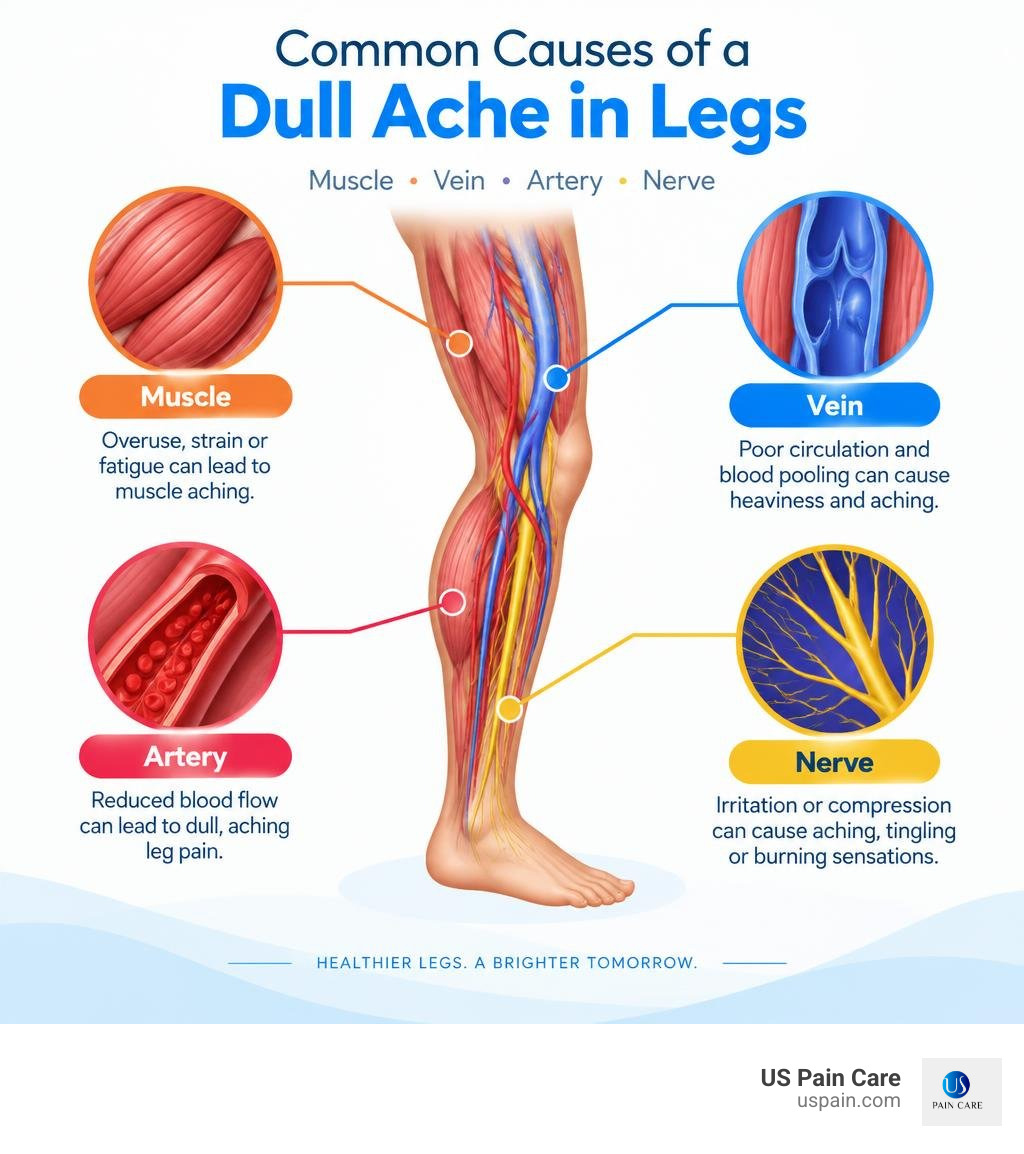
Understanding the Common Causes of a Dull Ache in Legs
When patients present to us describing a generalized, throbbing, or diffuse sensation in their lower limbs, our first task is separating localized mechanical problems from systemic and vascular conditions. Your legs are complex anatomical structures containing deep muscle compartments, major neurovascular bundles, connective tissue fascial planes, and structural bones.
A dull ache rarely stems from a single isolated fiber. Instead, it frequently reflects soft tissue inflammation, altered vascular hemodynamics, or referred neurological signaling that creates a heavy, tired feeling throughout the extremity.
Musculoskeletal Strain and Overuse
The most frequent culprit behind lower extremity discomfort is everyday physical stress. Repetitive motions, such as high-mileage running, abrupt increases in training volume, or extended walking on unyielding surfaces, strain muscle fibers and surrounding tendons.
- Delayed-Onset Muscle Soreness (DOMS): Microscopic tears occurring after intense exertion create a deep, diffuse soreness that typically peaks 24 to 48 hours later.
- Shin Splints (Medial Tibial Stress Syndrome): Inflammation of the periosteum along the tibia causes an aching pain along the inner shin bone that intensifies during or right after running.
- Tendonitis and Fascial Strain: Overuse of the Achilles tendon or patellar tendon can manifest as a persistent, localized ache that stiffens after periods of rest.
- Nocturnal Calf Cramps: Sudden involuntary contractions leave behind a lingering muscular tenderness often described as a residual “muscle bruise.”
When these structural aches fail to settle after a few days of conservative rest, specialized strategies for chronic musculoskeletal pain relief can help break the cycle of recurring soft tissue strain.
Vascular Issues: Venous Insufficiency and PAD
Your circulatory system relies on a delicate balance: arteries pump oxygenated blood downward, and veins rely on one-way valves and the calf muscle pump to send deoxygenated blood back upward against gravity. When this system falters, chronic aching is a hallmark symptom.
In chronic venous disease (CVD) and venous insufficiency, tiny valves within the leg veins stretch and fail. Blood pools in the lower extremities—a phenomenon known as venous stasis—leading to visible varicose veins, ankle swelling, and a distinct sensation of heavy, tired legs that worsens toward the evening.
Conversely, peripheral artery disease (PAD) involves arterial narrowing due to atherosclerotic plaque accumulation. Muscles become starved of oxygen during exertion, causing a dull, cramping tightness known as intermittent claudication. It is critical to recognize the warning signs of peripheral artery disease, as poor arterial supply requires dedicated vascular intervention.
Nerve Compression and Systemic Conditions
Nerves originating in the lower lumbar spine travel down through the pelvis, thighs, calves, and feet. When nerve roots become compressed or irritated by a damaged spinal disc, bone spur, or spinal stenosis, the brain can perceive the problem as a deep ache in the thigh or calf.
Patients trying to understand what does a herniated disc feel like are often surprised to learn that nerve compression does not always present as an electric shock; it frequently starts as an unyielding, deep-seated ache along the sciatic nerve pathway.
Systemic conditions can also drive diffuse leg aching:
- Peripheral Neuropathy: Common in diabetes or metabolic dysfunction, damaged sensory nerves can misfire, producing a blend of numbness, tingling, and a dull, burning ache.
- Fibromyalgia: Central sensitization alters the way the central nervous system processes pain signals, warranting comprehensive pain management for fibromyalgia.
- Viral Myalgia: When fighting respiratory viral infections, immune cells release circulating inflammatory cytokines (such as interleukins and interferons) and prostaglandins. Because the quadriceps and calf muscles represent the largest vascular muscle beds in the body, they absorb high concentrations of these inflammatory mediators, producing significant viral muscle aches.
Dull Ache vs. Sharp Leg Pain: Recognizing the Difference
The qualitative nature of your leg pain provides essential diagnostic clues regarding its underlying origin. While a dull ache points toward soft-tissue tension, fluid congestion, or chronic nerve compression, sharp sensations usually indicate acute structural tears, active nerve root impingement, or sudden arterial blockage.
| Symptom Feature | Dull Leg Ache | Sharp / Shooting Leg Pain |
|---|---|---|
| Typical Quality | Deep, heavy, throbbing, sore, diffuse | Stabbing, knife-like, electric, lancinating |
| Common Drivers | Venous pooling, DOMS, shin splints, systemic inflammation | Acute disc herniation, severe sciatica, tendon rupture |
| Aggravating Factors | Prolonged standing, static sitting, evening fatigue | Bending, coughing, explosive movement, sudden twisting |
| Relieving Factors | Leg elevation, light walking, gentle heat, compression | Specific spinal decompression postures, total rest |
| Primary Location | Broad areas of calves, thighs, or shin bones | Well-defined lines along dermatomes or localized joints |
How to Identify a Nerve-Related Dull Ache in Legs
Nerve-related discomfort—often categorized under lumbar radiculopathy or spinal nerve irritation—exhibits distinct behavioral patterns compared to pure muscle strain.
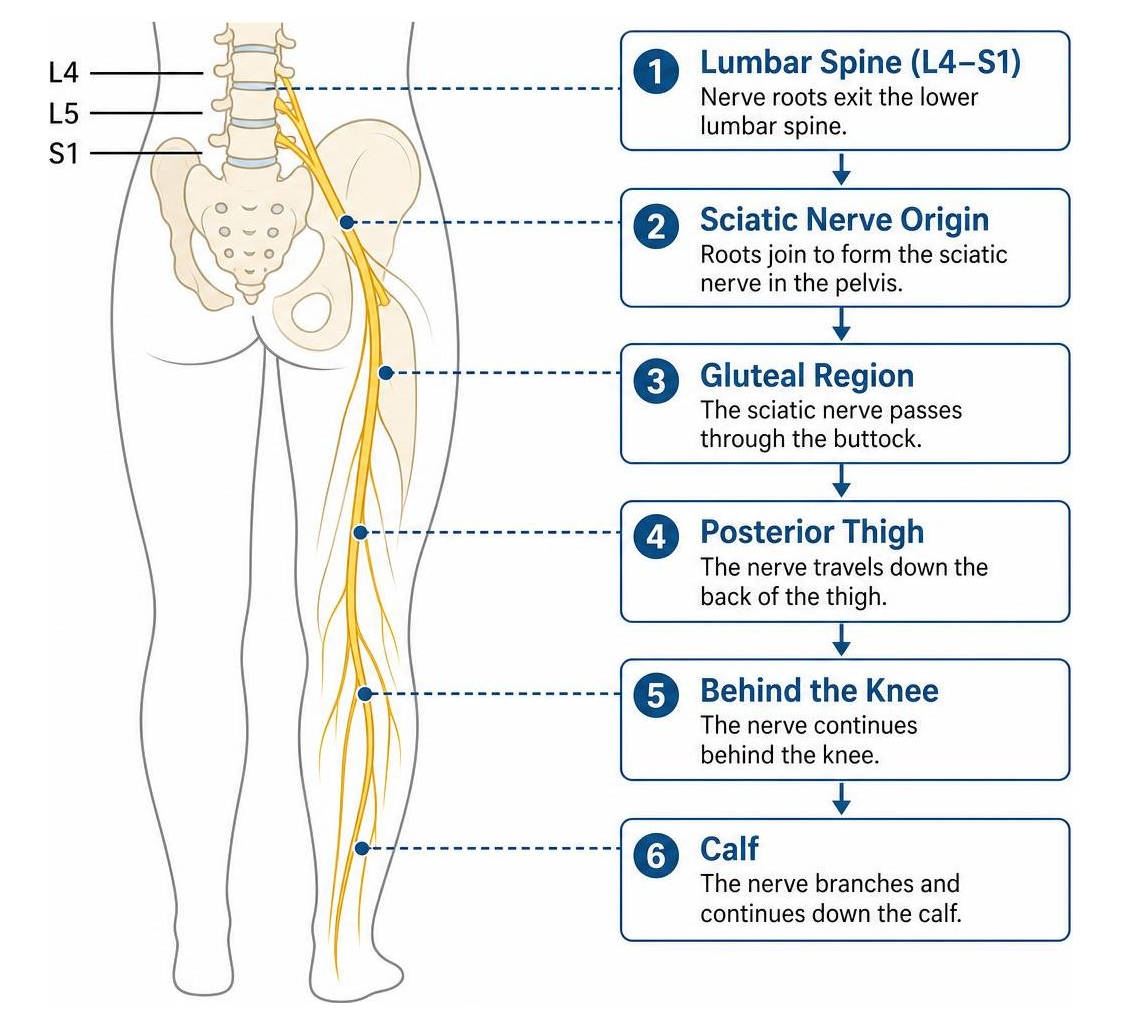
When nerve roots in the L4, L5, or S1 spinal regions face mechanical pressure, inflammation can cause a continuous, deep gluteal ache that travels into the hamstring and lower calf. Unlike a simple muscle knot, this discomfort:
- Is accompanied by paresthesias (pins and needles, numbness, or a sensation of “water running down the leg”).
- Fluctuates based on spinal posture, intensifying during prolonged sitting, forward bending, or driving.
- May lead to subtle motor deficits, such as a feeling that the foot is heavy or catching on carpet.
Addressing these symptoms early is critical. Exploring evidence-based chronic nerve pain relief and advanced neuropathic pain treatment options prevents chronic nerve remodeling and long-term dysfunction.
Muscle Fatigue and Circulatory Heavy Sensations
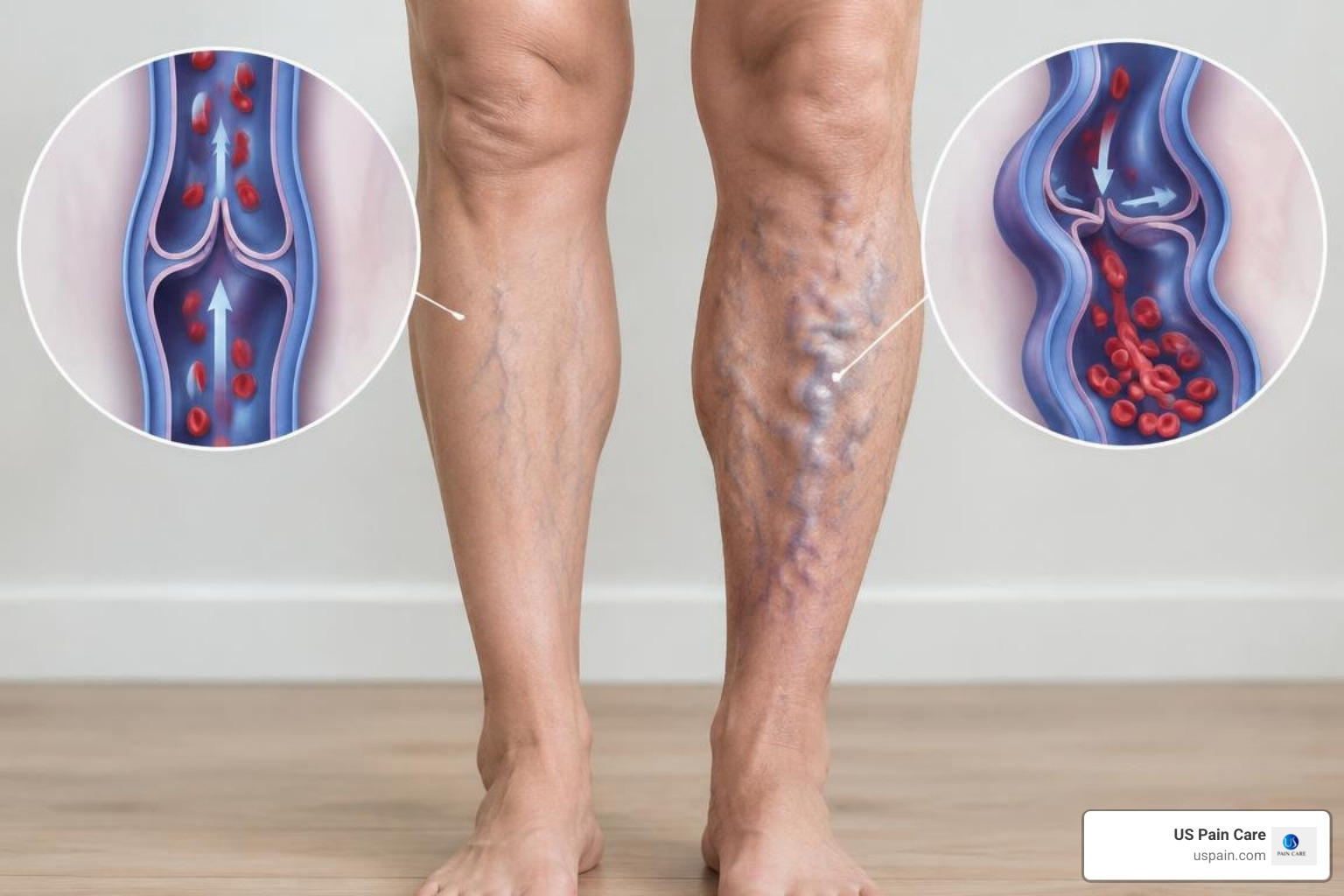
When your dull ache is driven by venous pooling rather than spinal nerves, the sensation feels profoundly different. Patients frequently report that their legs feel as though they are “filled with lead” or “carrying sandbags.”
This heavy sensation stems directly from mechanical fluid stagnation. Standing or sitting motionless for hours disables the calf muscle pump. Without regular contraction of the gastrocnemius and soleus muscles to squeeze venous blood back toward the heart, interstitial fluid accumulates in the lower third of the legs. This increases tissue pressure, stretching tiny sensory receptors and producing a deep, congested ache that builds throughout the day.
Red Flags and Warning Signs: When Leg Discomfort Requires Immediate Care
While many leg aches resolve with simple rest and activity modification, certain clinical presentations demand emergency evaluation. Understanding when to bypass home care can prevent life-threatening complications.
Blood Clots, DVT, and Infection Indicators
A Deep Vein Thrombosis (DVT) is a blood clot that develops in the deep venous system, most commonly in the calf or thigh. If a fragment of this clot breaks free, it can travel to the lungs and cause a potentially fatal Pulmonary Embolism (PE).
Seek immediate emergency medical attention if you observe:
- Unilateral Swelling: Rapid swelling localized to one calf or leg.
- Localized Heat and Erythema: A calf that feels noticeably warmer than the opposite side, accompanied by visible redness.
- Tenderness on Palpation: Sharp or severe pain when gently squeezing the deep calf muscles.
- Infection Signs (Cellulitis): Spreading redness, skin that feels tight and glossy, accompanied by systemic fever, chills, or malaise.
When a Dull Ache in Legs Signals a Medical Emergency
Certain neurological and vascular crises require surgical or interventional care within hours:
- Acute Limb Ischemia: A sudden arterial blockage that leaves the leg pale, cold to the touch, pulseless, and painful.
- Cauda Equina Syndrome: Severe compression of the cauda equina nerve roots in the lower spine, marked by bilateral leg weakness, numbness in the groin or “saddle” area, and sudden loss of bowel or bladder control.
- Acute Compartment Syndrome: A dangerous spike in pressure within a muscle compartment—often following trauma or fracture—producing severe, unyielding pain out of proportion to the injury.
Taking time for understanding what that persistent aching pain means empowers you to act decisively when subtle aches shift into acute clinical emergencies.
Diagnostic Tests and Targeted Medical Treatments
Pinpointing the precise etiology of chronic leg discomfort requires a methodical diagnostic workup. Because multiple organ systems converge in the lower extremity, accurate diagnosis prevents years of mismatched therapies.
Clinical Exams, Imaging, and Vascular Testing
During your clinical evaluation, our physicians perform specialized orthopedic, neurological, and vascular assessments:
- Duplex Doppler Ultrasound: Evaluates blood flow velocity and maps venous reflux or deep vein clots in real time.
- Ankle-Brachial Index (ABI): Compares blood pressure readings in the upper arm against the ankle to assess for peripheral arterial narrowing.
- Magnetic Resonance Imaging (MRI): Visualizes lumbar disc herniations, facet arthropathy, nerve root impingement, and soft-tissue tears.
- Electromyography (EMG) and Nerve Conduction Studies (NCS): Measures electrical conduction along motor and sensory nerves to pinpoint neuropathy or radiculopathy.
- Targeted Blood Panels: Evaluates inflammatory markers (ESR, CRP), serum electrolytes, vitamin D, vitamin B12, and glycemic control (HbA1c).
Pain Management and Minimally Invasive Therapies
At US Pain Care, we believe no patient should be forced to endure unresolved lower extremity discomfort. We provide advanced, physician-led chronic pain management that treats the root cause through a whole-person, patient-first approach.
For patients who have exhausted standard conservative measures without lasting relief, we provide cutting-edge, minimally invasive interventions tailored to your specific diagnosis:
- Targeted Epidural Injections & Nerve Blocks: Calms acute nerve root inflammation driven by lumbar disc pathology.
- Neuromodulation & Spinal Cord Stimulation (SCS): Delivers mild electrical signals to disrupt chronic neuropathic pain signaling before it reaches the brain.
- Image-Guided Musculoskeletal Injections: Restores joint biomechanics and reduces localized periarticular inflammation.
- Multidisciplinary Physical Rehabilitation: Retrains the kinetic chain, balances pelvic loading, and restores muscular endurance under direct medical supervision.
Daily Relief and Long-Term Prevention Strategies
Sustained relief requires combining advanced clinical care with sound daily habits. Integrating ergonomic principles and vascular support into your routine reduces mechanical strain on both muscles and blood vessels.
At-Home Self-Care and Movement Protocols
For mild, non-emergency leg aching resulting from everyday fatigue or venous pooling, several home-care strategies offer rapid relief:
- Active Leg Elevation: Elevate your lower legs above the level of your heart for 15 to 20 minutes at the end of the day to drain pooled venous blood.
- Graduated Compression Garments: Knee-high graduated compression socks (15–20 mmHg or 20–30 mmHg, worn under clinical guidance) support the calf muscle pump and prevent fluid accumulation during long work shifts.
- Active Calf Stretching: Gently stretch your calf and hamstring muscles for 30 seconds at a time to reduce fascial tension and prevent nocturnal cramping.
- Hydration and Electrolyte Replenishment: Drink adequate fluids and balance your daily intake of potassium and magnesium to support optimal neuromuscular firing.
- Managing Generalized Discomfort: For routine muscle tension, short-term use of oral anti-inflammatories or soothing topical balms can help relieve generalized aches and pains.
Ergonomic and Lifestyle Adjustments
Modern work environments often require prolonged, static positions that hinder healthy blood flow. Making targeted adjustments protects both your spine and your circulatory health:
- Adopt the 45-Minute Movement Rule: Avoid sitting or standing in one place for hours. Shift positions, use a sit-stand desk, or take a two-minute walking break every 45 minutes to activate the calf muscle pump.
- Choose Supportive Footwear: Wear shoes with adequate arch support and shock absorption. High heels and unsupportive flat shoes place chronic stress on calf musculature and alter pelvic alignment.
- Incorporate Low-Impact Conditioning: Swimming, stationary cycling, and brisk walking promote circulatory health and spinal stability without placing heavy impact loads on joints.
- Prioritize Vascular Wellness: Avoid tobacco products, maintain a healthy body weight, and monitor blood pressure to keep both large and small blood vessels supple and clear.
Frequently Asked Questions About Persistent Leg Aches
Can dehydration or vitamin deficiency cause constant aching legs?
Yes. Dehydration reduces total plasma volume, slowing microcirculation and causing muscle tissue to fatigue prematurely.
Furthermore, electrolyte imbalances—specifically sub-optimal levels of magnesium, potassium, or calcium—interfere with how muscles contract and relax, leading to persistent twitching, cramping, and deep aches. Deficiencies in vitamin D and vitamin B12 can also impair bone metabolism and nerve health, causing diffuse lower extremity discomfort.
Why do my legs ache more at night or after resting?
Nocturnal leg aching typically stems from one of three factors:
- Venous Stasis and Fluid Redistribution: When you lie flat, fluid that accumulated in your lower legs throughout the day shifts, altering local tissue pressure and creating a throbbing ache.
- Restless Legs Syndrome (RLS): This neurological sensorimotor disorder creates an uncomfortable crawling or aching sensation in the legs that triggers an irresistible urge to move them, occurring almost exclusively in the evening or during rest.
- Temperature and Circadian Fluctuations: Core body temperature and natural anti-inflammatory hormone levels drop during sleep, making underlying nerve irritation and joint stiffness more noticeable.
How long should I wait before seeing a doctor for leg pain?
If your leg pain follows an intense workout or a day on your feet, it should noticeably improve within 3 to 5 days with gentle rest and hydration.
However, you should schedule a comprehensive medical evaluation if your leg ache:
- Persists continuously for more than 7 to 10 days without improvement.
- Gradually worsens in severity over time.
- Is accompanied by visible varicose veins, ankle swelling, or skin color changes.
- Disturbs your ability to fall asleep or walk normal distances.
Conclusion
A persistent dull ache in your legs should never be dismissed as an inevitable consequence of aging or hard work. Your legs carry you through life, and unyielding discomfort is a clear signal that muscles, circulation, or spinal nerves require thoughtful clinical attention.
By identifying whether your symptoms stem from musculoskeletal fatigue, venous congestion, arterial insufficiency, or spinal nerve compression, you can take control of your health.
At US Pain Care, our dedicated physicians specialize in unravelling complex, unresolved symptoms through compassionate, personalized, and minimally invasive treatment plans. For more clinical insights into deciphering your discomfort, explore our comprehensive dull pain management guide and take the first step toward lasting relief and restored mobility today.