

What a Dull Ache Across the Middle Back May Mean
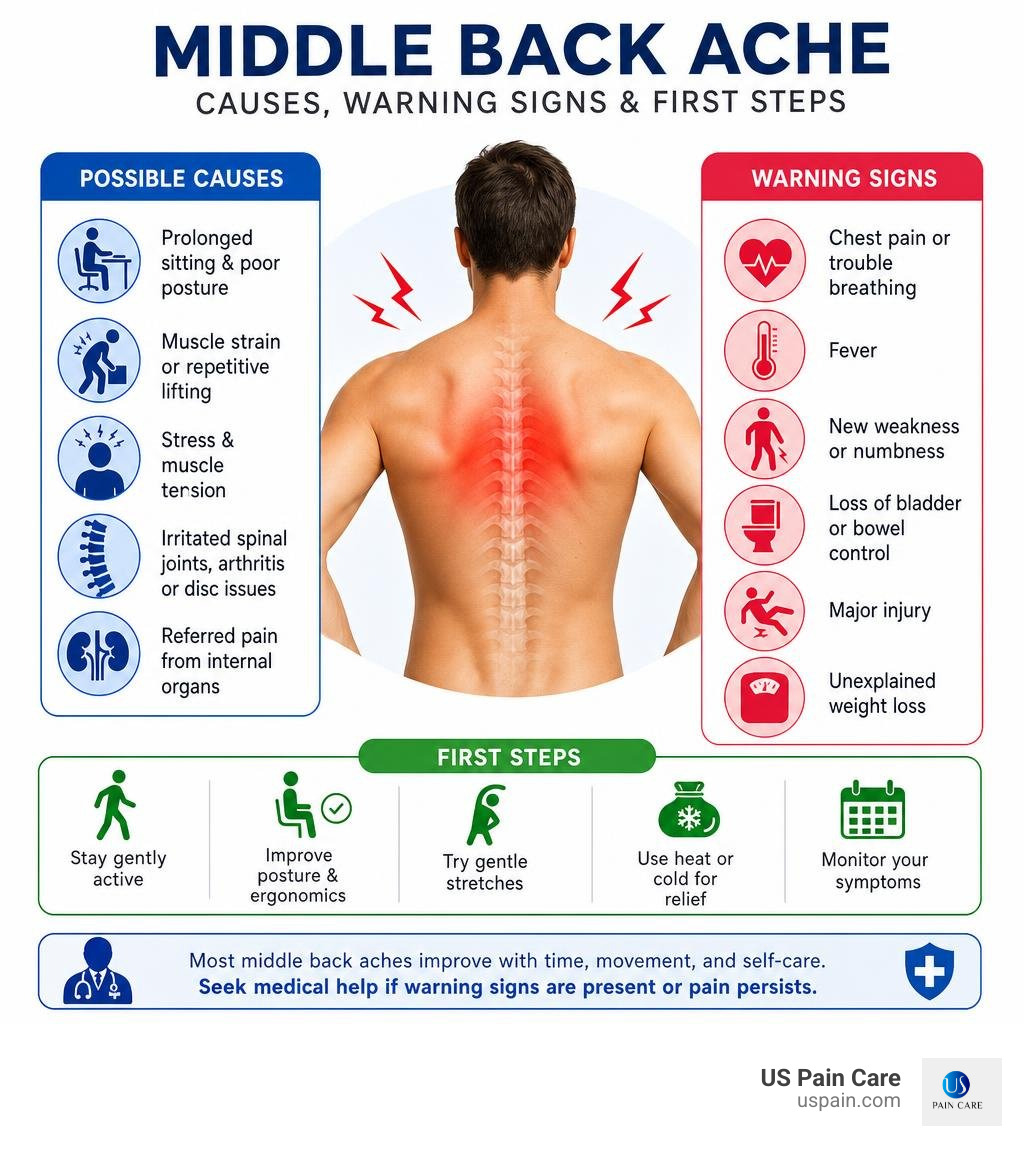
A dull ache across middle back is often caused by muscle strain, long periods of sitting, slouched posture, repetitive lifting, or stress-related muscle tension. It may also come from irritated spinal joints, arthritis, a disc problem, or pain referred from an internal organ, such as the gallbladder or kidneys.
Most mechanical aches improve with gentle movement, posture changes, and short-term home care. But get urgent medical help for back pain with chest pain, trouble breathing, fever, new weakness or numbness, loss of bladder or bowel control, major injury, or unexplained weight loss.
The middle back is the thoracic spine: 12 vertebrae joined to the ribs. It is built for stability more than motion, so tight muscles and poor movement habits can create a broad, nagging ache that feels hard to pinpoint. Stress can add to the problem by keeping the shoulders, chest, and upper-back muscles tense.
I’m Dr. Paul Lynch, a double board-certified pain management physician and anesthesiologist with 17 years of experience evaluating persistent pain conditions, including a dull ache across middle back. My approach looks beyond the painful spot to consider movement, spinal health, nerve symptoms, stress, and other medical causes that may need attention.
Understanding the Anatomy of the Thoracic Spine
To understand why your mid-spine aches, it helps to look at how this part of your body is constructed. The middle back consists of the thoracic spine, comprising 12 vertebrae labeled T1 through T12. Unlike your flexible neck (cervical spine) and your bendable lower back (lumbar spine), your thoracic spine is uniquely anchored to your rib cage.
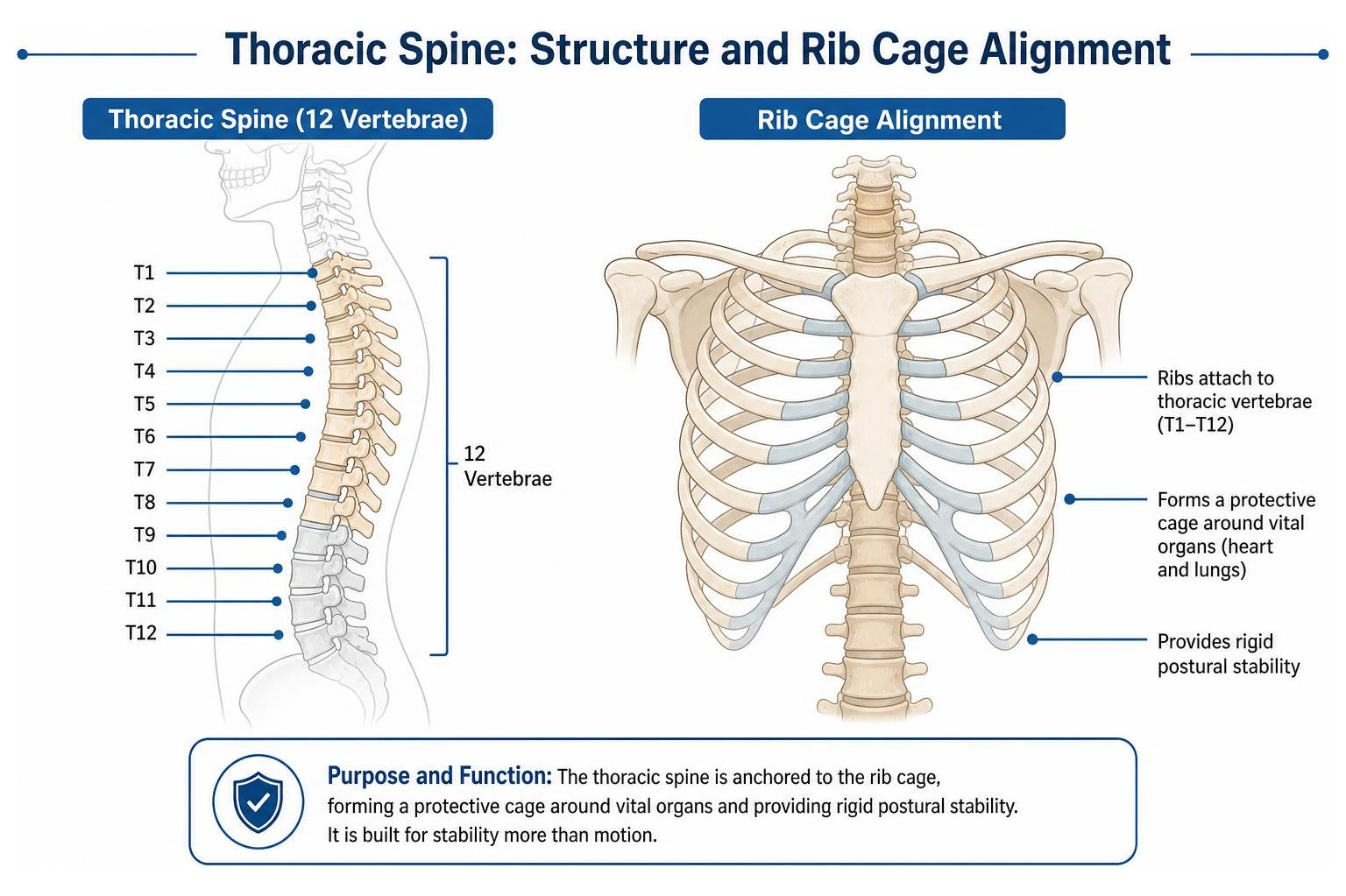
This architectural design serves an important purpose: it forms a protective cage around your vital organs, including your heart and lungs, while providing rigid postural stability. However, because these vertebrae have limited mobility, the area is especially vulnerable to biomechanical stress from axial loading and sustained posture. When you sit hunched over a laptop or slouch on a couch, the muscles, ligaments, and facet joints of the thoracic spine bear continuous mechanical tension. Over time, this constant loading leads to fatigue and inflammation in the surrounding tissues.
Common Causes of a Dull Ache Across Middle Back
A persistent mid-back ache rarely appears out of nowhere. It generally stems from mechanical overload, degenerative spinal changes, or referred visceral issues.
| Pain Category | Common Causes | Typical Sensation | Key Identifying Features |
|---|---|---|---|
| Musculoskeletal Strain | Postural fatigue, muscle knots, overstretching | Diffuse, sore, heavy ache | Worsens with prolonged sitting; eases with gentle movement |
| Degenerative Spinal Issues | Thoracic osteoarthritis, disc issues, bone spurs | Deep, localized stiffness or grinding | Worse in the morning; aggravated by spinal extension or twisting |
| Visceral Referred Pain | Gallbladder conditions, kidney stones, peptic ulcers | Deep, gnawing, non-mechanical pressure | Unrelated to spinal movement; may flare after meals or with urination |
Musculoskeletal Strain and Postural Fatigue
In modern daily life, desk work and screen time are prime culprits behind mid-back discomfort. Prolonged sitting frequently leads to upper crossed syndrome, a postural imbalance characterized by forward head posture, rounded shoulders, and a hunched thoracic spine.
When you slouch, the chest muscles (pectorals) become tight and short, while the opposing muscles across your upper and middle back become overstretched and weak. This muscular imbalance creates myofascial trigger points—painful, hyperirritable knots in the muscle fibers that produce a continuous, broad ache.
How Muscle Strain Triggers a Dull Ache Across Middle Back
When the rhomboids, middle trapezius, and erector spinae muscles work overtime to keep your torso upright against poor posture, they develop micro-tears and chronic spasms. Sustained contraction restricts local blood flow, creating a state of localized tissue ischemia.
Without adequate oxygen and nutrient delivery, metabolic waste products build up in the muscle beds, irritating nerve endings and registering in the brain as a persistent, heavy, and exhausting ache across the center of your back.
Degenerative Changes, Herniated Discs, and Arthritis
While less common than in the lower back, structural spinal changes do occur in the thoracic spine:
- Thoracic Osteoarthritis: Cartilage wearing down within the facet joints can produce joint inflammation, stiffness, and localized bone spurs.
- Thoracic Herniated Discs: Discs acting as cushions between vertebrae can bulge or herniate from trauma or age-related degeneration, sometimes pressing on nearby spinal nerves and sending a band-like ache around the ribs.
- Vertebral Compression Fractures: Often driven by osteoporosis or low bone density, tiny hairline fractures in the vertebral body can collapse under minimal stress, leading to sharp initial pain followed by a relentless, deep ache.
Visceral Referred Pain from Internal Organs
The nerves supplying thoracic spinal structures share pathways in the spinal cord with nerves from your internal organs. When an organ is inflamed or irritated, the brain can misinterpret those signals as coming from the middle back:
- Gallbladder Issues: Gallstones or cholecystitis typically refer pain to the right middle back or beneath the right shoulder blade, often spiking after a high-fat meal.
- Kidney Stones or Infections: Renal problems commonly manifest as flank pain that radiates across the lower-to-middle back, frequently accompanied by urinary changes.
- Peptic Ulcers: A deep, gnawing mid-back ache that fluctuates based on whether your stomach is empty or full can point toward gastrointestinal irritation.
Distinguishing Muscular Discomfort from Serious Spinal Pathology
Most mid-back aches are mechanical and respond well to conservative care. However, distinguishing between a simple postural ache and a serious underlying condition is essential for protecting your health.
Muscular aches typically fluctuate with movement, feel tender when pressed, and improve when you change positions. Conversely, pain stemming from deeper systemic or structural issues tends to be constant, unrelenting at night, and unresponsive to posture adjustments.
Red Flag Symptoms Requiring Immediate Medical Attention
Seek urgent medical evaluation if your middle back discomfort is accompanied by any of the following warning signs:
- Progressive numbness, tingling, or weakness in your legs, chest, or abdomen
- Sudden loss of bowel or bladder control (signs of severe spinal cord compression)
- Unexplained fever, chills, or night sweats
- Rapid, unintentional weight loss
- Back pain resulting from sudden physical trauma, such as a motor vehicle collision or a high fall
- Shortness of breath, dizziness, or pain that radiates directly into your chest
How Physicians Diagnose Thoracic Spine Conditions
When you consult a physician for persistent mid-back pain, the evaluation begins with a thorough physical and neurological examination. We assess your range of motion, test reflexes, check sensory response, and palpate for localized spinal or muscular tenderness.
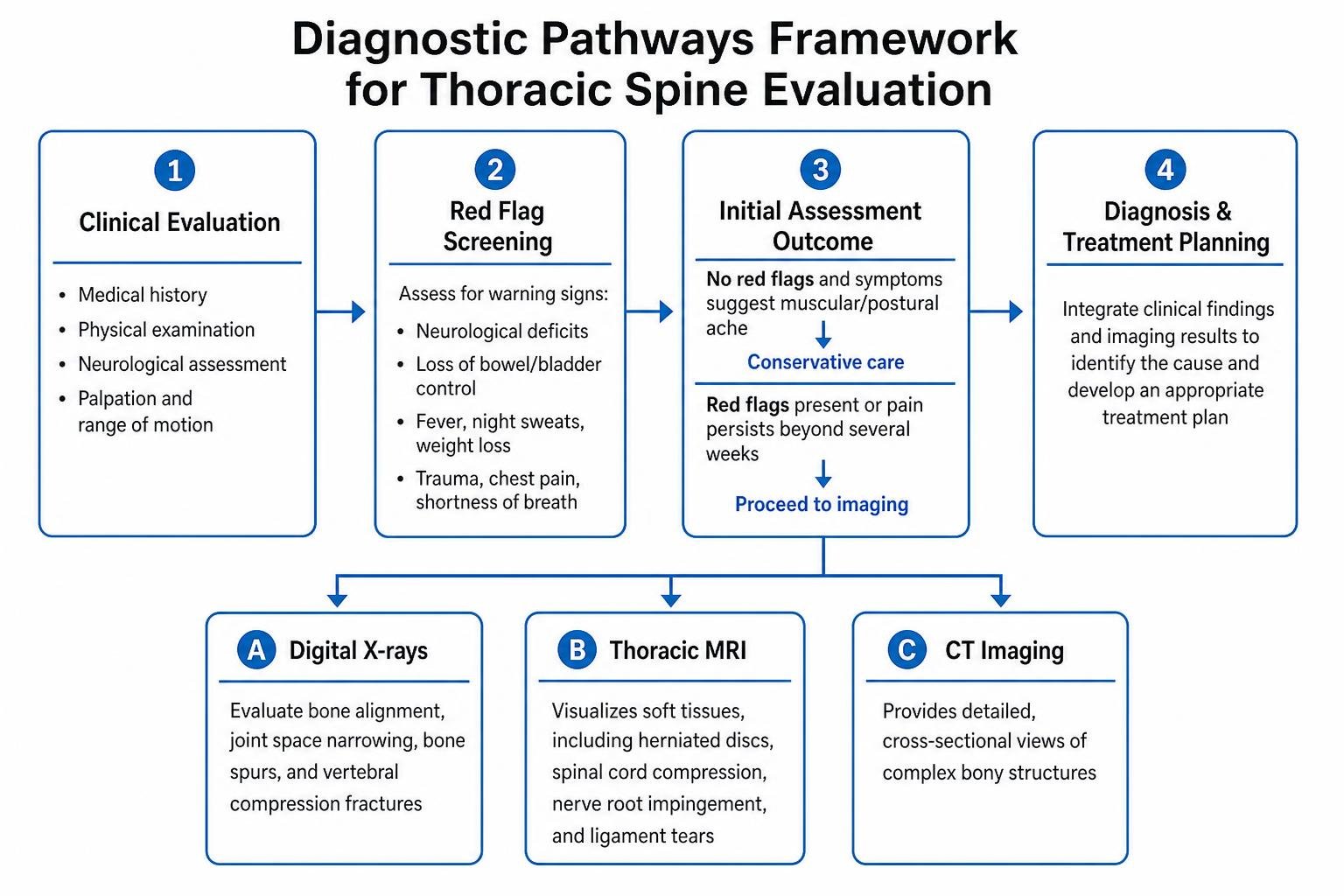
If red flags are present or conservative treatment fails to provide relief after several weeks, advanced diagnostics help identify the root cause:
- Digital X-rays: Highlight bone alignment, joint space narrowing, bone spurs, and vertebral compression fractures.
- Thoracic MRI: Visualizes soft tissues, including herniated discs, spinal cord compression, nerve root impingement, and subtle ligament tears.
- CT Imaging: Offers detailed, cross-sectional views of complex bony structures.
- Nerve Conduction Studies (EMG/NCS): Evaluate electrical activity in nerves and muscles to pinpoint neurological dysfunction.
At-Home Strategies, Stretches, and Ergonomic Relief
For standard mechanical soreness, gentle, active recovery is far more effective than staying in bed. Prolonged bed rest allows spinal joints to stiffen and supporting muscles to decondition, often prolonging your recovery.
Exercises to Relieve a Dull Ache Across Middle Back
Incorporate these low-impact movements into your daily routine to mobilize the thoracic spine and reduce muscle guarding:
- Cat-Cow Stretch: On your hands and knees, slowly alternate between arching your back toward the ceiling and letting your belly sink while lifting your chest. Perform 10 controlled repetitions.
- Thoracic Extension over a Foam Roller: Place a foam roller horizontally across your mid-back while supporting your head with your hands. Gently extend backward over the roller, taking deep breaths.
- Open-Book Rotations: Lie on your side with your knees bent at 90 degrees. Extend both arms forward, then slowly rotate your top arm up and across your body toward the floor behind you, opening your chest. Hold for 3 to 5 seconds; repeat 8 to 10 times per side.
- Scapular Retractions: Sit tall and gently squeeze your shoulder blades together as if holding a pencil between them. Hold for 5 seconds, release, and repeat 10 to 12 times.
Heat, Cold, and Daily Postural Adjustments
Balancing temperature therapy and ergonomics can help calm irritated tissues throughout your workday:
- Cold Therapy: Apply an ice pack wrapped in a thin towel for 15 to 20 minutes during the first 48 hours following an acute muscle pull to diminish localized inflammation.
- Heat Therapy: Use a warm heating pad or take a hot shower to relax chronic, tight muscle knots and boost blood circulation.
- Workstation Ergonomics: Adjust your computer monitor so the top third of the screen is at eye level. Keep your elbows at 90 degrees and support your lower back to maintain a neutral spinal curve.
- Supportive Sleep Posture: If sleeping on your side, place a pillow between your knees to keep your hips and spine aligned. Back sleepers can place a small pillow beneath their knees to reduce tension on the spine.
Advanced Medical and Interventional Pain Treatments
When a mid-back ache persists beyond a few weeks and limits your ability to work or stay active, conservative home remedies may not be enough. Our physician-led team focuses on whole-person, patient-first care, combining comprehensive rehabilitation with cutting-edge interventional options:
- Targeted Physical Therapy: Customized strength and mobility programs designed to correct postural imbalances, stabilize core musculature, and decompress the thoracic spine.
- Trigger Point Injections: Precise injections of local anesthetics (with or without anti-inflammatory medications) directly into stubborn myofascial knots to break the chronic muscle spasm cycle.
- Thoracic Facet Joint Injections: Targeted therapeutic injections placed directly into irritated spinal joints to calm local inflammation and confirm the exact source of arthritic discomfort.
- Thoracic Epidural Steroid Injections: Minimally invasive procedures delivering targeted corticosteroids into the epidural space to alleviate nerve inflammation caused by disc herniations or spinal stenosis.
- Radiofrequency Ablation (RFA): A specialized procedure that uses gentle thermal energy to quiet the sensory nerves supplying painful facet joints, offering long-lasting relief for chronic thoracic arthritis.
Frequently Asked Questions About Middle Back Pain
How long can a mid-back ache last before seeing a doctor?
A minor postural strain often begins improving within 3 to 5 days of rest, stretching, and ergonomics. If your mid-back ache persists beyond one to two weeks, steadily worsens, or interferes with your sleep and everyday tasks, schedule a medical evaluation to identify the underlying cause and prevent chronic patterns from forming.
Can kidney stones or gallbladder problems cause mid-back pain?
Yes. Visceral organs share sensory nerve pathways with the thoracic spine. Gallbladder inflammation frequently causes referred pain near the right mid-back or shoulder blade, especially after eating fatty meals. Kidney stones or infections typically cause sharp or aching discomfort in the flank and mid-to-lower back, often accompanied by fever, nausea, or changes in urination.
Does stress directly contribute to mid-spine tension?
Stress triggers a systemic “fight-or-flight” response, causing you to unconsciously elevate your shoulders, tighten your neck and upper-back muscles, and take shallow chest breaths. Over time, this chronic muscle guarding reduces blood flow to thoracic tissues, creating a cycle of muscular fatigue, tension, and persistent mid-spine soreness.
Conclusion
A persistent mid-back ache does not have to dictate your daily routine. By identifying the root cause of your discomfort—whether it stems from posture, joint inflammation, muscular strain, or internal triggers—you can take practical, lasting steps toward recovery.
If you are struggling to make sense of your symptoms, understanding your discomfort with our sharp vs dull pain guide is a great first step toward finding clarity. When home care and postural changes aren’t enough, reaching out to a pain management physician can help you access an accurate diagnosis and an individualized treatment plan to restore your comfort and mobility.