

What Persistent Aching Pain Can Mean
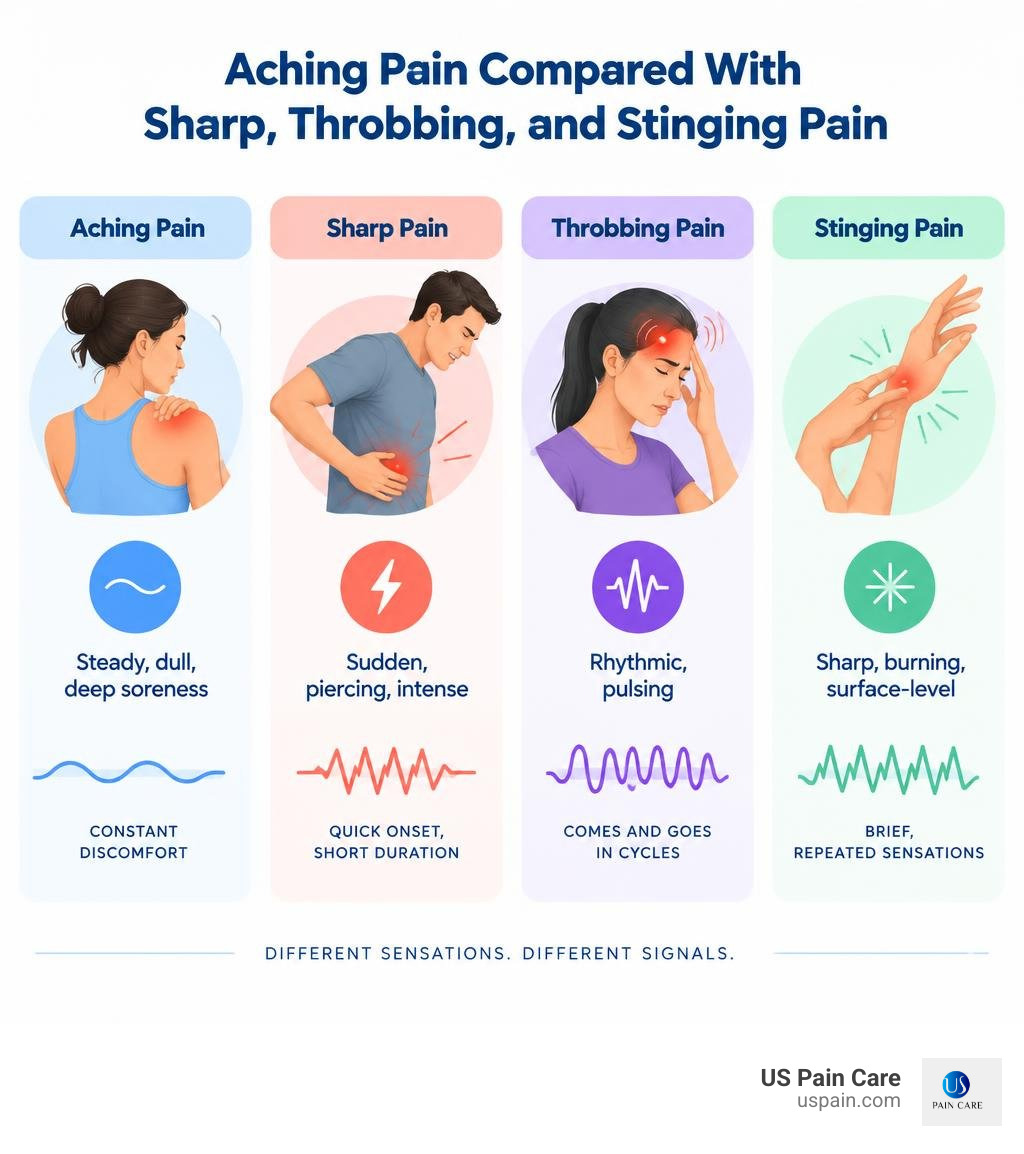
Aching pain is a steady, dull, unpleasant discomfort that often feels deep, sore, or hard to pinpoint. It is usually less sudden or intense than sharp pain, less rhythmic than throbbing pain, and less surface-level than stinging or burning. The aching pain meaning can range from normal muscle soreness after activity to a sign of an ongoing health issue when it lasts, spreads, or affects daily life.
Aches can develop from muscle overuse, prolonged sitting, stress-related tension, poor sleep, dehydration or electrolyte imbalance, medication side effects, and conditions such as fibromyalgia. Notice where the pain is, what brings it on, how long it lasts, and whether it comes with weakness, swelling, fever, numbness, or other new symptoms.
If an ache is severe, follows an injury, worsens quickly, or persists for weeks, a medical evaluation can help identify the cause and guide treatment.
I’m Dr. Paul Lynch, a double board-certified pain management physician and anesthesiologist with 17 years of experience treating chronic and complex pain. I help patients understand the aching pain meaning in the context of their symptoms, health history, and goals so care can address both pain and function.
The Clinical Aching Pain Meaning: Characteristics and Sensations
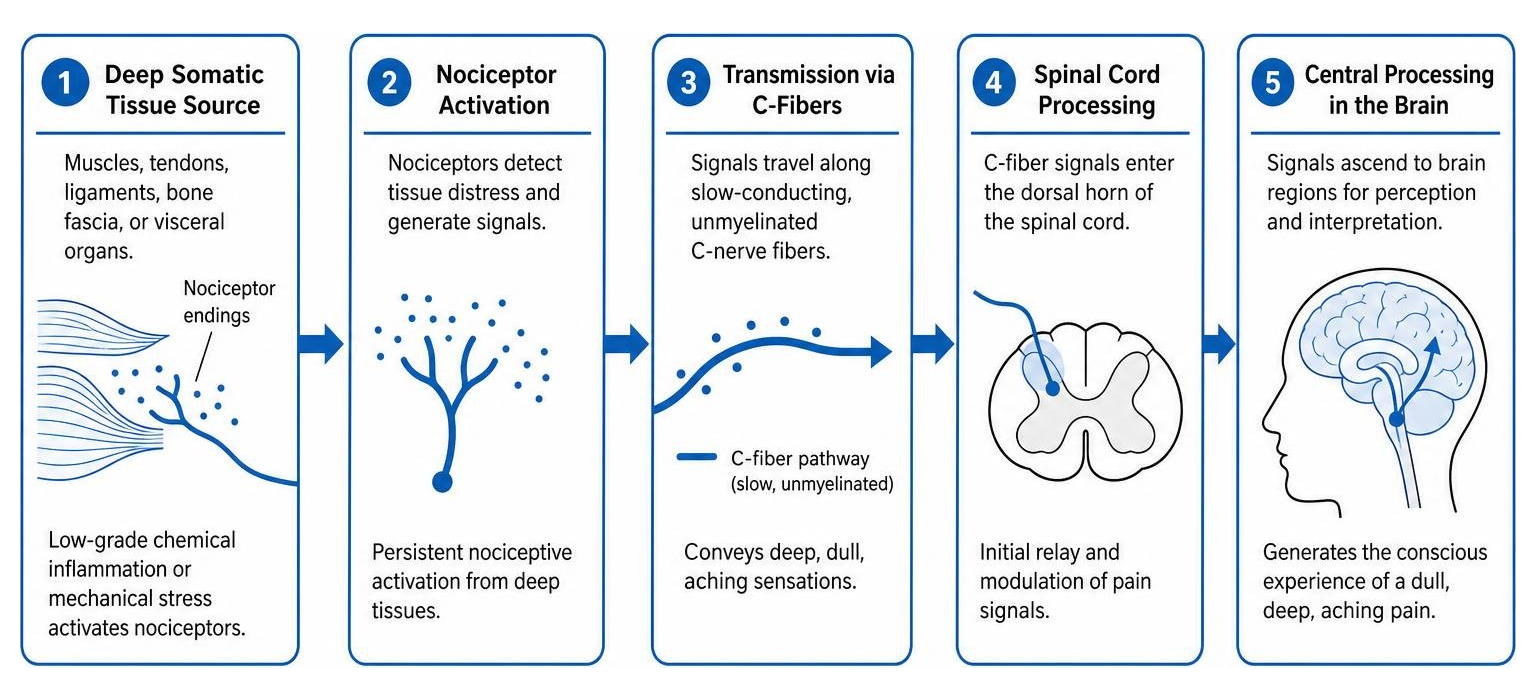
When physicians look at the clinical picture of pain, the precise sensations you experience tell a vital story. From a physiological standpoint, an ache is typically a continuous, low-to-moderate intensity discomfort transmitted primarily through slow-conducting, unmyelinated C-nerve fibers. Unlike rapid, myelinated A-delta fibers that signal immediate danger with a piercing prick, C-fibers communicate deep tissue distress, leading to the sensation we recognize as a dull, heavy soreness.
To accurately define pain, clinical practitioners classify sensations based on the underlying neurological pathways and anatomical structures involved. While general dictionaries such as the Cambridge Dictionary definition of ache describe an ache as a continuous, unpleasant, but not very severe discomfort, medical evaluations explore deeper somatic and visceral signaling mechanisms.
Aching sensations typically stem from:
- Deep somatic tissue: Muscles, tendons, ligaments, and bone fascia.
- Visceral organs: Hollow organs or abdominal structures, which frequently refer vague, diffuse aches to external body regions.
- Persistent nociceptive activation: Low-grade chemical inflammation irritating local nerve endings without structural severance.
Everyday Language vs. Medical Aching Pain Meaning
In daily conversation, we frequently use “ache” as a catch-all term for general physical fatigue or even emotional distress. As linguistic references like the WordReference definition of aching illustrate, the term can describe everything from post-marathon calf soreness to an emotional longing for home.
However, in a clinical setting, we evaluate aches through objective parameters: duration, localization, mechanical triggers, and secondary neurological signs. When a patient says, “My entire back just aches constantly,” we look beyond general fatigue to investigate muscular imbalances, facet joint degeneration, or systemic inflammatory triggers.
Differentiating Dull Aches from Sharp, Throbbing, and Stinging Sensations
Describing your discomfort accurately helps your clinical team form a precise differential diagnosis. Pain characteristics generally break down into four distinct categories:
| Pain Descriptor | Typical Sensation | Primary Nerve Fiber / Mechanism | Common Clinical Examples |
|---|---|---|---|
| Aching | Deep, dull, diffuse, steady soreness | C-fibers; deep somatic and visceral nociception | Muscle fatigue, myofascial pain, osteoarthritis |
| Sharp | Acute, piercing, stabbing, localized | A-delta fibers; rapid somatic signaling | Acute ligament tears, bone fractures, herniated discs |
| Throbbing | Rhythmic, pulsating, pounding | Vascular fluctuations and localized inflammation | Migraines, acute dental infections, throbbing contusions |
| Stinging / Burning | Pricking, burning, electric, surface-level | Superficial cutaneous fibers, neuropathic damage | Peripheral neuropathy, shingles (post-herpetic neuralgia), chemical burns |
When patients need help distinguishing sharp vs dull pain, we examine whether the pain is localized to a single point or spread out diffusely. Aches are notoriously diffuse, making them harder to pinpoint with a single finger.
Common Medical and Physiological Causes of Aching Pain
Persistent aches rarely appear in a vacuum. Understanding common aches and pains requires examining the physiological balance between muscle exertion, cellular recovery, and systemic biochemistry.
- Repetitive Overuse and Microtrauma: Engaging in repetitive motions or unaccustomed physical labor causes microscopic tears in muscle fibers, triggering delayed onset muscle soreness (DOMS). While normal DOMS peaks at 24 to 48 hours and fades, ongoing repetitive strain without adequate recovery leads to chronic myofascial trigger points.
- Postural Strain: Prolonged static sitting creates sustained isometric contractions in the postural muscles of the neck, shoulders, and lumbar spine. This reduces capillary blood supply, producing localized ischemic aching.
- Electrolyte Imbalances: Muscle cells rely on a delicate ratio of potassium, calcium, and magnesium to regulate contraction and relaxation. A deficiency in magnesium or potassium prevents muscle fibers from relaxing fully, resulting in sustained cramping and pervasive aches. Even overhydration without adequate electrolytes can dilute serum sodium, causing systemic muscle soreness.
- Prescription Medications: A variety of standard medications list muscle and joint discomfort as known side effects. For example, research demonstrates that an average of 14 percent of women taking estrogen medications experience muscle and joint pain. Similarly, approximately six percent of individuals taking anti-seizure medications develop persistent muscle pain. Statin medications used for cholesterol management are also widely recognized for inducing statin-associated muscle symptoms (SAMS).
Systemic Conditions: Fibromyalgia, Tension, and Autoimmune Disorders
When aching pain becomes widespread and persistent, systemic disorders are often the primary cause:
- Fibromyalgia: Characterized by central sensitization, a state where the central nervous system amplifies sensory input, turning normal touch or mild discomfort into widespread aching. Patients frequently benefit from structured pain management for fibromyalgia to reset heightened nervous system pathways.
- Chronic Stress and Vasoconstriction: Persistent mental stress activates the sympathetic nervous system, releasing cortisol and adrenaline. This response constricts peripheral blood vessels, diminishing blood flow and oxygen delivery to large postural muscle groups.
- Autoimmune and Rheumatic Diseases: Conditions like rheumatoid arthritis, lupus, and polymyalgia rheumatica involve immune-mediated inflammation attacking synovial linings and soft tissues, requiring comprehensive pain management for autoimmune disease.
Acute vs. Chronic Aches: Duration and Progression
The timeline of an ache dictates how it is evaluated and treated. For a thorough exploration of pain timelines, our chronic pain clinical guide outlines the standard medical benchmarks:
- Acute Aching Pain: Lasts from a few days to under three months. It typically represents normal tissue healing in response to physical injury, strain, or temporary illness.
- Chronic Aching Pain: Persists beyond three months, past the expected window of normal tissue repair. In chronic cases, the underlying issue is often no longer an active structural injury, but maladaptive neuroplasticity within the central nervous system. This state is central to understanding chronic pain syndrome, where the nervous system continues to transmit danger signals long after original tissue repair has finished.
Diagnosis and When to Seek Medical Attention
While mild aches after exercise or a busy workweek are normal, persistent or worsening discomfort requires clinical evaluation.
Seek prompt medical care if you experience any of the following “red-flag” symptoms alongside an ache:
- Sudden, progressive muscle weakness or loss of coordination
- Unexplained numbness, tingling, or “pins and needles” radiating down the arms or legs
- High fever, chills, or unexplained weight loss
- Visible joint warmth, severe swelling, or erythema (redness)
- Ache accompanied by bowel or bladder dysfunction
- Pain that awakens you consistently from a deep sleep and is unrelieved by rest
Clinical Nuances: Aching Pain Meaning in Differential Diagnosis
During an evaluation, our physicians employ a thorough, multimodal diagnostic approach:
- Detailed Pain History: Reviewing the onset, duration, relieving/aggravating factors, and prior treatments. We encourage patients to keep a structured pain journal to track daily patterns.
- Comprehensive Blood Work: Evaluating complete blood counts (CBC), inflammatory markers (ESR, hs-CRP), electrolyte levels (magnesium, potassium, calcium), and autoimmune antibody panels (ANA, RF).
- Advanced Diagnostic Imaging: Utilizing high-resolution MRI, CT scans, or musculoskeletal ultrasound to visualize soft tissue tears, nerve impingement, or joint degeneration.
- Electromyography and Nerve Conduction Studies (EMG/NCS): Assessing nerve health and electrical conduction within aching muscle groups.
Our complete pain management overview provides an in-depth look at how comprehensive diagnostic evaluations help build targeted recovery plans, while our chronic pain patient education resources offer further guidance on navigating diagnosis.
Comprehensive Treatment Options and Relief Strategies
Managing persistent aching pain requires a comprehensive, whole-person approach rather than a single quick fix. Whether looking up a general definition in the Oxford Learner’s Dictionary definition of ache or working through clinical rehabilitation, relief comes from combining home strategies, physical restoration, and targeted interventional care.
Lifestyle Adjustments and Home Remedies
Foundational lifestyle strategies provide the baseline for tissue recovery and inflammation reduction:
- Thermotherapy and Cryotherapy: Applying moist heat promotes localized blood circulation and relaxes tense muscle knots, whereas cold therapy reduces acute inflammation and numbs sharp underlying flares.
- Targeted Hydration and Electrolyte Support: Ensuring adequate daily water intake paired with bioavailable magnesium, potassium, and calcium helps maintain normal cellular muscle function.
- Sleep Hygiene: Non-REM deep sleep is essential for muscle restoration and central nervous system down-regulation. Practicing consistent sleep routines reduces systemic pain sensitivity.
- Mindfulness and Stress Reduction: Incorporating 10 to 30 minutes of daily mindfulness, progressive muscle relaxation, or guided breathwork helps counter sympathetic vasoconstriction, restoring healthy blood flow to chronically tense muscles.
- Gentle Movement: Low-impact activities such as walking, aquatic therapy, and restorative stretching improve blood flow and joint mobility without overstressing recovering tissues. For additional methods, review our effective chronic pain coping strategies.
Advanced Interventional Therapies and Specialist Care
When conservative lifestyle modifications are not enough to resolve persistent, debilitating aches, specialized interventional medicine can break the pain cycle:
- Trigger Point Injections: Targeted administration of local anesthetics (with or without anti-inflammatory medications) directly into hyperirritable myofascial knots to release chronic muscle contraction.
- Peripheral Nerve Blocks and Joint Injections: Fluoroscopic- or ultrasound-guided injections delivering targeted relief to inflamed facet joints, sacroiliac joints, or compressed peripheral nerves.
- Neuromodulation Therapies: Advanced technologies, such as spinal cord stimulation (SCS) or peripheral nerve stimulation (PNS), that alter pain signaling pathways before they reach the brain.
- Physical Rehabilitation: Targeted physical therapy designed to correct biomechanical imbalances, strengthen stabilizing muscle groups, and prevent compensatory strain patterns.
Patients can explore our guide to evaluating chronic pain treatment options or read about our specialized chronic pain management services to learn how personalized clinical care plans are structured.
Frequently Asked Questions About Aching Pain
What causes widespread aching without recent physical exercise?
Widespread aching that occurs in the absence of exercise is commonly linked to systemic inflammation, acute viral infections, systemic electrolyte deficits (such as low magnesium or potassium), poor sleep quality, or underlying conditions like fibromyalgia and autoimmune disorders. Sustained emotional stress can also cause chronic vasoconstriction, leading to generalized muscle soreness.
Can prescription medications trigger persistent aching pain?
Yes. Several classes of medications can induce muscle and joint aching as a side effect. Clinical research shows that an average of 14 percent of women taking estrogen medications report muscle and joint discomfort, while roughly six percent of individuals taking anti-seizure drugs experience muscle pain. Cholesterol-lowering statins, certain antibiotics, and specific blood pressure medications can also trigger myalgia. Always consult your prescribing physician before altering your medication regimen.
How can I tell if my aching pain is a sign of a serious condition?
An ache may signal a more serious underlying issue if it is accompanied by progressive muscle weakness, unexplained weight loss, persistent fever, localized swelling and heat in the joints, or numbness and tingling that radiates through your limbs. If an ache appears suddenly following trauma or worsens progressively over several weeks without relief, seek a professional medical evaluation.
Conclusion
A persistent ache is your body’s communication system signaling that something in your muscles, joints, or nervous system needs attention. While everyday soreness from physical activity is a normal part of life, ongoing, diffuse, or progressive aching should never be ignored or accepted as unavoidable.
At US Pain Care, our double board-certified physicians specialize in identifying the root causes of complex, persistent pain. By combining cutting-edge diagnostic tools with personalized, minimally invasive interventional treatments and whole-person wellness strategies, we help you regain daily function and reclaim your quality of life.
If persistent discomfort is disrupting your daily routine, take the first step toward lasting relief: read our comprehensive guide to understanding dull pain or connect with our clinical team today to schedule your comprehensive evaluation.