

{“@context”: “https://schema.org”, “@graph”: [{“@type”: “Article”, “headline”: “Interventional Pain Management | US Pain Care”, “description”: “Explore how US Pain Care’s interventional pain management center offers relief beyond medication with minimally invasive techniques.”, “author”: {“@type”: “Person”, “name”: “lynchmd@gmail.com”}, “publisher”: {“@type”: “Organization”, “name”: “US Pain Care”, “logo”: {“@type”: “ImageObject”, “url”: “https://firebasestorage.googleapis.com/v0/b/ai-templates.appspot.com/o/bot%2FalTvOGuAQFWrD2hChGTd%2Flogo%2FUS-PAIN-MAIN-LOGO-FINAL.png?alt=media&token=6a86d9b0-0182-4ade-97a8-b742dd4b6a77”}}, “datePublished”: “2025-05-28T18:12:59.413413”, “dateModified”: “2025-05-28T18:12:59.413413”, “mainEntityOfPage”: {“@type”: “WebPage”, “@id”: “https://uspain.com/interventional-pain-management-center/”}}, {“@type”: “FAQPage”, “mainEntity”: [{“@type”: “Question”, “name”: “What is an interventional pain management center?”, “acceptedAnswer”: {“@type”: “Answer”, “text”: “An interventional pain management center is a specialized medical facility where doctors use minimally invasive techniques to diagnose and treat chronic pain conditions without heavy reliance on prescription medications, focusing on addressing the source of pain.”}}, {“@type”: “Question”, “name”: “What types of conditions do interventional pain management centers treat?”, “acceptedAnswer”: {“@type”: “Answer”, “text”: “Interventional pain management centers treat conditions such as back pain, neck pain, joint pain, nerve pain, and complex regional pain syndrome.”}}, {“@type”: “Question”, “name”: “What are common treatments offered at interventional pain management centers?”, “acceptedAnswer”: {“@type”: “Answer”, “text”: “Common treatments include nerve blocks, injections, radiofrequency ablation, and spinal cord stimulation.”}}, {“@type”: “Question”, “name”: “How does interventional pain management differ from traditional pain management?”, “acceptedAnswer”: {“@type”: “Answer”, “text”: “Unlike traditional pain management that often relies on prescription medications, interventional pain management uses minimally invasive procedures to interrupt pain signals at their source, aiming to reduce pain and improve quality of life without heavy reliance on medications.”}}, {“@type”: “Question”, “name”: “What can patients expect when visiting an interventional pain management center?”, “acceptedAnswer”: {“@type”: “Answer”, “text”: “Patients can expect a focus on diagnosing and treating the actual source of their pain through precise, image-guided techniques, in a setting designed to maximize functionality and quality of life.”}}]}]}
Finding Relief Beyond Medication: The Interventional Pain Management Approach
An interventional pain management center is a specialized medical facility where doctors use minimally invasive techniques to diagnose and treat chronic pain conditions without heavy reliance on prescription medications. These centers offer targeted procedures that address the source of pain rather than just masking symptoms.
| What Is an Interventional Pain Management Center? |
|---|
| • Purpose: Diagnoses and treats pain using minimally invasive procedures |
| • Specialists: Board-certified pain physicians, often anesthesiologists |
| • Common Treatments: Nerve blocks, injections, radiofrequency ablation, spinal cord stimulation |
| • Conditions Treated: Back pain, neck pain, joint pain, nerve pain, complex regional pain syndrome |
| • Approach: Multidisciplinary, whole-person care focusing on function |
Chronic pain affects nearly 4 in 10 adults globally and can turn anyone’s world upside down. When conventional treatments fail to provide relief, many people find themselves trapped in cycles of increasing medication dosages with diminishing returns. An interventional pain management center offers a different approach—one that targets the specific nerves, joints, or tissues causing your pain using precise, image-guided techniques.
“Our mission is to maximize functionality, quality of life, and reduce pain,” is a common philosophy among interventional pain specialists who understand that living with persistent pain impacts every aspect of your physical and mental health.
Unlike traditional pain management that often relies heavily on prescription medications, interventional techniques aim to interrupt pain signals at their source. These procedures can range from simple injections that take minutes to perform to more advanced options like spinal cord stimulation for long-term relief.
The goal isn’t just to reduce pain—it’s to help you return to the activities that matter most in your life.
I’m Dr. Paul Lynch, a double board-certified pain management physician with 17 years of experience at interventional pain management centers, specializing in advanced procedures including spinal cord stimulation and minimally invasive spine treatments.
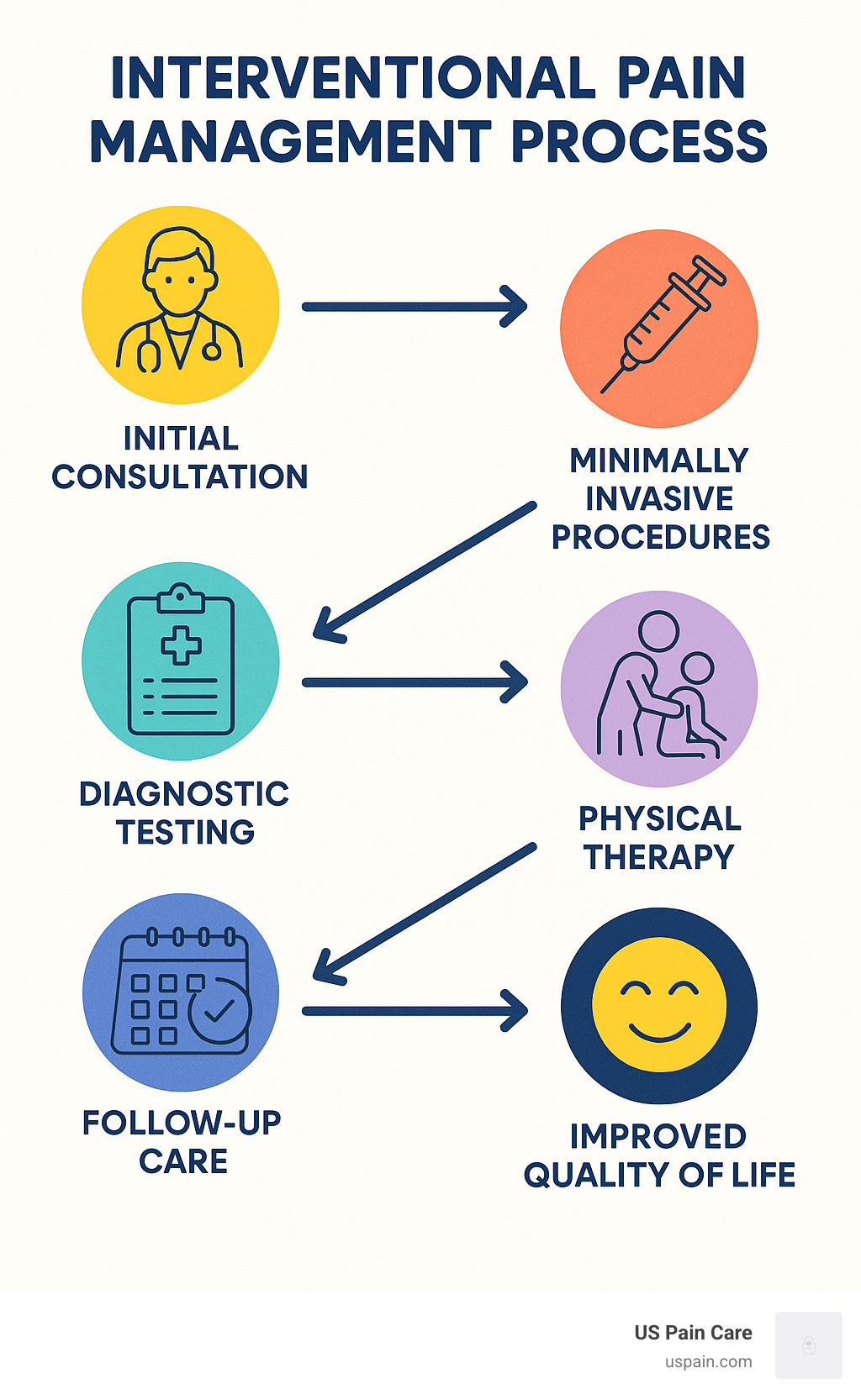
What to Expect at an Interventional Pain Management Center
Walking into an interventional pain management center feels different from a typical doctor’s visit. These specialized centers are designed with one goal in mind: finding the actual source of your pain, not just covering up symptoms.
At US Pain Care, we believe effective pain relief starts with understanding your unique pain story. Our centers feature advanced imaging technology like fluoroscopy (real-time X-ray), ultrasound, and sometimes on-site MRI capabilities. These tools help us pinpoint exactly what’s causing your discomfort with remarkable precision.

What makes an interventional pain management center truly special is our team approach. When you become our patient, you gain access to a group of specialists working together on your behalf:
Your care team typically includes board-certified pain physicians (often with backgrounds in anesthesiology), specialized nurse practitioners, imaging technologists, physical therapists, and behavioral health specialists who understand the emotional toll of living with chronic pain.
As one of our physicians often says, “We don’t just treat your symptoms; we get to the source of your pain.” This philosophy guides everything we do.
| Traditional Pain Management | Interventional Pain Management |
|---|---|
| Focus on symptom control | Focus on treating pain sources |
| Heavy reliance on medications | Minimally invasive procedures |
| General treatment approaches | Targeted, specific interventions |
| Limited diagnostic capabilities | Advanced imaging for precision |
| Manages pain | Aims to reduce or eliminate pain |
| Passive patient role | Active patient participation |
First Visit at an Interventional Pain Management Center
Your first appointment at our interventional pain management center sets the foundation for your entire treatment journey. We schedule these visits longer than typical medical appointments—usually 45-60 minutes—because understanding your pain requires time and attention.
During this initial visit, we’ll have an in-depth conversation about your pain history. When did it start? What makes it better or worse? How has it changed your daily life? We’ll perform a thorough physical examination focused specifically on your pain areas.
Be sure to bring any previous imaging studies (X-rays, MRIs, CT scans) and medical records. These help us avoid repeating tests unnecessarily and give us valuable insights into your condition.
We’ll also assess how pain affects your functionality—can you work? Sleep? Enjoy hobbies? These details help us create treatment goals focused on restoring quality of life, not just reducing a pain score.
As one patient recently shared: “I was anxious about receiving an injection I had to have done today and they couldn’t have been any more supportive! They explained the procedure step by step, which really helped calm my nerves.”
Sometimes, we might perform diagnostic nerve blocks during this first visit. These targeted injections of local anesthetic can help us identify exactly which nerves are causing your pain—think of it as pain detective work that leads to more precise treatment.
By the end of your first visit, you’ll have a clearer understanding of your condition and the beginnings of a customized treatment plan.
Developing Your Personalized Treatment Plan at an Interventional Pain Management Center
After your comprehensive assessment at our interventional pain management center, we’ll work together to develop your personalized pain management strategy. This isn’t a cookie-cutter approach—it’s a roadmap created specifically for you.
We believe in setting concrete, achievable goals. Rather than simply aiming for “less pain,” we’ll help you establish specific targets like “walking for 30 minutes without stopping” or “returning to work part-time.” These clear objectives give us measurable ways to track your progress.
Every treatment option has potential benefits and risks. Your doctor will carefully explain these, empowering you to make informed decisions about your care. We believe you should be an active participant in your treatment journey, not just a passive recipient.
Effective pain management rarely relies on just one approach. Your plan might combine several elements:
Targeted interventional procedures to address pain at its source, physical therapy to improve strength and mobility, behavioral health support for developing pain coping strategies, carefully selected medications (minimizing opioids whenever possible), and lifestyle modifications that support long-term pain reduction.
As our philosophy at US Pain Care states: “Our number one goal is to help you manage and reduce your pain symptoms, and to promote your day-to-day functionality, improving your quality of life.” We focus on helping you live better, not just hurt less.
Your treatment plan will evolve as we see how you respond to different approaches. We’ll regularly reassess and make adjustments, ensuring you’re always moving toward your goals of improved function and reduced pain.
More info about chronic pain conditions
5 Core Benefits of Choosing Interventional Care
Living with chronic pain often feels like being trapped in your own body. If you’ve tried conventional treatments without success, the specialized approach at an interventional pain management center might be the turning point you’ve been hoping for. Let’s explore five meaningful advantages that make this approach so valuable for people struggling with persistent pain.
1. Reduced Reliance on Opioid Medications
One of the most profound benefits of interventional pain management is breaking free from the cycle of pain medications. With the opioid crisis affecting communities across the country, having alternatives that actually work is incredibly important.
“As interventional pain medicine doctors, our goal is to replace weakness, pain and limitation with knowledge, relief and hope,” rather than simply prescribing another round of pills. By targeting the specific nerves or tissues causing your pain, these precise procedures often provide substantial relief without the foggy thinking, constipation, dependency risks, and other challenging side effects that come with long-term opioid use.
2. Faster Recovery with Minimally Invasive Techniques
Most people are surprised by how quickly they can return to normal activities after interventional procedures. These techniques typically require no overnight hospital stays and often involve tiny incisions or sometimes no incisions at all. This means your body experiences less trauma, fewer risks of complications, and a much faster bounce-back time.
For perspective, someone with a painful spinal compression fracture might undergo a vertebroplasty procedure that takes about 30 minutes and allows them to return to normal activities within days—compared to the weeks or months of recovery after traditional open surgery. This dramatic difference can be life-changing when pain has been limiting your ability to work, care for family, or simply enjoy everyday activities.
3. Precise Diagnostic Capabilities
Sometimes the most frustrating part of chronic pain is not knowing exactly what’s causing it. Interventional techniques shine as powerful diagnostic tools, not just treatments. Through selective nerve blocks, your physician can identify precisely which nerves are generating your pain, even when MRIs and other imaging studies appear normal or show multiple potential causes.
This diagnostic precision is like having a pain detective who can finally solve the mystery of your discomfort. As one specialist explains, “We can use these diagnostic blocks to confirm our suspicions about where the pain is coming from before proceeding with longer-lasting treatments.” This targeted approach means you’re not wasting time on treatments that address the wrong problem.
4. Long-Term Pain Relief Potential
While some treatments offer only temporary comfort, many interventional procedures provide extended or even permanent relief. Radiofrequency ablation can ease facet joint pain for 6-18 months. Spinal cord stimulation delivers continuous relief that can last for years. And kyphoplasty for vertebral compression fractures has shown remarkable durability, with studies demonstrating a 79% reduction in pain lasting up to 4 years.
This lasting relief stands in stark contrast to the constant medication cycle many chronic pain patients find themselves trapped in, where pills work for shorter periods as tolerance builds, requiring higher doses or different medications in a seemingly endless loop.
5. Focus on Functional Restoration
Perhaps the most meaningful benefit is the emphasis on improving what you can do, not just lowering your pain score. The true measure of success isn’t a number on a chart—it’s being able to play with your grandchildren again, return to work, garden in your backyard, or simply walk to the mailbox without assistance.

“Our mission is to maximize functionality, quality of life, and reduce pain,” perfectly captures this philosophy. By addressing the root causes of your pain rather than masking symptoms, interventional approaches help restore normal movement patterns and break the cycle of compensatory behaviors that often lead to secondary pain problems in other parts of the body.
When you’re ready to learn more about specific interventional options, reliable medical resources can provide deeper insights into treatments like spinal injections and their effectiveness for various conditions.
Top Interventional Pain Management Procedures to Know
Walking into an interventional pain management center can feel overwhelming with all the medical terminology and treatment options. Let’s break down the most effective pain-fighting procedures in simple terms – think of this as your friendly guide to understanding what might help your specific pain situation.
Radiofrequency Ablation
If you’re struggling with arthritis pain in your spine or chronic neck discomfort, radiofrequency ablation (RFA) might be your new best friend. This clever procedure uses heat from radio waves to interrupt the pain signals from specific nerves.
During your visit, your doctor will use X-ray guidance (like a GPS system for your body) to position a special needle near the troublemaking nerve. A tiny microelectrode delivers controlled heat that essentially “turns down the volume” on your pain signals. The whole process typically takes less than an hour, and you’ll be heading home the same day.
What makes RFA stand out is how long the relief lasts – many people enjoy 6-18 months of significantly reduced pain. And when the nerve eventually regenerates and the pain returns, you can simply repeat the procedure.
“Radiofrequency ablation can be life-changing for patients with chronic back or neck pain who haven’t responded to other treatments,” as our pain specialists often tell patients. “It’s particularly valuable because it provides longer-lasting relief than injections alone.”
More info about Radiofrequency Ablation
Spinal Cord Stimulation
For those battling stubborn neuropathic pain that just won’t respond to other treatments, spinal cord stimulation (SCS) represents one of the most sophisticated options available at an interventional pain management center. Think of it as a “pain pacemaker” – small electrical leads placed near your spinal cord deliver gentle pulses that interrupt pain signals before they reach your brain.
The beauty of SCS is that you get to “test drive” it before committing. The process typically starts with a 5-7 day trial where temporary leads are placed to see if you experience meaningful relief. If you achieve at least 50% pain reduction (the usual threshold for success), you’ll move forward with permanent implantation of the leads and a small battery pack.
Today’s systems offer impressive options:
- Traditional systems that create a gentle tingling sensation
- Newer “paresthesia-free” systems that work silently in the background
- Rechargeable or non-rechargeable batteries depending on your preference
- MRI-compatible systems so you don’t have to worry about future diagnostic needs
SCS has proven particularly effective for failed back surgery syndrome, complex regional pain syndrome, and certain types of nerve pain. Many patients describe the relief as transformative after years of struggling.
Joint & Nerve Blocks
Joint and nerve blocks are among the most common procedures you’ll encounter at an interventional pain management center – and for good reason. These targeted injections deliver medication right to the pain source, acting as both detective and healer.
Facet joint injections target those small joints in your spine that can become painful due to arthritis or injury. Using X-ray guidance for precision, your doctor delivers a combination of local anesthetic and anti-inflammatory medication directly into these joints. The immediate relief from the anesthetic confirms the diagnosis, while the anti-inflammatory provides longer-lasting benefit.
For pain related to your sympathetic nervous system (the network controlling involuntary functions like blood flow), sympathetic nerve blocks can be game-changers. These specialized injections often help conditions like complex regional pain syndrome (CRPS) or certain vascular pain problems when other treatments fall short.
If your lower back and buttock pain stems from where your spine meets your pelvis, sacroiliac (SI) joint injections might be the answer. These precisely guided injections not only confirm whether your SI joint is causing trouble but can also provide significant relief.
What makes these blocks particularly valuable is their dual purpose – they’re both diagnostic and therapeutic. As one of our specialists explains, “These injections are like pain detectives. When a patient gets complete relief from a specific block, even temporarily, we’ve just solved the mystery of which exact nerve or joint is causing the problem.”
More info about Joint Injections
Regenerative Therapies
Imagine treatments that don’t just mask your pain but actually help heal damaged tissues. That’s the exciting promise of regenerative medicine at our interventional pain management center. These cutting-edge approaches harness your body’s natural healing abilities.
Platelet-Rich Plasma (PRP) Therapy uses the healing power of your own blood. We draw a small sample, process it to concentrate the platelets (which contain growth factors), and then precisely inject this “healing concentrate” into your injured area. It’s your body’s own repair kit, just concentrated and delivered exactly where it’s needed. PRP works particularly well for joint pain, tendon injuries, and certain muscle damage.
For more advanced cases, Bone Marrow Concentrate Therapy takes regenerative medicine a step further. After extracting a small sample of bone marrow (usually from your hip), we concentrate the stem cells and growth factors before injecting them into the treatment area. This approach shows promise for more severe joint degeneration, cartilage damage, and stubborn tendon conditions.
What makes these biologics special is their focus on addressing the root cause – the damaged tissue – rather than simply blocking pain signals. “These treatments work with your body instead of just masking symptoms,” as our team often explains. “They’re particularly appealing for patients hoping to avoid surgery or reduce reliance on medications.”
While research continues to evolve, many patients report significant improvements in both pain levels and function after regenerative treatments. Your body has remarkable healing capacity – sometimes it just needs a little boost in the right spot.
Vertebral Repair & Decompression
Some spinal conditions require structural solutions, and that’s where vertebral repair and decompression procedures shine. These specialized interventions address specific problems that medications simply can’t touch.
If you’re suffering from a vertebral compression fracture (often caused by osteoporosis or certain cancers), kyphoplasty offers remarkable relief with minimal downtime. Through a tiny incision, your doctor creates a path to the fractured vertebra, inserts a special balloon to restore height to the collapsed bone, and then injects bone cement to stabilize the fracture. Many patients experience immediate pain relief and can return to normal activities within days.
For those with lumbar spinal stenosis – where the spinal canal narrows and compresses nerves – interspinous spacer devices like the Superion® system provide an innovative solution. This outpatient procedure places a small titanium device between vertebrae to create breathing room for compressed nerves. The device maintains this spacing whether you’re sitting or standing, addressing the root cause of pain.
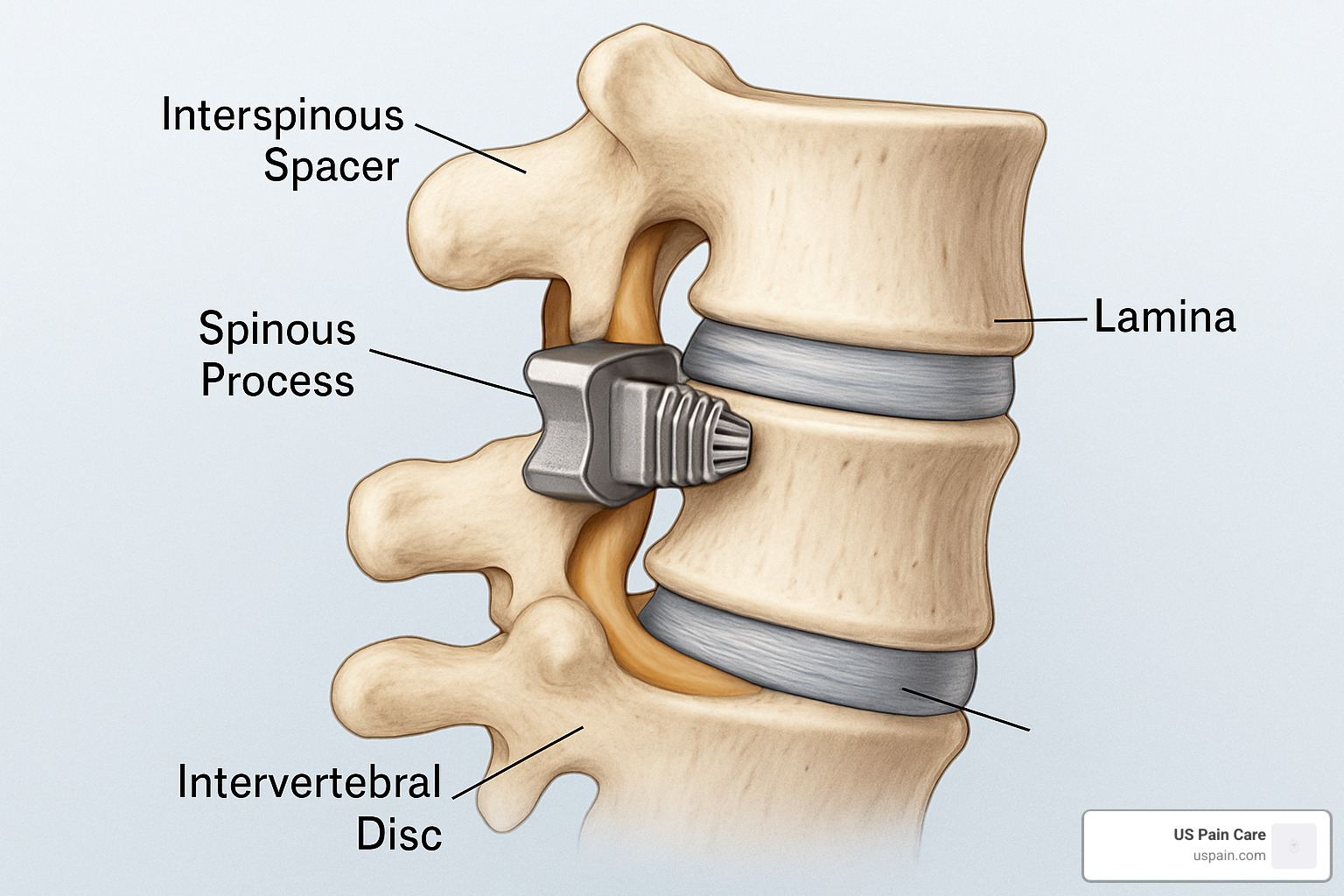
Few musculoskeletal conditions can hijack your life the way lower back pain can,” as one of our specialists often notes. What makes these vertebral procedures so valuable is their ability to provide structural solutions without major surgery. You get the benefit of addressing the mechanical problem causing your pain without the lengthy recovery and potential complications of traditional open surgery.
Clinical results speak for themselves – one study reported a 79% reduction in leg pain at 48 months after Superion implantation. For the right candidates, these procedures can be truly life-changing.
How to Choose the Right Interventional Pain Management Center
Finding the perfect interventional pain management center is a bit like dating – you want someone who listens, understands your needs, and has the right qualifications. This decision can truly make or break your pain relief journey, so it’s worth taking the time to find the right match.
When I talk with patients about choosing a center, I always emphasize credentials first. Look for physicians who are board-certified in pain medicine – typically through the American Board of Anesthesiology, Physical Medicine and Rehabilitation, or Neurology. Doctors with fellowship training specifically in interventional pain management have that extra year of specialized education that can make a real difference in your care.
“I was nervous about trying yet another pain clinic after so many disappointments,” one of our patients recently told me. “But these are some of the most caring doctors and staff members I have encountered in a very long time.” This human connection matters tremendously – technical expertise without compassion isn’t enough when you’re dealing with chronic pain.
A comprehensive interventional pain management center should offer you a full menu of treatment options. Think of it as a toolbox – the more tools available, the more precisely your doctor can address your specific pain. From simple injections to advanced options like spinal cord stimulation, having everything under one roof means your treatment can evolve without forcing you to start over with a new provider.

Don’t overlook the practical aspects of your care. Is the center in-network with your insurance? Do they offer payment plans for procedures not fully covered? For many patients, these financial considerations are just as important as medical expertise.
I also recommend looking for centers that offer integrated rehabilitation services. Pain management isn’t just about procedures – physical therapy and rehabilitation play crucial roles in long-term success. Centers that coordinate closely with these specialists often provide more comprehensive care.
Also consider whether the center tracks patient outcomes. This might seem like a behind-the-scenes detail, but centers that measure results are often more committed to continuously improving their care. Similarly, telehealth capabilities can be a blessing for follow-up appointments, especially if you live far away or have mobility challenges.
Location matters too – particularly if you’ll need multiple treatments. A center might be excellent, but if getting there requires a two-hour drive that leaves you in more pain, it might not be the right fit for your situation.
More info about booking appointment
Questions to Ask Prospective Centers
When you’re researching interventional pain management centers, come armed with questions. A good center will welcome your curiosity rather than rush you through basic information.
Start by asking about their physicians’ experience: “How many pain specialists practice at your center?” and “How many of the specific procedure I need do your physicians perform annually?” Volume matters – you want doctors who perform these procedures regularly, not occasionally.
Technical questions can reveal a lot about a center’s commitment to safety and precision. Ask what imaging guidance they use for interventional procedures (fluoroscopy and ultrasound guidance are gold standards) and whether they have protocols for minimizing radiation exposure during fluoroscopy-guided procedures.
Don’t shy away from asking about outcomes: “What is your complication rate for the procedure I’m considering?” and “How do you measure treatment success beyond pain scores?” A quality center will be transparent about their results and focus on functional improvements, not just pain reduction.
I always suggest patients ask about follow-up protocols too. Pain management isn’t a one-and-done situation – it requires ongoing assessment and adjustment. Centers that have structured follow-up plans demonstrate commitment to your long-term wellness.
Finally, cover the practical matters: insurance acceptance, scheduling processes for urgent issues, and how after-hours concerns are handled. These everyday aspects of care can significantly impact your experience.
As one of my colleagues often says, “The best interventional pain centers view patients as partners in the treatment process and are happy to address all questions and concerns.” If you feel rushed or dismissed when asking these questions, that’s valuable information about how you might be treated as a patient.
Red Flags to Avoid
While searching for the right interventional pain management center, watch out for warning signs that might indicate subpar care. Think of these as the pain management equivalent of a check engine light – they deserve your attention.
Perhaps the biggest red flag is an over-reliance on opioid medications. Modern pain management emphasizes minimizing opioids when possible, using them strategically rather than as the primary approach. If a center seems quick to prescribe long-term opioids without offering interventional options, this suggests limited capabilities or outdated approaches.
A lack of a multidisciplinary team should also raise eyebrows. Pain is complex – it affects your physical, emotional, and social well-being. Centers that operate in isolation, without connections to physical therapy, behavioral health, or other specialties, may provide incomplete care. Your pain doesn’t exist in a vacuum, and neither should your treatment.
Be wary of centers with limited procedure options. Quality interventional centers offer a range of techniques customized to different conditions. If it seems like every patient gets the same one or two procedures regardless of their condition, you might be getting a one-size-fits-all approach rather than personalized care.
Technical standards matter tremendously in interventional procedures. Centers that perform injections without appropriate imaging guidance may not be delivering treatments with necessary precision. This isn’t just about comfort – it’s about safety and effectiveness.
I’ve seen patients frustrated by centers with inadequate follow-up protocols. Effective pain management requires ongoing assessment and adjustment. If a center seems disinterested in your progress after a procedure, this suggests they’re more focused on doing procedures than achieving outcomes.
Trust your instincts if you encounter pressure tactics or guarantees. Ethical pain management involves honest discussions about expectations and respect for your decision-making timeline. No reputable specialist should pressure you into immediate procedures or guarantee specific results – pain is too complex for absolute promises.
Finally, be alert to an excessive focus on high-revenue procedures. If a center seems to steer all patients toward their most expensive options regardless of condition, this may indicate they’re prioritizing financial interests over patient needs.
As one of our pain specialists often reminds me, “The goal of interventional pain management isn’t just to perform procedures—it’s to improve patients’ lives through appropriate interventional therapies custom to their specific conditions.”
Frequently Asked Questions about Interventional Pain Management
What risks or side effects should I know about?
When considering treatment at an interventional pain management center, it’s natural to have questions about potential risks. While serious complications are rare when procedures are performed by qualified specialists, being informed helps you make confident decisions about your care.
Most patients experience only minor, temporary side effects after interventional procedures. You might notice some soreness at the injection site that typically resolves within a few days – something easily managed with ice packs and over-the-counter pain relievers. Some people also experience what we call a “pain flare” – a temporary increase in discomfort before improvement begins, usually lasting just 24-72 hours.
“I tell my patients to think of it like stirring up a beehive before calming it down,” one of our specialists explains. “That temporary increase sometimes happens before the real relief kicks in.”
Minor bruising can also appear at needle insertion sites, especially if you’re taking blood thinners. This is generally harmless and resolves on its own.
More significant risks, while uncommon, include infection (less than 1% of procedures), bleeding (rare except in patients with bleeding disorders), temporary nerve irritation, and allergic reactions to medications used during procedures. Each specific treatment also carries its own considerations – for example, spinal cord stimulation involves considerations related to the implanted device, while vertebral procedures have specific risks related to bone cement placement.
“We believe in transparent conversations about both risks and benefits,” our team emphasizes. “We’ll walk you through everything specific to your procedure before moving forward.” Many patients find comfort knowing that the risks of untreated chronic pain – including depression, reduced mobility, and diminished quality of life – often far outweigh the relatively minor risks of properly performed interventional procedures.
How long does pain relief typically last?
One of the most common questions we hear at our interventional pain management center is about how long patients can expect relief to last. The honest answer? It varies considerably depending on the specific treatment, your underlying condition, and individual factors unique to your situation.
Some treatments, like diagnostic nerve blocks, are actually designed to be temporary – lasting only hours to days – as their main purpose is to confirm the source of your pain rather than provide long-term relief.
Steroid injections typically provide medium-term relief. Epidural injections might help for 3 weeks to 6 months, while facet joint injections commonly provide comfort for 1 to 6 months. Major joint injections for knees or shoulders generally last 2 weeks to 6 months.
I had an epidural steroid injection that gave me almost 5 months of being able to garden again,” shared one of our patients. “When it began wearing off, we scheduled another, and I’ve been managing well with just two treatments a year.”
For longer-lasting relief, radiofrequency ablation is often an excellent option. By disrupting the nerve’s ability to transmit pain signals, RFA can provide relief for 6 to 18 months for spinal facet pain, or 6 to 12 months for peripheral joint pain. The relief lasts until the treated nerve regenerates.
Advanced options like spinal cord stimulation can provide continuous relief for years – some patients report sustained benefits for 5-10 years or more with proper maintenance and occasional reprogramming.
Regenerative therapies like PRP or bone marrow concentrate work differently – they may take 2-3 months to show full effect as tissues heal, but potentially provide longer-lasting relief by addressing underlying tissue damage.
Our team often reminds patients that combining interventional procedures with physical therapy, appropriate exercise, and lifestyle modifications typically leads to longer-lasting benefits than procedures alone. Think of these complementary approaches as ways to extend and improve your results.
Is interventional pain management covered by insurance?
Navigating insurance coverage for pain treatments can sometimes feel as challenging as managing the pain itself. The good news is that most major insurance plans, including Medicare and many Medicaid programs, do cover established interventional pain procedures when they’re deemed medically necessary.
“Insurance coverage is like a puzzle we help patients solve,” explains our billing coordinator. “Each plan has different requirements, but we’ve become experts at navigating the process.”
For most interventional pain management center procedures, insurance typically requires proper documentation of your condition, evidence that you’ve tried conservative treatments first (like physical therapy or medications), and prior authorization for many advanced procedures.
Coverage is most consistent for well-established treatments like epidural steroid injections, facet joint procedures, major joint injections, and nerve blocks. More advanced or newer interventions may have variable coverage. For example, spinal cord stimulation is covered by most plans but often requires extensive documentation, while regenerative therapies like PRP treatments frequently have limited coverage and may require out-of-pocket payment.
One patient shared: “I was worried about coverage for my radiofrequency ablation, but the billing team handled everything. They got pre-approval from my insurance and explained exactly what my out-of-pocket cost would be before we scheduled anything.”
Our team works diligently to obtain necessary authorizations and provide detailed documentation supporting the medical necessity of your recommended procedures. We understand that unexpected medical bills are the last thing you need when dealing with chronic pain.
For patients with high-deductible plans or procedures not covered by insurance, we offer various payment options including payment plans, cash-pay discounted rates, healthcare financing programs like CareCredit, and compatibility with FSA or HSA accounts.
Before scheduling any procedure, we recommend verifying your specific benefits for interventional pain procedures, understanding your deductible and out-of-pocket responsibility, and discussing potential costs with our billing department. This proactive approach allows you to focus on what really matters – getting relief from your pain and improving your quality of life.
Conclusion
Finding relief from chronic pain requires more than just masking symptoms—it demands a comprehensive approach that addresses the root causes of your discomfort while enhancing your overall quality of life. At US Pain Care, our interventional pain management center is dedicated to providing this whole-person, patient-first approach through cutting-edge, minimally invasive treatments.
The journey through interventional pain management offers hope for those who have struggled with persistent pain and found limited relief through conventional methods. By targeting the specific nerves, joints, and tissues causing your pain, these specialized techniques can provide more precise, effective, and often longer-lasting relief than medication alone.
Think of pain management as a partnership between you and your healthcare team. The physicians at our interventional pain management center bring advanced training and specialized techniques to the table, but your active participation—from honest communication about your symptoms to following through with home exercises—makes all the difference in your outcomes.
“We don’t tell you how good we’ve done – we let you tell us based on how you feel,” is the philosophy that guides our approach. Your improved function and quality of life are the true measures of successful treatment, not just numbers on a pain scale.
If you’ve been struggling with chronic pain that hasn’t responded well to conventional treatments, it might be time to explore the options available at an interventional pain management center. The targeted, minimally invasive approaches we offer could provide the relief you’ve been searching for and help you reclaim the activities that pain has taken from you—whether that’s playing with grandchildren, gardening, or simply walking without discomfort.
Your path to improved pain management starts with a single step—reaching out to specialists who understand the complex nature of chronic pain and have the tools to address it effectively. At US Pain Care, we’re ready to walk that path with you, providing compassionate, evidence-based care custom to your unique needs. After all, your pain is as individual as you are, and your treatment should be too.
More info about our chronic pain treatments