
Knee pain is pain in or around the knee joint, and it is one of the most common complaints in people of all ages. It may come from an injury, overuse, or a condition such as arthritis. Because the knee carries your body weight and takes part in almost every move you make, it is especially prone to injury and wear.
If knee pain makes stairs, walking, work, or sleep harder, you do not have to simply live with it. Your care team at US Pain Care can help you find what is driving your pain and talk through options that fit your health and your goals.
The right plan depends on the cause of your pain, how long you have had it, and how much it limits you.
What Is Knee Pain?
Knee pain ranges from mild discomfort to sharp pain that makes it hard to bear weight. It can be acute, coming on suddenly after an injury, or chronic, lasting for months.
The knee is a complex hinge joint where the thigh bone (femur) meets the shin bone (tibia). Its main parts include:
- The kneecap (patella), which protects the front of the joint
- Articular cartilage, which covers the bone ends
- Two menisci, which act as shock absorbers
- Four major ligaments: the ACL, PCL, MCL, and LCL
- Tendons, such as the patellar tendon
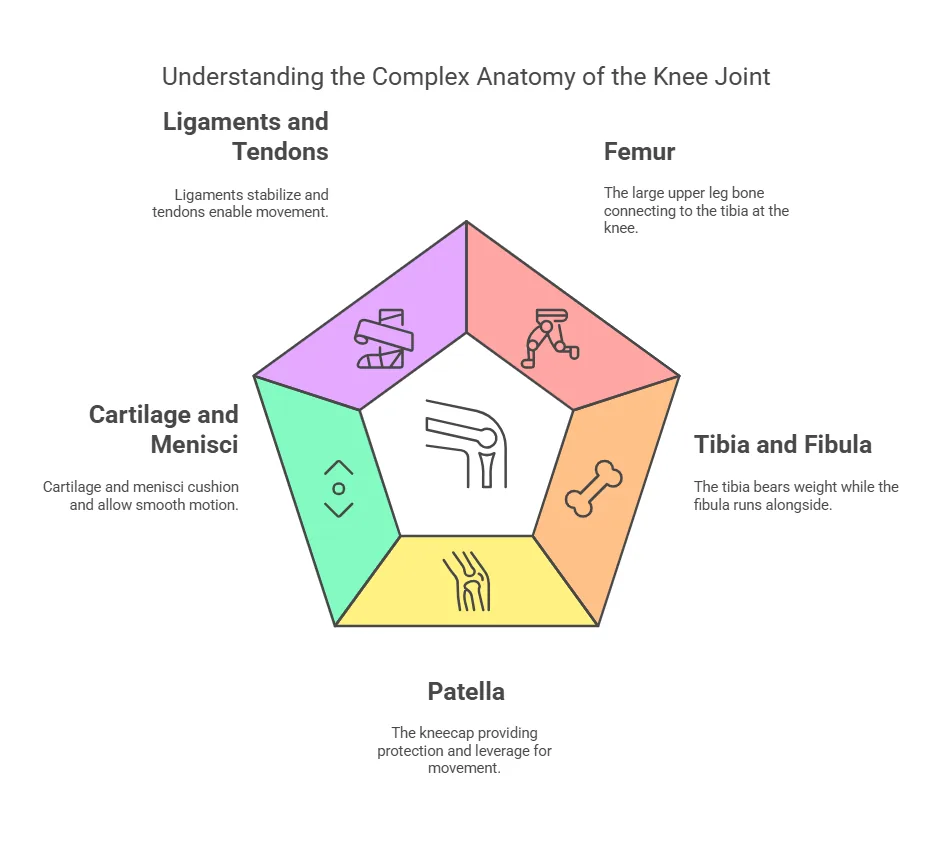
Because the knee is so complex, even minor damage or strain can cause real pain and loss of function.
Acute Knee Pain
Acute knee pain starts suddenly, often after a twist, fall, or blow to the knee. Sprains, ligament tears, meniscus tears, and fractures are common examples.
Chronic Knee Pain
Chronic knee pain lasts for months or keeps coming back. It is often linked to osteoarthritis, old injuries that did not fully heal, or overuse.
Referred Knee Pain
Sometimes knee pain starts somewhere else. Problems in the hip can send pain into the knee, which is why your physician may examine your hip as well.
Knee Pain Symptoms
Depending on the cause, knee pain may be felt in one spot or across the whole joint. You may notice:
- Pain that is mild, sharp, or aching
- Stiffness when bending or straightening the knee
- Swelling or puffiness
- Weakness or a knee that gives way
- Popping or clicking with movement
- Trouble putting weight on the leg
- Locking or catching
- Redness and warmth around the knee
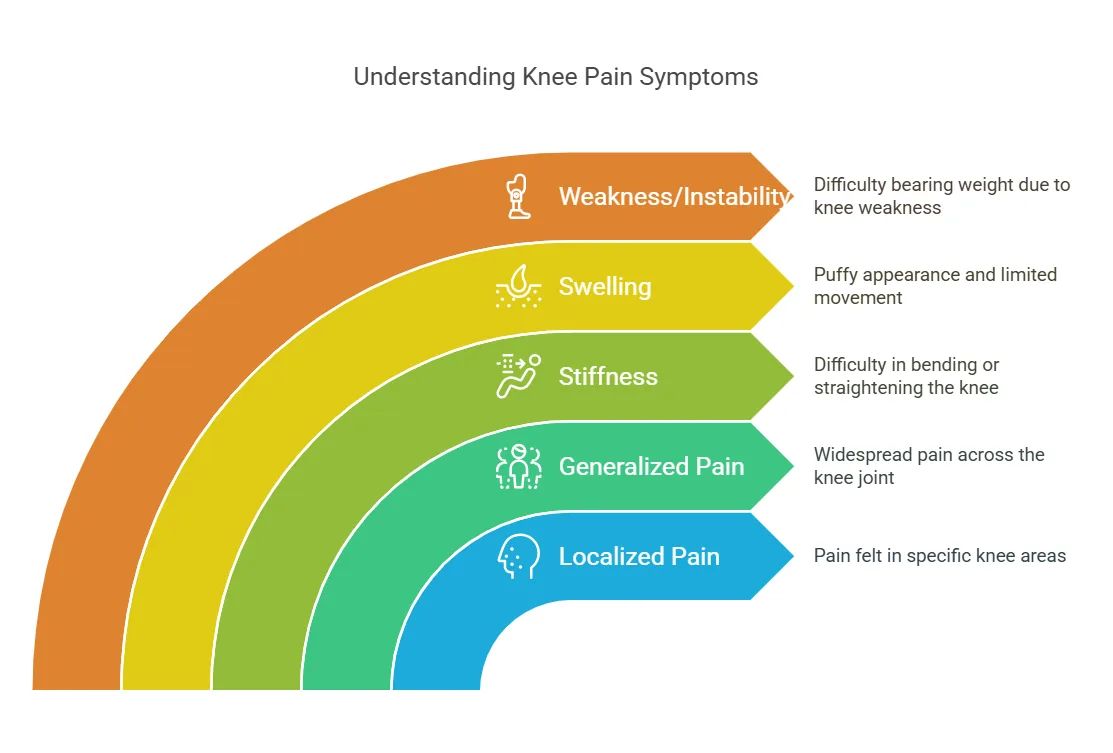
Popping, locking, or catching may point to damage in the cartilage or meniscus. Tell your physician which symptoms you have and when they started.
Where the pain sits can also offer clues. According to Cleveland Clinic’s overview of knee pain, pain at the front of the knee may point to arthritis, bursitis, or patellofemoral pain, while pain along the inner or outer edge may come from a ligament injury or iliotibial band syndrome.
Knee Pain Causes
Knee pain can come from age-related wear, sudden injury, or other health conditions. Osteoarthritis is the most common knee disease, and ligament and tendon injuries are also common.
Osteoarthritis
Osteoarthritis is the most common cause of chronic knee pain, especially in older adults. Cartilage wears away over time, causing pain, stiffness, swelling, and less range of motion. The National Institute of Arthritis and Musculoskeletal and Skin Diseases notes that osteoarthritis stiffness usually lasts less than 30 minutes, often in the morning or after rest.
Rheumatoid Arthritis
Rheumatoid arthritis is an autoimmune disease that inflames the joint lining. It often affects both knees and may bring fatigue, fever, and weight loss.
Runner’s Knee
Patellofemoral pain syndrome causes pain around the kneecap. It is often linked to overuse, poor kneecap alignment, or muscle imbalance, and it may hurt most on stairs or when squatting.
Tendinitis
Tendinitis is inflammation of a tendon from repetitive use. Patellar tendinitis, or “jumper’s knee,” is common in people who run and jump.
Meniscus Tears
A sudden twist or deep squat can tear a meniscus. Tears can cause pain, swelling, stiffness, and a feeling that the knee locks or catches.
Ligament Injuries
ACL and MCL injuries often happen in sports with sudden stops, jumps, or changes in direction. They can lead to pain and an unstable knee.
Bursitis
Bursae are small fluid-filled sacs that cushion the knee. Long periods of kneeling or repeated pressure can inflame them and cause pain and swelling.
Gout and Infection
Gout happens when uric acid crystals build up in a joint, causing sudden, severe pain, redness, and swelling. A joint infection (septic arthritis) is rare but can quickly damage the knee.
Other Causes
Knee fractures, a Baker’s cyst behind the knee, a dislocated kneecap, and iliotibial band syndrome can also cause knee pain.
If knee pain is changing how you walk, climb stairs, or sleep, a pain specialist can help find the cause. Book an evaluation or call 1-877-940-3501.
Risk Factors
Anyone can develop knee pain, but some factors raise the odds.
- Being overweight or obese
- Older age
- Being a woman, especially after age 50
- A past knee injury
- Sports with jumping, pivoting, or quick turns
- Running and jumping often
- Work that keeps you on your hands and knees
- Bow legs or knock knees
- Lack of physical activity
Extra body weight adds pressure on the knee and is a risk factor for osteoarthritis. According to the CDC’s osteoarthritis overview, about 33 million U.S. adults have osteoarthritis, and the knee is one of the joints it affects most often. Having it in one joint also raises the chance of developing it in others.
Diagnosis
An accurate diagnosis guides your treatment. Your physician starts with a detailed history and a physical exam.
Your provider may ask about:
- When the pain started and what you were doing
- Where it hurts and what makes it worse
- Past injuries and surgeries
- Your activity level and work
During the exam, your physician checks for swelling, tenderness, warmth, and range of motion. Movement tests such as the Lachman test (for ACL tears) or the McMurray test (for meniscus tears) can help pinpoint the problem.
Tests may include:
- X-rays to look for arthritis, fractures, or misalignment
- MRI to see ligaments, tendons, and cartilage
- CT scans for a detailed view of bone
- Ultrasound to check soft tissue and fluid
- Blood tests or joint fluid tests for infection, gout, or rheumatoid arthritis
In some cases, a surgeon may use arthroscopy, a small camera placed through tiny incisions, to look inside the joint.
Treatment Options
Treatment depends on the cause of your knee pain. The goals are to ease pain, improve function, and prevent further damage. Conservative care usually comes first, and results vary from person to person.
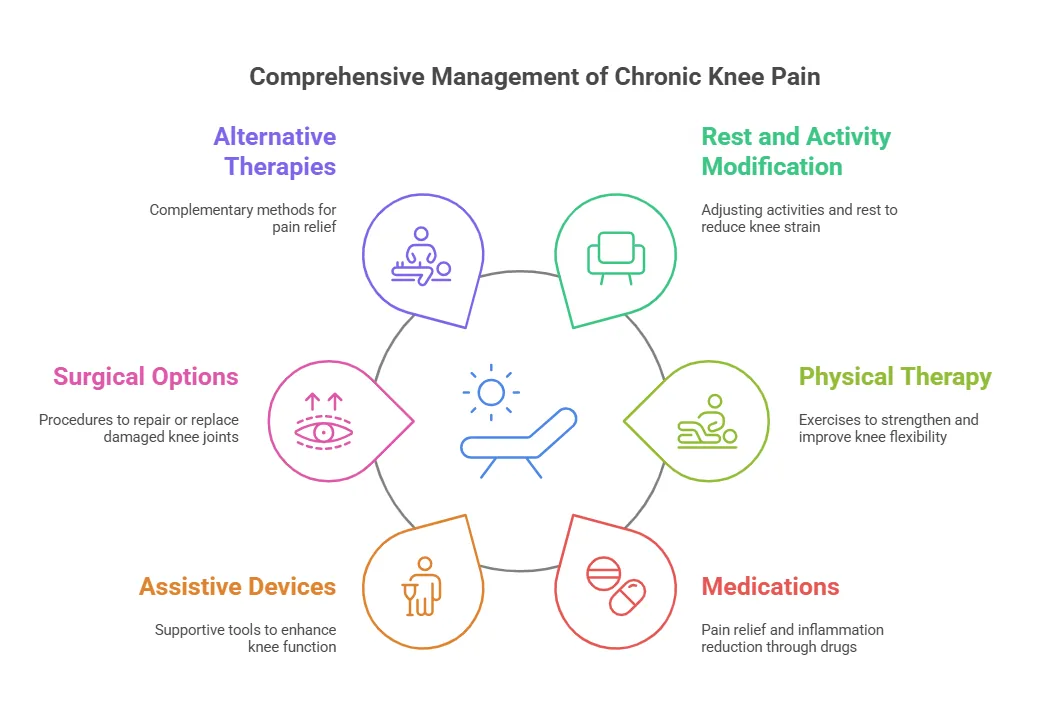
Rest and Home Care
Avoid activities that worsen the pain and switch to low-impact exercise such as swimming or cycling. Ice for 15 to 20 minutes every few hours, a compression wrap, and elevation may ease swelling.
Physical Therapy
Physical therapy strengthens the quadriceps, hamstrings, and hip muscles. Stretching may improve flexibility and range of motion.
Medications
Acetaminophen or NSAIDs such as ibuprofen and naproxen may ease pain and inflammation. Your physician may suggest prescription options for more severe pain.
Braces and Supports
Knee braces, supports, or custom orthotics may improve stability and ease strain during movement.
Steroid Injections
A corticosteroid injection reduces inflammation in the joint. It may help osteoarthritis, tendinitis, bursitis, or rheumatoid arthritis, with relief lasting from weeks to months. Learn more about knee injections.
Hyaluronic Acid Injections
Hyaluronic acid is a natural part of joint fluid. Injections may improve lubrication in mild to moderate osteoarthritis, and relief may last 6 to 12 months for some people.
PRP Injections
Platelet-rich plasma is made from your own blood and concentrated to deliver growth factors. It may help mild to moderate osteoarthritis or tendon injuries, and relief may last 6 to 12 months for some people.
Genicular Nerve Blocks
A genicular nerve block numbs the nerves that carry pain from the knee joint. A test block can also show whether radiofrequency ablation may help.
Radiofrequency Ablation
Radiofrequency ablation uses heat to interrupt pain signals from the genicular or infrapatellar saphenous nerves. Relief may last 6 to 12 months, sometimes longer, and the procedure can be repeated if pain returns.
Nerve Stimulation
Peripheral nerve stimulation and dorsal root ganglion stimulation use mild electrical pulses to block pain signals. Both start with a short trial and may be considered for chronic or post-surgical knee pain.
Surgery
When damage is severe, a surgeon may recommend arthroscopy, ACL reconstruction, meniscus repair, tendon repair, or partial or total knee replacement. Recovery often takes several months of rehabilitation.
Prevention
Not all knee pain can be prevented, but healthy habits may lower your risk:
- Strengthen your thigh, calf, and core muscles
- Warm up before exercise and stretch afterward
- Wear supportive, cushioned shoes
- Choose biking or swimming over running
- Walk, rather than run, downhill
- Keep a healthy weight
- Use proper form when lifting or playing sports
- Rest after intense activity
- Do not play through knee pain
- Wear protective gear for sports
- Keep walkways clear and avoid standing on chairs to lower fall risk
Staying active matters even when your knee hurts. For people with osteoarthritis, regular exercise may ease pain and improve function.
Outlook
The outlook depends on the cause, how severe it is, and how soon you get care. Many cases of knee pain improve with conservative care within a few weeks.
Osteoarthritis, severe ligament tears, and fractures may need longer care or surgery. For degenerative conditions, the goal is to manage symptoms, improve function, and slow further damage.
Ignoring ongoing knee pain can lead to worsening symptoms and reduced mobility. Regular exercise, weight management, and activity changes may help you stay active over the long term.
Warning Signs
Some knee symptoms need prompt care. Call 911 or go to the emergency room after a serious accident or fall, if you cannot move your knee or leg, or if you think a bone is broken.
Contact your provider right away if:
- You cannot bear weight on the knee
- The knee looks deformed or misshapen
- You have severe pain, even at rest
- The knee buckles, clicks, or locks
- You have a fever with redness, warmth, or major swelling
- Your calf below the knee is painful, swollen, numb, tingling, or bluish
When to See a Pain Specialist
Mild knee pain often improves with rest, ice, and gentle movement. If it does not, an evaluation can help find the cause.
Consider seeing a pain specialist if:
- Pain lasts more than a few days or keeps returning
- Pain wakes you at night or limits walking or stairs
- Home care, therapy, or medicine has not helped
- You have arthritis and want options before or instead of surgery
- Pain has not improved as expected after knee surgery
A pain specialist can sort out whether your pain comes from the joint surface, the soft tissues, or the nerves around the knee.
Getting Care at US Pain Care
US Pain Care is a physician-led network of pain management practices. Your visit begins with a review of your history and imaging and a careful exam of your knee.
Your care team then explains what is likely driving your pain. Your plan may include physical therapy guidance, medication changes, image-guided injections, PRP, or radiofrequency ablation, depending on your diagnosis and goals.
To learn more about long-term care, read about chronic knee pain management. When you are ready, find a location near you, then book your appointment online or call 1-877-940-3501.
Book Your AppointmentTrusted Information
Medical references:
- MedlinePlus: Knee Injuries and Disorders
- MedlinePlus: Knee Pain
- NIAMS: Osteoarthritis
- CDC: Osteoarthritis
- Cleveland Clinic: Knee Pain
- Cleveland Clinic: Radiofrequency Ablation
Related US Pain Care resources: Knee injections · Platelet-rich plasma therapy · Radiofrequency ablation · Peripheral nerve stimulation · Chronic knee pain management · Hip pain · Tendinitis.
This article is for general education and does not replace an individualized medical evaluation by your physician.
Frequently Asked Questions
What causes most knee pain?
Osteoarthritis is the most common knee disease, and ligament, tendon, and meniscus injuries are also frequent. Overuse, past injuries, and extra body weight can add to the problem. An exam and imaging help your physician find the source so your treatment can be matched to it.
When does knee pain need a doctor?
See a doctor if knee pain lasts more than a few days, swells, locks, gives way, or limits walking or sleep. Get prompt care after an injury. A pain specialist can review your imaging and discuss nonsurgical options before anything more invasive is considered.
Do knee injections work?
Injections help some patients, though results vary. Options include steroid, hyaluronic acid, and platelet-rich plasma injections. Relief can last from weeks to months in some cases. Injections often work best alongside exercise, and your physician will explain which option fits your diagnosis and goals.
Do knee injections hurt?
Most patients feel brief pressure or a sting like a routine shot, and the skin is usually numbed first. Imaging helps your physician place the needle accurately. Some people feel soreness at the injection site for a day or two afterward, and your care team will explain what to expect.
Is surgery my only option?
No. Many people try physical therapy, weight management, medication, injections, and nerve-based treatments first. Knee replacement is generally considered when other care has not been enough. Your physician can help you weigh the benefits and risks of each path based on your diagnosis.
What can I do at home?
Many people find relief with activity changes, gentle strengthening and stretching, ice, elevation, and a healthy weight. Over-the-counter pain relievers may help some patients. If pain lasts, swells, or limits walking, schedule an evaluation instead of pushing through, since early care can widen your options.
How long does knee pain last?
Many minor strains and overuse injuries improve within a few weeks with rest, ice, and gradual strengthening. Ligament tears, meniscus injuries, and arthritis can take longer and may need ongoing care. If pain has not improved after a few weeks or keeps returning, an evaluation can help find the cause.
Should I rest or exercise?
Short-term rest helps after an acute injury, but long stretches of inactivity weaken the muscles that support the knee. For arthritis and chronic pain, guided low-impact exercise such as cycling, swimming, or walking is generally recommended. Stop any activity that causes sharp or worsening pain, and ask your care team for a plan.