

Best Pain Killer for Teeth Pain: Start With Non-Opioid Relief
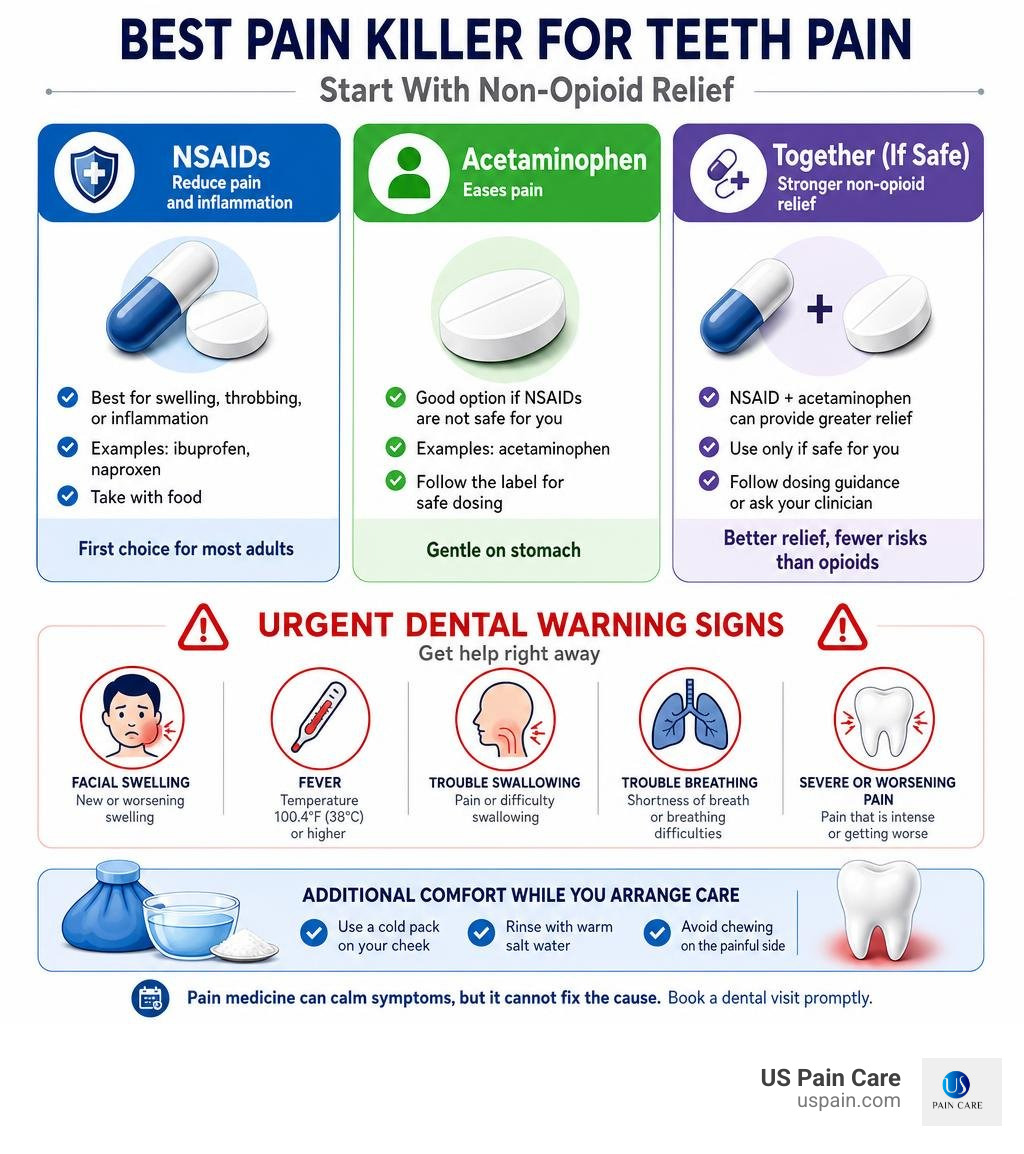
For most adults, the best pain killer for teeth pain is an NSAID such as ibuprofen, because it reduces both pain and inflammation around the tooth. If you cannot take NSAIDs, acetaminophen can help. For stronger short-term relief, clinical guidelines support using an NSAID and acetaminophen together when it is safe for you to do so.
- Choose ibuprofen or naproxen for tooth pain linked to swelling, throbbing, or inflammation.
- Choose acetaminophen if NSAIDs are unsafe for you, such as with certain stomach, kidney, heart, or pregnancy-related concerns.
- Do not use opioids first. Research across 87 randomized trials found NSAIDs, alone or paired with acetaminophen, work better than opioids for pain after dental procedures.
- Book a dental visit promptly. Pain medicine can calm symptoms, but it cannot fix a cavity, cracked tooth, gum problem, or infection.
A cold pack against the cheek, a warm saltwater rinse, and avoiding chewing on the painful side can offer added temporary comfort while you arrange care. Seek urgent dental or medical help for facial swelling, fever, trouble swallowing or breathing, or pain that is severe or worsening.
I’m Dr. Paul Lynch, a double board-certified pain management physician and anesthesiologist with 17 years of experience in evidence-based pain care and responsible opioid prescribing. In this guide, I will help you understand how to choose the best pain killer for teeth pain while avoiding unnecessary medication risks and getting the dental treatment that addresses the cause.
Simple guide to best pain killer for teeth pain:
Finding the Best Pain Killer for Teeth Pain: First-Line OTC Options
Dental pain is distinct from many other forms of acute discomfort. Most toothaches originate within the rigid walls of a tooth’s inner chamber (the pulp) or the tight fibrous ligaments securing the root to the jawbone. When bacteria reach the pulp or trauma irritates the periodontal ligament, an inflammatory cascade begins. Tissue swelling inside a confined, unyielding space creates intense hydrostatic pressure, activating sensitive dental nerve endings.
Because acute dental pain is fundamentally driven by localized inflammation and prostaglandin production, medications that directly inhibit the cyclooxygenase (COX-1 and COX-2) enzymes provide the most rapid and comprehensive relief. Non-steroidal anti-inflammatory drugs (NSAIDs) halt this cascade at the chemical source.
The ADA clinical practice guideline for acute dental pain firmly establishes that non-opioid medications represent the gold standard for managing acute dental discomfort (Carrasco-Labra et al., 2024). The following comparison outlines standard over-the-counter (OTC) oral analgesics for temporary dental relief:
| Analgesic Category | Typical Adult Dose | Onset of Action | Primary Mechanism of Action | Best Used For |
|---|---|---|---|---|
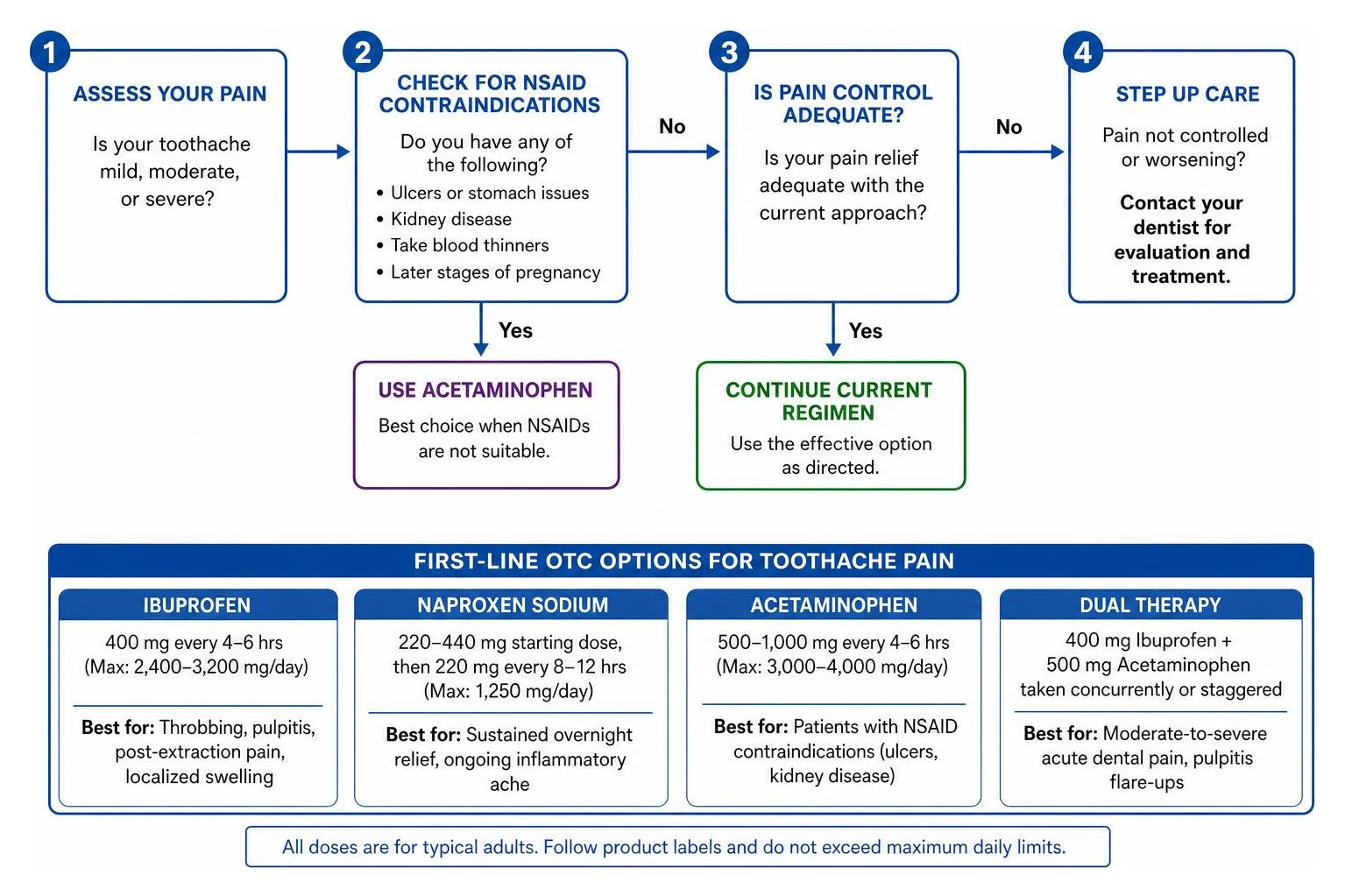
| Ibuprofen (Advil/Motrin) | 400 mg every 4–6 hrs (Max: 2,400–3,200 mg/day) | 30–60 minutes | COX inhibition; suppresses inflammatory prostaglandins | Throbbing, pulpitis, post-extraction pain, localized swelling |
| Naproxen Sodium (Aleve) | 220–440 mg starting dose, then 220 mg every 8–12 hrs (Max: 1,250 mg/day) | 60 minutes | Long-acting COX inhibition | Sustained overnight relief, ongoing inflammatory ache |
| Acetaminophen (Tylenol) | 500–1,000 mg every 4–6 hrs (Max: 3,000–4,000 mg/day) | 30–45 minutes | Central nervous system prostaglandin inhibition | Patients with NSAID contraindications (ulcers, kidney disease) |
| Dual Therapy (Ibuprofen + Acetaminophen) | 400 mg Ibuprofen + 500 mg Acetaminophen taken concurrently or staggered | 30–45 minutes | Peripheral anti-inflammatory action + central pain signal modulation | Moderate-to-severe acute dental pain, pulpitis flare-ups |
Ibuprofen and NSAIDs: The Best Pain Killer for Teeth Pain Caused by Inflammation
When acute swelling drives nerve compression within the tooth, standard anti-inflammatory options serve as the first-line choice. Ibuprofen works by directly suppressing prostaglandin production at the site of tissue injury.
For mild-to-moderate dental pain, clinical evidence suggests a standard adult dose of 400 mg of ibuprofen every 4 to 6 hours as needed. While prescription daily maximums can reach 3,200 mg under direct medical supervision, typical over-the-counter limits should remain at or below 2,400 mg in 24 hours to minimize gastrointestinal strain.
For individuals seeking longer-lasting nighttime relief without redosing, naproxen sodium offers an effective alternative. A starting dose of 440 to 500 mg, followed by 220 to 250 mg every 6 to 8 hours (not to exceed 1,250 mg daily), provides an extended duration of anti-inflammatory coverage. If you are managing widespread musculoskeletal aches alongside dental swelling, targeted inflammation medication protocols help control systemic flare-ups safely.
When Acetaminophen Serves as the Best Pain Killer for Teeth Pain
While NSAIDs excel at stopping localized inflammation, they are not suitable for every individual. NSAIDs can irritate the gastric mucosal lining, elevate blood pressure, exacerbate chronic kidney disease, and interact with anticoagulants or blood thinners. They are also contraindicated during the later stages of pregnancy.
In these circumstances, acetaminophen (Tylenol) functions as an effective alternative. Acetaminophen works primarily within the central nervous system to block pain signals and regulate body temperature.
To maximize safety:
- Standard adult dosing is 500 to 1,000 mg every 4 to 6 hours as needed.
- Total daily intake must never exceed 3,000 to 4,000 mg from all sources combined, as excessive doses carry significant risks of hepatotoxicity (liver damage).
- Always verify that other combination cough, cold, or sinus remedies do not contain hidden acetaminophen.
For a comprehensive overview of non-prescription pain options and their safety limits, explore the ultimate guide to strongest OTC pain relievers.
Synergistic Relief: Combining Ibuprofen and Acetaminophen Safely
For intense, throbbing tooth pain that resists a single medication, combining an NSAID with acetaminophen produces a synergistic effect that outperforms either drug alone. Because these two compounds utilize entirely different metabolic pathways—ibuprofen operating peripherally and cleared by the kidneys, acetaminophen operating centrally and metabolized by the liver—they can be taken together safely by eligible adults.
Clinical protocols support two administration methods:
- Concurrent Administration: Taking 400 mg of ibuprofen alongside 500 mg of acetaminophen simultaneously every 6 hours.
- Staggered Administration: Taking 400 mg of ibuprofen, waiting 3 hours, taking 500 mg of acetaminophen, and repeating the alternating cycle every 3 hours.
Staggering the medications creates a steady baseline of pain control without peak-and-valley breakthrough pain episodes. When selecting the best medicine for swelling and pain, coordinating this dual-action strategy delivers hospital-grade relief without narcotic risks.
Topical Anesthetics and Immediate At-Home Comfort Measures
Systemic oral analgesics take between 30 and 60 minutes to enter the bloodstream and mitigate symptoms. While waiting for pills to take effect, localized numbing agents and at-home comfort measures can bridge the gap.
Safe Use of Benzocaine Gels and Numbing Agents
Over-the-counter topical liquids and gels containing 20% benzocaine (such as Orajel or store-brand equivalents) deliver rapid, localized surface numbness by blocking nerve conduction in mucosal tissues.
To ensure safety, follow the parameters outlined on the FDA drug safety label for topical benzocaine:
- Targeted Application: Use a clean cotton swab to apply a small amount directly to the aching gum tissue or exposed cavity margins up to 4 times daily.
- Avoid Swallowing: Do not swallow excess gel, and avoid eating or drinking for 15 to 30 minutes after application.
- Duration Limit: Limit use to a maximum of 7 consecutive days.
- Safety Warning: Benzocaine carries a rare but serious risk of methemoglobinemia, a condition that impairs the oxygen-carrying capacity of red blood cells. Benzocaine products should never be used in children under 2 years of age or for teething discomfort.
Immediate Home Remedies: Cold Packs and Saltwater Rinses
Non-pharmacologic home therapies help reduce tissue tension, clear debris, and provide fast, short-term relief:
- Warm Saltwater Rinses: Dissolve 1/2 teaspoon of table salt in 8 ounces of warm water. Gently swish for 30 seconds and spit out. The mild hypertonic saline solution draws excess fluid out of inflamed gum tissues and removes trapped food particles.
- External Cold Compresses: Apply an ice pack wrapped in a cloth to your cheek over the painful area for 15 minutes on, followed by 15 minutes off. Cryotherapy constricts local blood vessels, decreasing swelling and slowing nerve conduction.
- Head Elevation: Lying flat increases blood pressure in the head and jaw, intensifying throbbing pain. Prop your head up with two or three pillows when resting or sleeping to facilitate venous drainage.
- Clove Oil (Eugenol): Eugenol, an active compound in clove oil, possesses natural anesthetic and antimicrobial properties. Dilute 1–2 drops of food-grade clove oil with an equal amount of carrier oil (such as olive oil), apply it to a small cotton pellet, and gently place it against the sensitive tooth for 10 minutes.
- Avoid Aspirin on Gums: Never place an aspirin tablet directly against gum tissue. Aspirin is an acid (acetylsalicylic acid) that will cause severe chemical burns on the oral mucosa without providing systemic relief.
The Clinical Reality of Prescription Opioids for Dental Pain
Dental pain frequently prompts emergency department visits. On average, someone visits a hospital emergency department for a dental condition every 15 seconds in the United States, with approximately 70% of these visits occurring outside regular business hours. Historically, dental complaints were the sixth most common reason for prescribing an opioid in emergency settings.
However, modern medical and dental practice has moved decisively away from narcotic pain management for oral conditions. The emergency clinical guidelines for managing acute dental pain emphasize that opioids fail to address the core inflammatory nature of dental disease (Green et al., 2025).
Why Non-Narcotic Pain Meds Outperform Opioids
Rigorous clinical research shows that non-opioid medications provide superior relief for dental pain compared to narcotics. A comprehensive meta-analysis of 87 randomized controlled trials revealed that NSAIDs—either alone (e.g., ibuprofen 400 mg) or combined with acetaminophen (e.g., ibuprofen 400 mg + acetaminophen 500 mg)—consistently outperformed opioid regimens (such as codeine or hydrocodone combined with acetaminophen) in reducing post-procedure dental pain.
Opioids alter central pain perception in the brain, but they do nothing to reduce tissue inflammation or swelling at the tooth root. NSAIDs stop pain at its source. For sustained, reliable pain control, exploring evidence-based non-narcotic pain meds provides superior clinical outcomes without gastrointestinal slowdown, dizziness, or cognitive impairment.
Severe Risks, Strict Limits, and Addiction Considerations
Opioid medications carry notable public health and personal safety risks. In 2021, opioid overdoses in the U.S. accounted for nearly twice as many deaths as motor vehicle accidents (25 versus 13 deaths per 100,000 people), with approximately 1 in 6 overdose deaths (16,000 deaths) involving prescription opioids.
Dental prescriptions—particularly following routine third-molar extractions—have historically represented a common initial exposure to opioids for adolescents and young adults. This early exposure is associated with an elevated risk of subsequent opioid misuse and long-term dependency.
When a healthcare provider determines that a short-acting opioid is necessary as a rescue medication because first-line therapies are contraindicated:
- Treatment duration should rarely exceed 3 days.
- Prescriptions must be limited to the lowest effective dose and the fewest tablets necessary.
- Unused tablets must be stored securely and disposed of through drug take-back programs or FDA-approved flush lists to prevent accidental household ingestion.
To better understand responsible pharmaceutical stewardship and pain therapies, review our guide to pain killer medicine.
When to Seek Professional Dental Care Immediately
Pain medications, mouth rinses, and cold packs are temporary measures designed to keep you comfortable while you coordinate definitive care. A toothache is a symptom of an underlying physical condition—such as deep dental caries, a cracked crown, pulp necrosis, or periodontal infection—that cannot resolve without clinical intervention.
Red-Flag Symptoms: Infection, Fever, and Abscesses
Certain clinical signs indicate that an oral infection may be spreading beyond the tooth root into the surrounding fascial spaces of the head and neck. Seek immediate dental or emergency medical attention if you experience:
- Visible Facial or Neck Swelling: Swelling extending into the cheek, under the jawline, or toward the eye.
- High Fever and Chills: Systemic signs of an advancing bacterial infection.
- Difficulty Swallowing or Breathing (Dysphagia/Dyspnea): A medical emergency signaling potential airway compromise (such as Ludwig’s angina).
- Trismus: Inability to open the mouth normally.
- Persistent Foul Discharge or Pungent Taste: Indicative of a draining periapical abscess.
- Sudden Cessation of Pain Accompanied by Swelling: If severe throbbing abruptly stops without treatment, it often indicates the pulpal nerve has died (pulpal necrosis). The underlying bacterial infection remains active and requires treatment (such as a root canal or extraction).
Long-Term Prevention Through Targeted Oral Hygiene
Preventing recurrent dental pain requires consistent preventive oral hygiene and professional maintenance:
- Brush Twice Daily: Use a soft-bristled toothbrush and fluoride toothpaste for two full minutes morning and night.
- Daily Interdental Cleaning: Clean between teeth daily using traditional floss, interdental brushes, or water flossers to clear plaque from surfaces a toothbrush cannot reach.
- Limit Dietary Sugars and Acids: Minimize frequent snacking on fermentable carbohydrates and acidic beverages that erode enamel and feed cariogenic bacteria.
- Wear a Protective Nightguard: If you clench or grind your teeth (bruxism), a custom nightguard prevents enamel micro-fractures, ligament strain, and cracked tooth syndrome.
- Schedule Bi-Annual Dental Exams: Routine dental checkups catch early enamel demineralization, micro-cavities, and gum inflammation long before they develop into painful acute emergencies.
Frequently Asked Questions About Dental Pain Relief
What is the fastest over-the-counter painkiller for sudden tooth pain?
For rapid systemic relief, liquid-filled softgel capsules of ibuprofen (400 mg) absorb more quickly than traditional compressed tablets, often providing relief within 20 to 30 minutes. Pairing oral NSAIDs with a direct dab of 20% benzocaine gel provides immediate, temporary surface numbness while the oral medication enters your system.
Can I safely combine ibuprofen and acetaminophen for severe toothache?
Yes, for most healthy adults without kidney, liver, or gastrointestinal contraindications, combining ibuprofen (400 mg) and acetaminophen (500 mg) is safe and clinically proven to be more effective than taking higher doses of either drug alone. You can take them simultaneously every 6 hours or stagger them every 3 hours. Never exceed the daily maximum limits of 2,400 mg of ibuprofen or 3,000–4,000 mg of acetaminophen.
Why are opioids no longer recommended as first-line treatment for dental pain?
Dental pain is driven by localized inflammation and swelling within a confined bone or tooth structure. NSAIDs block the production of inflammatory prostaglandins directly at the injury site, whereas opioids only alter central pain perception in the brain without reducing tissue inflammation. Extensive clinical trials demonstrate that NSAIDs provide superior pain relief with far fewer adverse side effects, avoiding the risks of tolerance, addiction, and overdose.
Conclusion
Finding the most effective relief for dental pain starts with understanding the inflammatory nature of toothaches. For the vast majority of people, first-line non-opioid medications—specifically ibuprofen, naproxen, or a safe combination of ibuprofen and acetaminophen—provide superior, targeted pain control compared to prescription narcotics. Complementing oral medications with short-term benzocaine gels, cold packs, and saltwater rinses will help you manage symptoms comfortably.
Pain relievers are a temporary bridge, not a permanent cure. If you are struggling with complex, unmanageable, or persistent pain conditions, our team at US Pain Care is dedicated to helping you achieve lasting comfort through advanced, physician-led care and whole-person wellness.
To explore more evidence-based approaches to managing acute and chronic discomfort, review our comprehensive resource on selecting the best pain reliever for your overall health needs.
References
Victoria G. Green, Deborah E. Polk, Michael A. Turturro, Paul A. Moore, Alonso Carrasco-Labra. “Evidence-based clinical practice guidelines for the management of acute dental pain.” The American Journal of Emergency Medicine, 2025. DOI 10.1016/j.ajem.2024.12.054. Carrasco-Labra A, Polk DE, Urquhart O, Aghaloo T, Claytor JW, Dhar V, Dionne RA, Espinoza L, Gordon SM, Hersh EV, Law AS, Li BS, Schwartz PJ, Suda KJ, Turturro MA, Wright ML, Dawson T, Miroshnychenko A, Pahlke S, Pilcher L, Shirey M, Tampi M, Moore PA. “Evidence-based clinical practice guideline for the pharmacologic management of acute dental pain in adolescents, adults, and older adults: A report from the American Dental Association Science and Research Institute, the University of Pittsburgh, and the University of Pennsylvania..” Journal of the American Dental Association (1939), 2024. PMCID PMC10919895.