

Comparing Options: What Is the Best Pain Killer for Gout?
When an attack strikes, the pain can peak rapidly within 6 to 12 hours, transforming a joint into a red, swollen, sensitive zone where even a light bedsheet feels unbearable. The primary clinical goal during an acute episode is rapid suppression of inflammation.
According to the clinical guidelines for acute gout flare pain, three main drug classes serve as first-line therapies: Non-Steroidal Anti-Inflammatory Drugs (NSAIDs), colchicine, and corticosteroids. Comparative clinical trials show that all three options offer similar overall analgesic efficacy. Deciding on the right option comes down to your personal health history, kidney function, and how early you begin treatment.
| Drug Class | Common Options | Optimal Start Window | Best Suited For | Key Precautions / Risks |
|---|---|---|---|---|
| NSAIDs | Ibuprofen, Naproxen, Indomethacin | Within 24–48 hours of onset | Younger patients without GI, renal, or cardiac disease | GI ulcers, kidney strain, fluid retention, high blood pressure |
| Colchicine | Colcrys, Mitigare (oral tablets) | Within 24–36 hours of onset | Patients needing targeted non-steroid relief without fluid shifts | Diarrhea, nausea, narrow therapeutic index, statin interactions |
| Corticosteroids | Oral Prednisone, Prednisolone, Joint Injections | Within 24–48 hours of onset | Patients with kidney disease, GI ulcers, or multiple comorbidities | Blood sugar spikes, insomnia, fluid retention, infection risk |
Over-the-Counter NSAIDs: The First-Line Best Pain Killer for Gout Flares
Over-the-counter NSAIDs are widely accessible and work by inhibiting cyclooxygenase (COX) enzymes, which halt the synthesis of inflammatory prostaglandins. For individuals without major contraindications, an over-the-counter option like naproxen or ibuprofen serves as a practical choice to stop swelling and pain fast.
Taking an over-the-counter NSAID early at anti-inflammatory dosages helps quell localized tissue swelling. However, treating a flare is different from managing everyday aches; timing is essential. Starting an NSAID at the first sign of throbbing yields noticeable relief much faster than waiting until the joint is fully engorged. While these agents excel at controlling symptoms, they do not lower serum urate levels or dissolve existing monosodium urate crystals.
Prescription Colchicine: Finding the Best Pain Killer for Gout Inflammation
Colchicine is an alkaloid medication that specifically disrupts the inflammatory cascade triggered by urate crystals. Unlike standard analgesics, colchicine is not a general painkiller; it works by blocking neutrophil activation and migration into the affected joint space.
Clinical evidence highlights that low-dose colchicine is just as effective as older, high-dose schedules while causing far less gastrointestinal distress. Per evidence-based colchicine dosing guidelines, the standard modern protocol involves taking 1.2 mg at the first sign of an attack, followed by 0.6 mg one hour later (a maximum of 1.8 mg total over that initial hour). Colchicine works best when taken within the first 24 to 36 hours. Because it features a narrow therapeutic index, it is important not to exceed recommended limits or use it as a general analgesic alongside other non-narcotic pain meds.
Systemic and Intra-Articular Corticosteroids
Corticosteroids are powerful anti-inflammatory agents that provide dependable pain relief, especially for patients who cannot safely take NSAIDs or colchicine. Systemic therapy usually involves a brief course of oral prednisone or prednisolone (typically 30 to 40 mg daily), gradually tapered over 10 to 14 days to avoid rebound flares.
For isolated, severe monoarticular presentations—such as a single inflamed knee or ankle—a physician-administered intra-articular corticosteroid injection delivers targeted relief directly into the joint capsule. This route minimizes systemic absorption while rapidly cooling localized inflammation, making targeted inflammation medication a dependable solution for severe, localized joint pain.
Safety Warnings, Health Risks, and Medication Interactions
Because acute gout medications carry distinct side-effect profiles, choosing a therapy requires balancing analgesic power with underlying health risks. Reviewing evidence on acute gout pain relief shows that safety considerations—especially regarding renal clearance and gastric mucosa—are central to deciding which treatment to use.
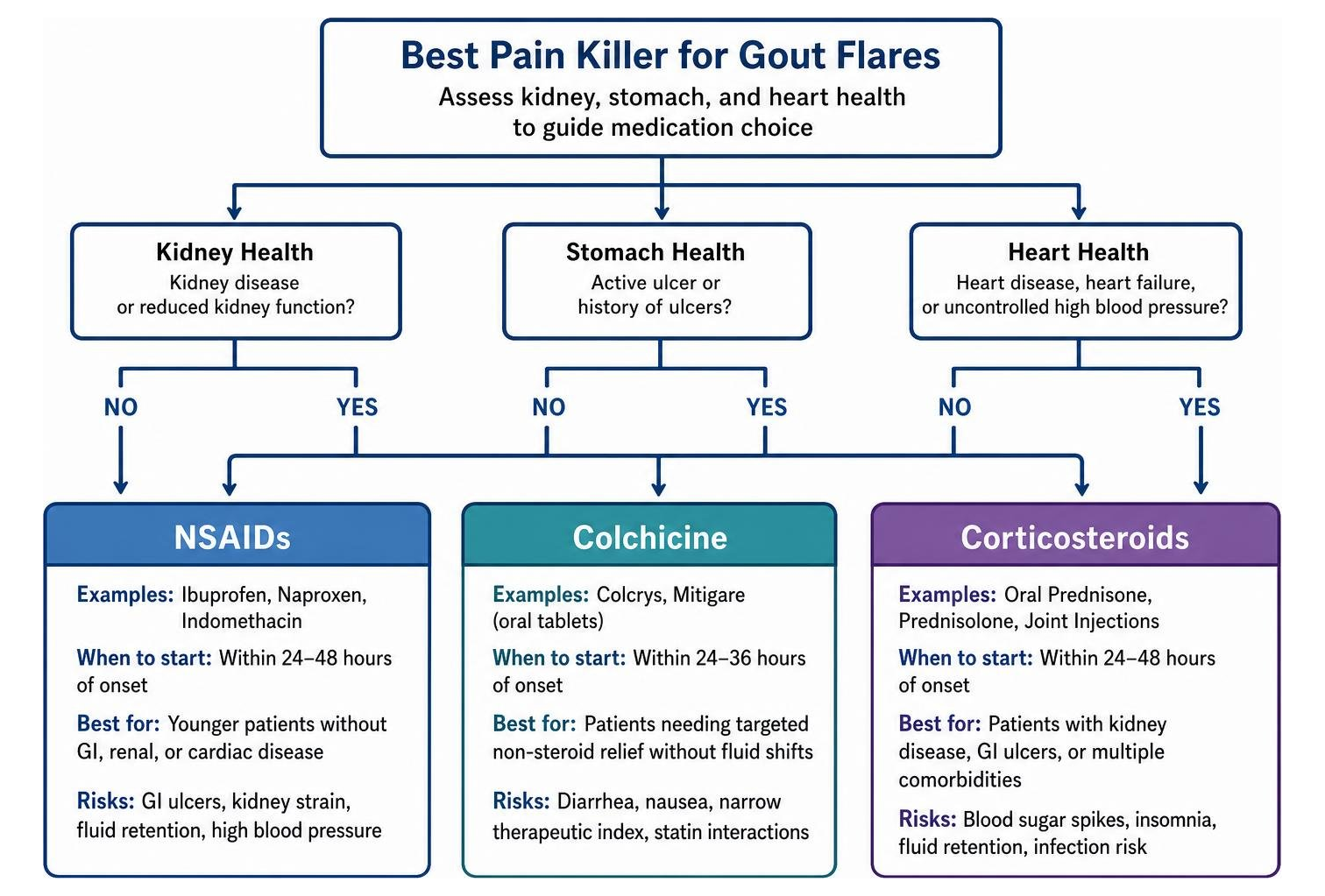
Contraindications for Kidney Disease, Ulcers, and Heart Health
Decreased renal clearance of uric acid accounts for approximately 90% of hyperuricemia cases, meaning many people living with gout also have underlying renal impairment. For anyone with stage 3 or higher chronic kidney disease (CKD), active peptic ulcer disease, uncontrolled hypertension, or congestive heart failure, systemic NSAIDs present notable risks.
NSAIDs reduce renal blood flow, promote fluid retention, and can erode the stomach lining. When NSAIDs are necessary for individuals with mild gastrointestinal risks, co-prescribing a proton pump inhibitor (PPI) like omeprazole helps protect the stomach. However, for moderate-to-severe kidney or heart disease, short-term oral corticosteroids or localized joint injections are generally the safer clinical pathway.
Combining Pain Medications with Blood Thinners and Colchicine
Dangerous drug-drug interactions can occur if gout treatments are combined without a clear strategy:
- Anticoagulants: Taking NSAIDs alongside blood thinners (such as warfarin, apixaban, or rivaroxaban) significantly elevates the risk of gastrointestinal bleeding.
- Statins and Fibrates: Co-administering colchicine with cholesterol-lowering statins (like atorvastatin) or fibrates increases the risk of muscle toxicity and rhabdomyolysis due to shared metabolic pathways.
- CYP3A4 and P-gp Inhibitors: Strong inhibitors like clarithromycin or ketoconazole alter colchicine metabolism, causing toxic blood levels. Always review your complete medication list when selecting non-opioid pain medications.
Why Aspirin Should Be Avoided During Acute Attacks
While acetylsalicylic acid (aspirin) is an over-the-counter NSAID, it should not be used to treat an acute gout attack. At low to moderate analgesic doses, aspirin interferes with renal uric acid excretion, causing urate retention in the kidneys. This sudden shift in blood urate levels can destabilize existing crystals, prolonging inflammation and worsening the flare.
Acute Flare Pain Relief vs. Long-Term Uric Acid Management
It is critical to distinguish between immediate pain control and long-term metabolic stability. Acute medications suppress localized swelling, while long-term management focuses on lowering systemic uric acid levels.
Relying solely on temporary pain relievers without addressing high uric acid allows crystals to continuously accumulate, eventually leading to permanent joint erosion and chalky nodular deposits called tophi. Comprehensive care, detailed in clinical research on long-term gout management, combines rapid flare intervention with structured urate control rather than relying on short-term pain killer medicine alone.
The Role of Urate-Lowering Therapy (ULT)
The American College of Rheumatology recommends initiating urate-lowering therapy (ULT) for individuals who experience two or more flares per year, demonstrate radiographic joint damage, or have subcutaneous tophi.
- Allopurinol: The preferred first-line xanthine oxidase inhibitor. It is started at a low dose (≤100 mg daily, lower in CKD) and titrated upward to achieve a serum urate target below 6.0 mg/dL (or below 5.0 mg/dL for severe tophaceous disease). Genetic screening for the HLA-B*5801 allele is recommended for high-risk populations, including individuals of Southeast Asian and African descent, to prevent severe hypersensitivity reactions.
- Febuxostat: An alternative xanthine oxidase inhibitor used when allopurinol is not tolerated, monitored carefully in patients with cardiovascular disease.
- Probenecid: A uricosuric agent that enhances urinary uric acid excretion, requiring adequate hydration and preserved renal function (CrCl >40 mL/min).
Preventing Flare-Ups During Initial Treatment
When starting a medication like allopurinol, uric acid levels in the blood begin to drop. This change causes existing crystals within the joint cartilage to dissolve and destabilize, paradoxically triggering what is known as a mobilization flare.
To prevent patients from abandoning therapy, guidelines strongly recommend concurrent anti-inflammatory prophylaxis—such as daily low-dose colchicine (0.6 mg once or twice daily), low-dose NSAIDs, or low-dose prednisone—for at least the first 3 to 6 months of initiating ULT.
Home Remedies and Lifestyle Strategies to Ease Gout Pain
Medications form the cornerstone of gout care, but non-pharmacological therapies help calm inflamed tissues and shorten recovery time.
Immediate Physical Relief and Cryotherapy
- Targeted Cold Therapy: Apply a cold compress or an ice pack wrapped in a cloth to the joint for 15 to 20 minutes at a time, several times a day. Cold constricts local blood vessels, reducing fluid accumulation and numbing sharp pain.
- Joint Elevation and Rest: Elevate the affected limb on a pillow above heart level to encourage lymphatic drainage and relieve throbbing pressure.
- Bedding Cradles: Use a blanket lift or prop pillows under the covers to keep bed linens off your feet at night, preventing painful pressure on sensitive joints.
- Hydration: Drink plenty of water throughout the day to support kidney function and assist natural urate filtration.
Dietary Triggers and Anti-Inflammatory Nutrition
About 20% of the body’s uric acid comes from purines in food. Adjusting dietary habits helps lower metabolic burden and prevents repeated flares.
- Foods to Limit: Organ meats (liver, sweetbreads), high-purine seafood (anchovies, sardines, mussels, scallops), red meat, and processed foods sweetened with high-fructose corn syrup.
- Beverages to Avoid: Regular beer and non-alcoholic beer, which contain high purine concentrations from yeast and impair renal urate clearance.
- Beneficial Choices: Fresh vegetables, low-fat dairy products, cherries, and high-fiber whole foods featured in our anti-inflammatory eating guide, which showcases the best anti-inflammatory foods to support metabolic balance.
When to Seek Immediate Medical Attention
Self-treatment is not appropriate for every presentation. Seek prompt medical care if you experience any of the following:
- Systemic Symptoms: A high fever, chills, nausea, or systemic weakness accompanying joint pain, which can indicate septic arthritis (a serious joint infection requiring emergency drainage and intravenous antibiotics).
- First-Time Severe Swelling: If you have never been clinically diagnosed with gout, a provider must evaluate the joint and analyze synovial fluid under polarized microscopy to confirm monosodium urate crystals.
- Polyarticular Involvement: Sudden, simultaneous swelling across multiple large joints (such as the knees, ankles, and wrists).
- Lack of Improvement: Pain that fails to diminish after 48 hours of initial medical therapy.
Frequently Asked Questions About Gout Pain Relief
How quickly do acute gout pain medications start working?
NSAIDs and oral corticosteroids typically begin reducing joint pain and throbbing within 1 to 2 hours of administration. Colchicine starts disrupting neutrophil migration quickly, but its full anti-inflammatory effect can take 12 to 24 hours to peak. If left untreated, an acute gout attack usually lasts 1 to 2 weeks before resolving on its own.
Can I take Tylenol or Advil while using colchicine?
Acetaminophen (Tylenol) can be taken with colchicine because it works through central analgesic pathways without compounding gastrointestinal irritation. Combining ibuprofen (Advil) with colchicine increases the risk of stomach irritation, ulceration, and digestive tract bleeding. If an NSAID must be combined with colchicine under medical guidance, taking a protective proton pump inhibitor (like omeprazole) is often recommended.
Why does pain worsen after starting uric acid medications?
Starting a urate-lowering medication like allopurinol causes uric acid concentrations in the bloodstream to fall. This shift begins dissolving crystal deposits inside the joint space, temporarily shedding small crystal fragments that trigger an acute inflammatory reaction. This is why physicians co-prescribe 3 to 6 months of daily low-dose anti-inflammatory prophylaxis when starting urate-lowering therapy.
Conclusion
Managing an acute gout flare effectively requires fast action, selecting an anti-inflammatory tailored to your medical history, and pairing short-term symptom relief with long-term metabolic care. Whether utilizing an over-the-counter NSAID, low-dose colchicine, or targeted corticosteroids, intervening within the first 24 hours is essential to halt the inflammatory cascade.
If recurrent flares, unmanaged joint inflammation, or complex medication interactions are impacting your daily quality of life, our multidisciplinary team at US Pain Care is here to help. We provide advanced, physician-led pain management that evaluates the whole person, helping you build a clear strategy to overcome persistent joint pain and find the best pain reliever for your needs.
{“@context”: “https://schema.org”, “@graph”: [{“@type”: “Article”, “headline”: “Best Pain Killer for Gout Flare Relief | US Pain Care”, “description”: “Find the best pain killer for gout flares, compare NSAIDs, colchicine and steroids, and learn when to seek care. Read US Pain Care’s guide.”, “author”: {“@type”: “Person”, “name”: “Paul Lynch”}, “publisher”: {“@type”: “Organization”, “name”: “US Pain Care”, “logo”: {“@type”: “ImageObject”, “url”: “https://firebasestorage.googleapis.com/v0/b/ai-templates.appspot.com/o/bot%2FalTvOGuAQFWrD2hChGTd%2Flogo%2FUS-PAIN-MAIN-LOGO-FINAL.png?alt=media&token=6a86d9b0-0182-4ade-97a8-b742dd4b6a77”}}, “datePublished”: “2026-09-05T02:02:47+00:00”, “dateModified”: “2026-09-05T02:02:59.684089”, “mainEntityOfPage”: {“@type”: “WebPage”, “@id”: “https://uspain.com/all-about-the-best-pain-killer-for-gout-compare-relief-options/”}, “image”: “https://images.pexels.com/photos/5637781/pexels-photo-5637781.jpeg?auto=compress&cs=tinysrgb&h=650&w=940”}, {“@type”: “FAQPage”, “mainEntity”: [{“@type”: “Question”, “name”: “What is the best pain killer for a gout flare?”, “acceptedAnswer”: {“@type”: “Answer”, “text”: “The article states that NSAIDs, colchicine, and corticosteroids are all first-line therapies for acute gout flare pain, with similar overall analgesic efficacy in comparative clinical trials. The best choice depends on personal health history, kidney function, and how early treatment begins.”}}, {“@type”: “Question”, “name”: “When should you start treatment for a gout attack?”, “acceptedAnswer”: {“@type”: “Answer”, “text”: “Treatment should be started as early as possible because gout pain can peak within 6 to 12 hours. NSAIDs and corticosteroids are optimally started within 24–48 hours of onset, while colchicine is best started within 24–36 hours.”}}, {“@type”: “Question”, “name”: “Are over-the-counter NSAIDs good for gout pain?”, “acceptedAnswer”: {“@type”: “Answer”, “text”: “Over-the-counter NSAIDs such as ibuprofen or naproxen can be practical first-line options for people without major contraindications. They work best when taken early at anti-inflammatory dosages, but they do not lower uric acid levels or dissolve existing urate crystals.”}}, {“@type”: “Question”, “name”: “Who should use corticosteroids for gout flare pain?”, “acceptedAnswer”: {“@type”: “Answer”, “text”: “Corticosteroids such as oral prednisone, prednisolone, or joint injections may be best suited for patients with kidney disease, gastrointestinal ulcers, or multiple comorbidities. Key risks include blood sugar spikes, insomnia, fluid retention, and infection risk.”}}, {“@type”: “Question”, “name”: “What are the risks of colchicine for gout?”, “acceptedAnswer”: {“@type”: “Answer”, “text”: “Colchicine targets the inflammatory response triggered by urate crystals and may help patients needing non-steroid relief without fluid shifts. Its precautions include diarrhea, nausea, a narrow therapeutic index, and interactions with statins.”}}]}]}