

Key Therapeutic Ingredients in the Best Massage Oil for Muscle Aches
The best massage oil for muscle aches blends targeted, active botanicals such as Arnica montana, cooling menthol, warming camphor, and wintergreen with lightweight, skin-nourishing carrier oils like cold-pressed jojoba or sweet almond oil. These synergistic blends soothe acute soreness, reduce localized inflammation, improve microcirculation, and provide sustained glide for deep tissue myofascial release. Using the best massage oil for muscle aches can enhance recovery and comfort.
Selecting an optimal topical formula involves evaluating active therapeutic botanicals alongside their carrier delivery systems. At US Pain Care, our clinical teams emphasize understanding the precise mechanisms behind topical relief so you can choose solutions that directly target your specific muscular discomfort.
Before applying any new formula, consider your skin sensitivity, medication profile, and the character of your pain. Oils that feel soothing for routine soreness should not be used on open wounds, rashes, or unexplained swelling; persistent, radiating, or worsening symptoms deserve professional evaluation.
Here are the key therapeutic ingredients that define high-performing formulations:
- Arnica Montana: Sourced from alpine daisy blossoms, arnica contains helenalin, a sesquiterpene lactone renowned for calming localized swelling, soothing post-exertional muscular soreness, and accelerating the fading of minor bruising.
- Menthol: A compound naturally derived from mint oils that stimulates transient receptor potential melastatin 8 (TRPM8) receptors in epidermal tissue. This triggers an invigorating cooling sensation that temporarily desensitizes pain receptors and produces a rapid counter-irritant effect to blunt sharp muscular aches.
- Camphor & Wintergreen (Methyl Salicylate): Camphor provides a mild numbing sensation, while wintergreen acts as a potent plant-derived salicylate. Together, they generate a dual warming-cooling effect that boosts local microcirculation, increases tissue elasticity, and eases deep, stubborn tension.
- Eucalyptus: Rich in 1,8-cineole (eucalyptol), eucalyptus provides a clarifying aroma and notable anti-inflammatory properties that assist in easing tight myofascial bands and relaxing constricted muscle fibers.
- Turmeric Root Oil: Concentrated turmeric oil supplies curcuminoids that counteract oxidative stress and blunt local inflammatory cascades, making it exceptionally helpful for joint stiffness and aching muscular insertions.
- Magnesium: Often suspended in lightweight formulas, transdermal magnesium supports neuromuscular relaxation, helping to calm acute spasms, replenish cellular electrolytes, and reduce cramping after intense physical exertion.
- Skin-Nourishing Carrier Bases (Sweet Almond, Jojoba, Sunflower, & Olive Oil): Essential oils require stable, non-comedogenic carrier oils to prevent epidermal irritation and enhance lipid-soluble absorption. Cold-pressed carrier oils like jojoba closely mimic the skin’s natural sebum, ensuring sustained glide for deep tissue manipulation without clogging pores or leaving a heavy, greasy residue.
Top Types of Massage Oils for Deep Muscle Relief
For optimal results, incorporating the best massage oil for muscle aches into your routine can make a significant difference in your recovery process.
Finding relief requires matching the oil formulation to your specific type of pain—whether you are dealing with acute athletic soreness, stress-induced neck spasms, or systemic joint stiffness. For a deeper look at therapeutic botanicals, review these 10 Essential Oils for Sore Muscle and Pain Relief to understand how individual plant compounds interact with neuromuscular pathways.
| Oil Type / Active Base | Key Ingredients | Sensory Profile | Best For | Absorption Rate |
|---|---|---|---|---|
| Arnica & Herbal Blends | Arnica Montana, Birch Leaf, Rosemary | Neutral to Mild Herbal | Bruising, overexertion, everyday aches | Moderate |
| Cooling Analgesic | Menthol, Peppermint, Eucalyptus | Crisp, Intense Cold | Post-workout DOMS, acute muscle fatigue | Fast |
| Warming Spiced Blends | Wintergreen, Camphor, Clove Bud | Thermal Warmth | Chronic tightness, lower back stiffness | Moderate to Slow |
| Calming Aromatherapeutic | Lavender, Roman Chamomile, Marjoram | Floral, Herbaceous | Stress tension, nighttime muscle spasms | Fast to Moderate |
| High-Concentration Botanical | Turmeric, Ambrette Seed, Sesame Base | Earthy, Musky | Joint stiffness, localized inflammation | Moderate |
Finding the Best Massage Oil for Muscle Aches and Inflammation
Moreover, when searching for the best massage oil for muscle aches, ensure it contains high-quality natural ingredients to maximize effectiveness.
When swelling, tenderness, and joint stiffness accompany general muscle fatigue, look for formulations built around arnica extract and concentrated turmeric root oil. Natural botanicals with high concentrations of sesquiterpenes and curcumin work synergistically with carrier oils to calm inflamed tissues and downregulate inflammatory enzymes. Blends incorporating plant-derived ambrette seed musk oil further soothe sensitive skin while allowing deeper penetration over high-stress structural areas like the knees, lower back, and shoulders.
Choosing the Best Massage Oil for Muscle Aches from Workouts
Delayed onset muscle soreness (DOMS) calls for fast-acting counter-irritants that distract sensory nerves and stimulate local blood flow. Formulas that pair natural menthol with eucalyptus and methyl salicylate stimulate peripheral circulation, helping dissipate metabolic waste products accumulated during high-intensity training. The resulting cooling-to-warming sensation interrupts peripheral pain signaling, easing structural tightness and reducing involuntary muscle cramps so you can recover quickly between workout sessions.
Choosing the best massage oil for muscle aches is crucial for addressing discomfort and facilitating faster recovery.
Warming and Relaxing Essential Oil Blends
Physical pain frequently pairs with emotional stress and nervous system overactivity. When workday tension manifests as shoulder tightness, trapezius spasms, or nighttime cramps, warming botanical blends provide systemic relief. Pure lavender oil, sweet marjoram, Roman chamomile, and clove bud create comforting warmth that soothes trigger points, relieves myofascial tension, and signals the central nervous system to downshift out of fight-or-flight mode into a restorative recovery state.
Broad-Spectrum Botanical and Carrier Oil Blends
For sustained deep tissue work, the glide of the carrier medium matters as much as the active extracts. Formulations combining cold-pressed jojoba, sweet almond, camellia seed, and broad-spectrum botanical extracts provide the structural grip needed to release dense fascia without dragging or pulling the skin. These nutrient-dense blends nourish the epidermal lipid barrier, deliver essential fatty acids, and absorb cleanly without leaving behind a heavy or sticky residue.
How to Properly Apply Massage Oil for Maximum Pain Relief
The application technique directly influences how well a massage oil works. Following a systematic process ensures you gain both the botanical benefits of active plant extracts and the mechanical advantages of myofascial release:
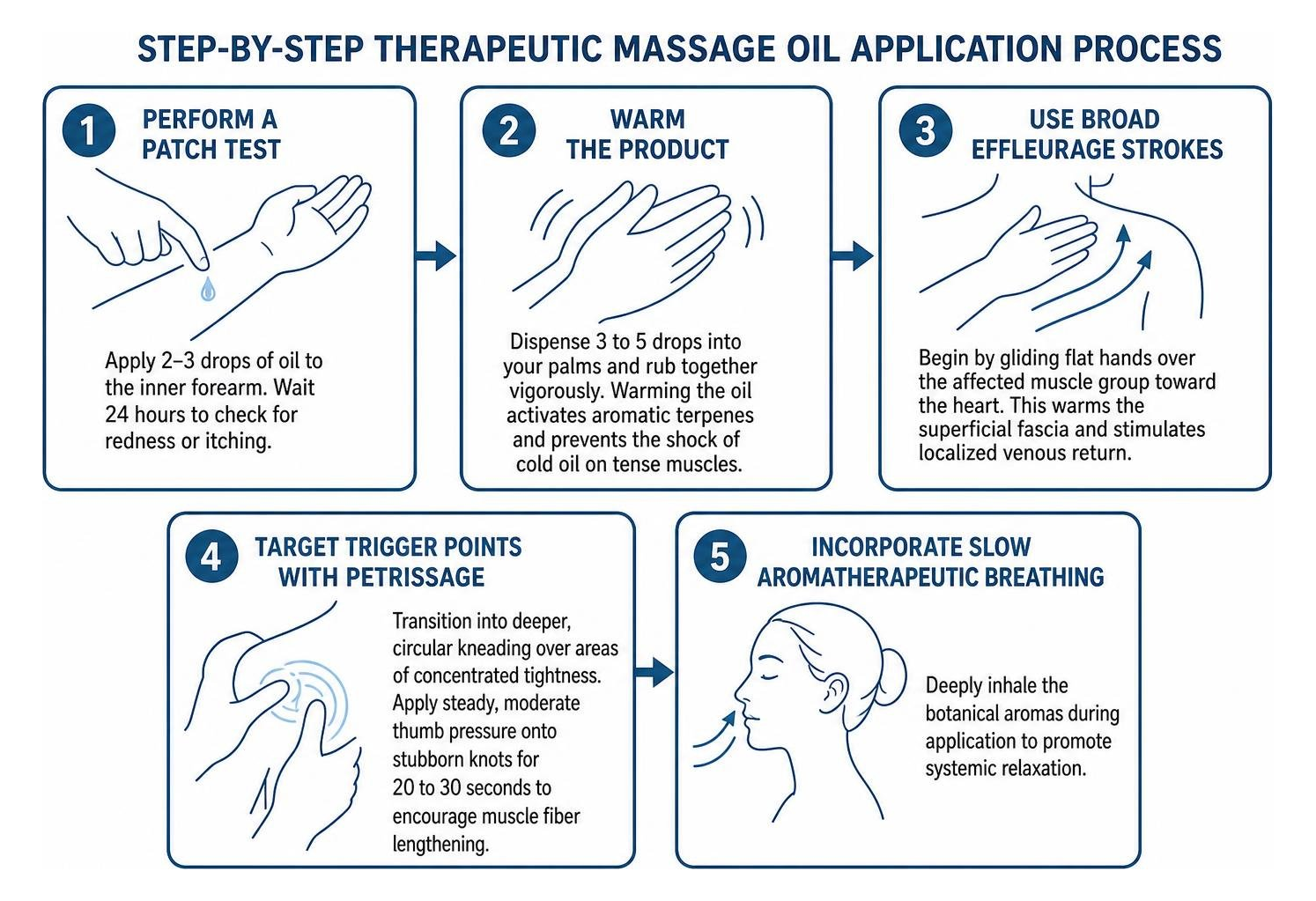
- Perform a Patch Test: Apply 2–3 drops of oil to the inner forearm. Wait 24 hours to verify that your skin tolerates the botanical ingredients without redness, burning, or itching.
- Warm the Product: Dispense 3 to 5 drops into your palms and rub them together vigorously for 10 to 15 seconds. Warming the oil activates volatile aromatic terpenes and prevents the reflexive shock of cold oil on tense muscles.
- Use Broad Effleurage Strokes: Begin by gliding flat hands over the affected muscle group toward the heart. This warms the superficial fascia, spreads the oil evenly, and stimulates localized venous and lymphatic return.
- Target Trigger Points with Petrissage: Transition into deeper, circular kneading over areas of concentrated tightness. Apply steady, moderate thumb pressure onto stubborn knots for 20 to 30 seconds to encourage muscle fiber lengthening and ischemic release. For specialized modalities, learn more about Deep Tissue, Face, and Sports Massages to see how licensed clinicians adjust pressure based on tissue density.
- Incorporate Slow Aromatherapeutic Breathing: Deeply inhale the botanical aromas throughout application to engage the parasympathetic nervous system and promote systemic neuromuscular relaxation.
Frequently Asked Questions About Sore Muscle Massage Oils
How often should you apply massage oil to sore muscles?
For acute post-workout soreness or isolated stiffness, applying massage oil once or twice daily is generally effective. If you are managing chronic postural tension or repetitive strain, a daily evening massage routine can help maintain soft tissue pliability and prevent nocturnal muscle cramping. Always monitor your skin’s response; if any redness or irritation develops, discontinue use and allow the epidermal barrier to recover.
Can massage oils stain clothes or linens?
Certain concentrated formulations—particularly those containing unrefined seed oils or rich botanical extracts like turmeric—can leave marks on lighter fabrics if applied excessively. To prevent staining, massage the oil thoroughly into the skin until completely absorbed, or drape a dark, dedicated towel over treatment areas during application. If oil transfers to linens, pretreat the spot with warm water and baking soda or grease-cutting dish soap before running a standard hot water laundry cycle.
Should you wash off massage oil after use?
Most high-grade massage oils are formulated with nutrient-rich carrier bases like jojoba and sweet almond that naturally hydrate the skin, meaning they do not require immediate washing. However, if you have sensitive or acne-prone skin, or if the product contains strong aromatics and warming counter-irritants, wiping down the area with a warm, damp towel 20 minutes post-massage removes excess surface residue while locking in underlying botanical benefits.
Conclusion: Reclaim Comfort and Mobility
Using top-rated topical oils is a practical, non-invasive way to relieve everyday muscle stiffness, calm exercise fatigue, and create restorative self-care routines at home. By selecting products formulated with clean carrier bases and proven botanicals like arnica, menthol, camphor, and lavender, you can target tight tissues and ease tension safely.
Utilizing the best massage oil for muscle aches not only alleviates pain but also enhances your overall wellness routine.
At US Pain Care, we understand that topical therapies are most effective when paired with a comprehensive approach to musculoskeletal wellness. If your muscular discomfort evolves into chronic, radiating, or debilitating pain that limits your everyday life, discover our clinical perspective on the best oils for pain and explore how our physician-led team can help you achieve lasting, multimodal relief.
To find the best massage oil for muscle aches, consider products that have been clinically tested for efficacy and safety.