

Choosing the Best Essential Oil for Osteoarthritis Relief
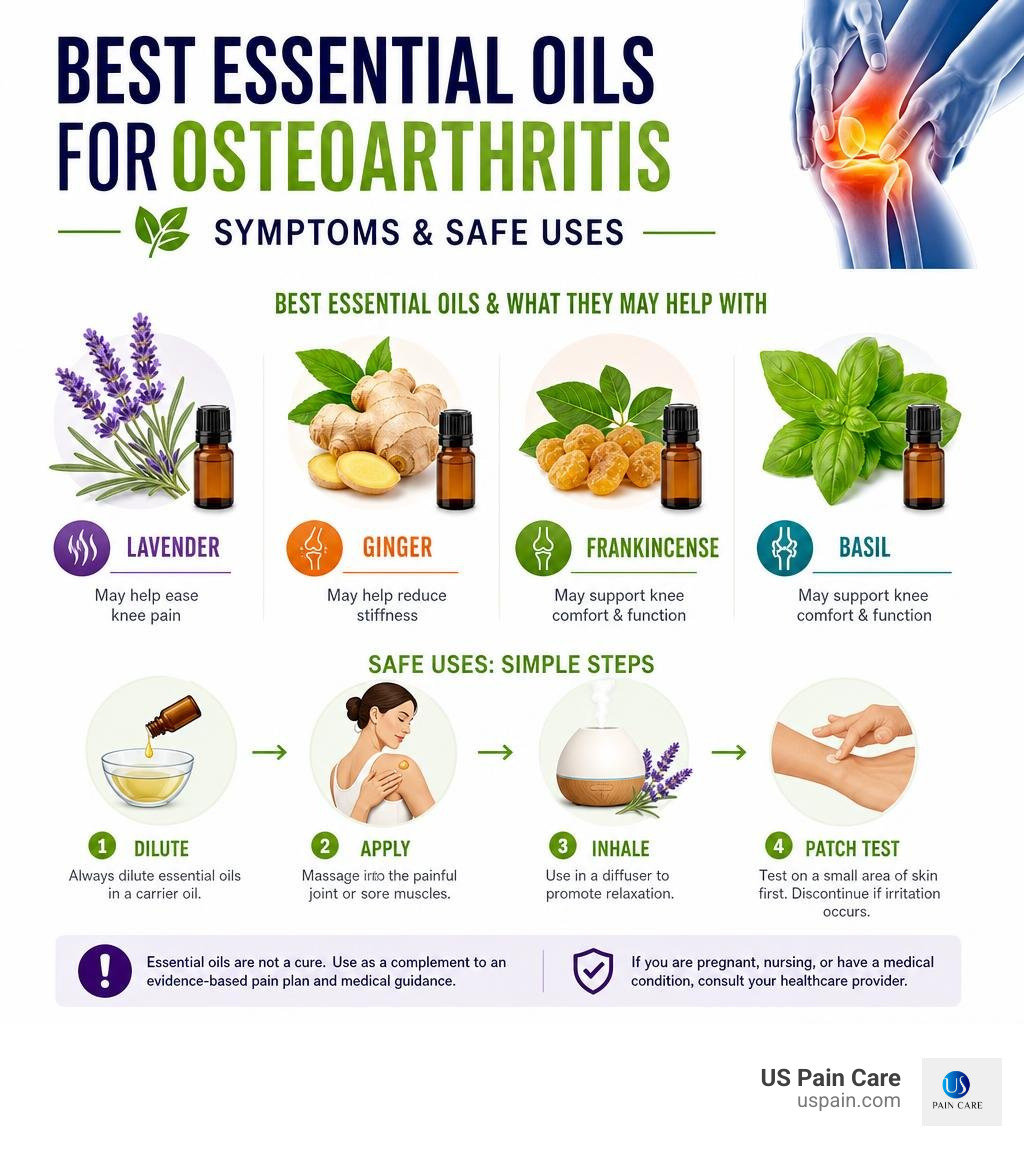
The best essential oil for osteoarthritis depends on the symptom you want to ease. Lavender has some of the clearest human evidence for short-term knee pain relief through aromatherapy massage. Ginger may help with stiffness, while frankincense and basil-based topical oils have shown promising results for knee pain and function in small clinical trials.
Essential oils are not a cure for osteoarthritis, and they cannot rebuild worn cartilage. But when they are properly diluted and used with massage or inhalation, they may provide a comforting, short-term addition to an evidence-based pain plan that includes movement, physical therapy, weight management where appropriate, and clinician-guided medication.
Osteoarthritis is the most common form of arthritis. It involves gradual changes to cartilage, bone, and the joint lining that can lead to pain, stiffness, swelling, and reduced mobility. Around 365 million people worldwide live with the condition. For many, especially those tired of relying only on prescription or over-the-counter medicine, a safe aromatherapy routine can offer a small but meaningful sense of control.
The key is to keep expectations realistic: choose well-studied oils, dilute them in a carrier oil, patch-test first, and treat them as a complement rather than a replacement for medical care.
I’m Dr. Paul Lynch, a double board-certified pain management physician and anesthesiologist with 17 years of experience caring for people with chronic pain through comprehensive, evidence-based plans. In this guide to the best essential oil for osteoarthritis, I will help you separate promising symptom-relief options from claims that go beyond the research.
Basic best essential oil for osteoarthritis glossary:
Understanding Osteoarthritis: Joint Degeneration and Aromatherapy Mechanisms
Osteoarthritis (OA) is a whole-joint disease. While it is often described as “wear and tear,” the process is far more active. Over time, the protective hyaline cartilage cushioning the ends of your bones gradually thins and breaks down. Beneath that cartilage, subchondral bone undergoes remodeling, often forming painful bone spurs (osteophytes). Simultaneously, the synovium—the delicate inner membrane lining the joint capsule—becomes chronically irritated and inflamed.
This combination of mechanical friction and biochemical irritation drives joint stiffness, swelling, and deep aching pain. Over time, persistent nociceptive input from the joint can alter central nervous system processing, contributing to central sensitization where pain pathways become amplified.
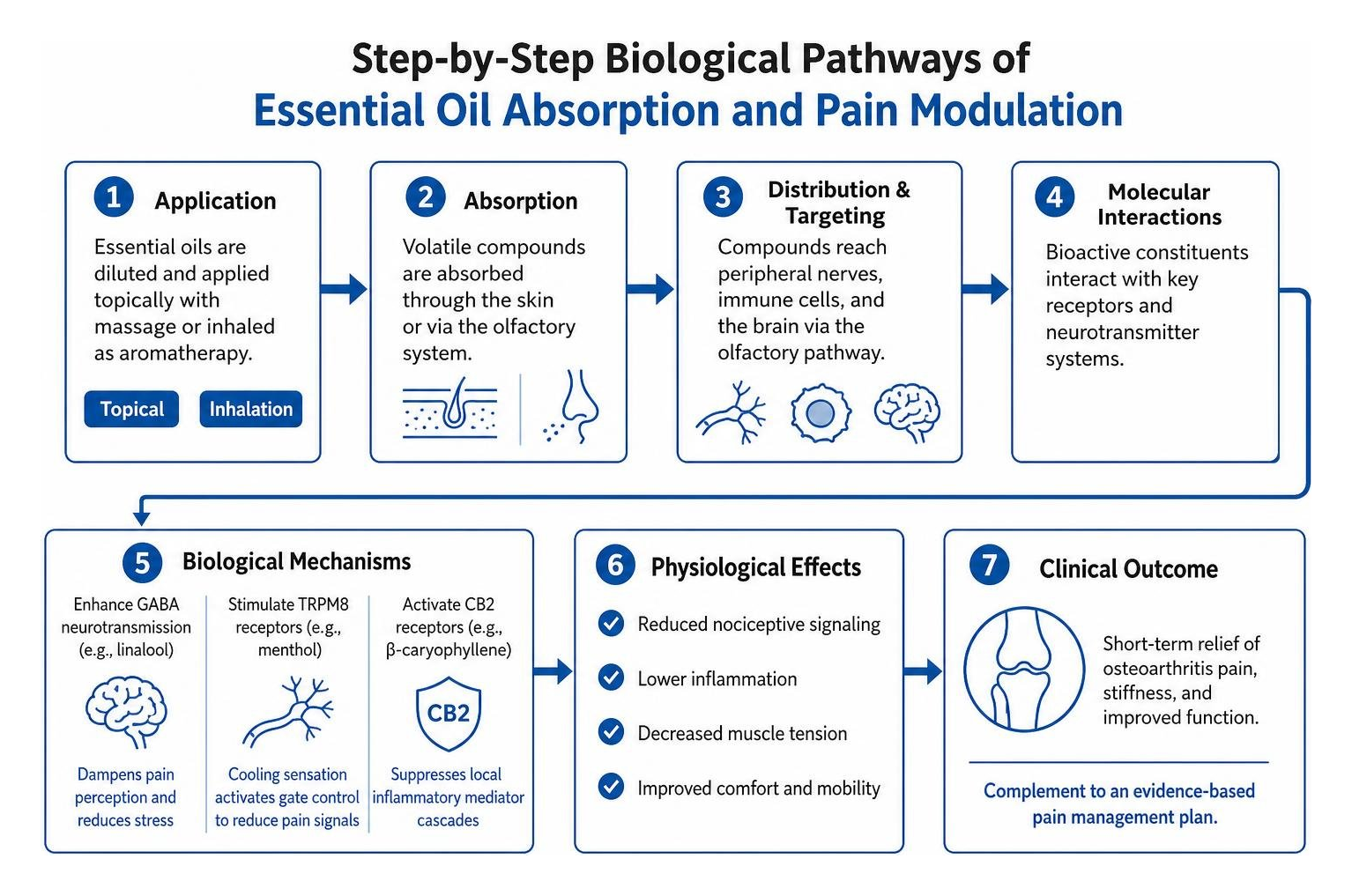
How do essential oils interact with these complex pain pathways? Plant-derived volatile compounds contain complex mixtures of terpenes and phenylpropanoids that work through several biological mechanisms:
- Neurotransmitter and Central Pathway Modulation: Certain aromatic volatiles, such as linalool found in lavender, can cross the olfactory system to influence the limbic system, enhancing gamma-aminobutyric acid (GABA) neurotransmission. GABA acts as an inhibitory brake on pain signaling, dampening the brain’s perception of discomfort and reducing stress-induced muscle tension.
- Receptor Desensitization and Counter-Irritation: Monoterpenes like menthol stimulate transient receptor potential melastatin 8 (TRPM8) receptors on sensory nerve fibers. This produces a cooling sensation that activates the “gate control” mechanism of pain, competing with dull, aching joint signals before they reach the brain.
- Endocannabinoid and Receptor Binding: Compounds like beta-caryophyllene selectively bind to peripheral cannabinoid type-2 (CB2) receptors, helping suppress localized inflammatory mediator cascades without psychoactive effects.
- Cytokine and Inflammatory Enzyme Suppression: Bioactive components interfere with nuclear factor-kappa B (NF-κB) pathways, downregulating pro-inflammatory cytokines like tumor necrosis factor-alpha (TNF-α), interleukin-1 beta (IL-1β), and interleukin-6 (IL-6), while suppressing cyclooxygenase-2 (COX-2) and 5-lipoxygenase (5-LOX) enzymes (Marrelli et al., 2020). For a broader exploration of these methods, examine our guide to Non Pharmacological And Non Opioid Solutions For Pain Management.
Evidence-Based Rankings: What Is the Best Essential Oil for Osteoarthritis?
Not all essential oils offer the same therapeutic properties. Clinical research shows that specific terpenes target distinct symptoms, ranging from localized swelling to systemic tension.
| Essential Oil | Primary Active Terpenes | Primary Symptom Target | Optimal Application Method | Key Clinical Finding |
|---|---|---|---|---|
| Lavender (Lavandula angustifolia) | Linalool, Linalyl acetate | Pain intensity, sleep disruption | Topical massage (diluted), Inhalation | Significant immediate and 1-week knee pain reduction in a 90-patient RCT |
| Ginger (Zingiber officinale) | Zingiberene, Gingerols, Shogaols | Joint stiffness, deep ache | Warming topical massage (diluted) | 40% reduction in knee pain/stiffness vs. placebo in 247 patients |
| Frankincense (Boswellia serrata) | Boswellic acids, Alpha-pinene | Chronic inflammation, cartilage stress | Topical carrier blend (diluted) | Significant WOMAC and VAS pain improvements over 4 weeks vs. placebo |
| Basil (Ocimum basilicum) | Linoleic acid, Oleic acid, Linalool | Functional mobility, joint flexion | Topical application (with sesame base) | Non-inferior pain and functional relief compared to 1% diclofenac gel |
| Peppermint (Mentha piperita) | Menthol, Menthone | Acute flare-ups, localized heat | Cooling topical blend, Nanoemulsion | Downregulates thermal hyperalgesia and elevates antioxidant enzymes |
| Eucalyptus (Eucalyptus globulus) | 1,8-Cineole (Eucalyptol) | Pain distress, surgical stiffness | Inhalation / Diffuser, Topical massage | Inhalation significantly reduced pain and blood pressure post-knee surgery |
Ginger and Turmeric: The Best Essential Oil for Osteoarthritis Inflammation and Swelling
Ginger and turmeric are two botanical roots renowned for anti-inflammatory performance. In osteoarthritis, the accumulation of synovial fluid combined with oxidative stress produces painful swelling.
A landmark clinical trial evaluated highly concentrated ginger extract in 247 patients with knee osteoarthritis and observed a 40% reduction in knee pain and stiffness compared to placebo, highlighting its potential as an adjunct to conventional NSAIDs. In animal models of joint inflammation, turmeric essential oil demonstrates remarkable bioactivity, preventing joint swelling by 95% to 100% when administered prior to peak inflammatory onset, and reducing established swelling by up to 68%.
When massaged topically in a carrier oil, ginger’s warming action promotes localized microcirculation, helping clear inflammatory exudates from sluggish joint capsules.
Lavender and Eucalyptus: The Best Essential Oil for Osteoarthritis Pain and Joint Stiffness
Lavender is one of the most thoroughly investigated essential oils for human joint pain. In a randomized controlled trial of 90 patients with knee osteoarthritis, participants receiving aromatherapy massage with lavender essential oil experienced immediate, statistically significant reductions in pain severity that persisted through the first week of treatment.
Eucalyptus oil, packed with 1,8-cineole (eucalyptol), works synergistically through inhalation. In clinical trials of patients undergoing total knee replacement surgery, inhaling eucalyptus oil for 30 minutes over consecutive days significantly decreased subjective pain scores and reduced systolic blood pressure compared to control groups. Emerging preclinical trials also highlight botanical relatives; research on the antiarthritic and antinociceptive properties of ylang-ylang essential oil demonstrates significant reductions in pro-inflammatory IL-6 and articular cartilage damage.
Frankincense and Basil Oil: Clinical Trial Evidence for Knee Mobility
While frankincense has historically been used in resin form, specialized topical oily solutions enriched with boswellic acids have demonstrated impressive clinical results. In a double-blind, placebo-controlled clinical trial involving 70 patients with knee osteoarthritis, topical application of a frankincense formulation significantly decreased visual analogue scale (VAS) pain scores and improved Western Ontario and McMaster Universities Osteoarthritis Index (WOMAC) functional scores over 4 weeks (Mohsenzadeh et al., 2023).
Similarly, a 2024 double-blind clinical trial compared topical Persian basil oil formulated in sesame oil against standard 1% diclofenac gel in 100 patients with knee osteoarthritis (Askari et al., 2024). The researchers found no statistically significant difference in pain reduction, 8-meter walking speed, or WOMAC functional improvements between basil oil and diclofenac gel over 4 weeks, demonstrating that properly standardized herbal oils can provide functional relief comparable to standard topical NSAIDs.
Peppermint and Rosemary: Synergistic Relief for Sore Joints
Peppermint brings the potent cooling action of menthol, while rosemary supplies rosmarinic acid, camphor, and 1,8-cineole. Together, they create a thermal contrast that distracts sensory nerve endings from deep mechanical aching.
Recent studies published in BMC Complementary Medicine and Therapies explored a nanoemulsion delivery system combining peppermint and rosemary essential oils in osteoarthritic animal models. The researchers found that the blend substantially improved mechanical and thermal pain thresholds while significantly raising tissue antioxidant enzymes (superoxide dismutase and glutathione peroxidase) and lowering malondialdehyde (MDA), a marker of oxidative cartilage breakdown.
How to Safely Apply and Dilute Essential Oils for Joint Comfort
Pure essential oils are highly concentrated botanical distillates. Applying them undiluted (“neat”) directly to the skin can lead to severe contact dermatitis, chemical burns, or permanent dermal sensitization.
To use essential oils safely, you must always disperse them into a lipid-rich carrier oil.
Choosing the Right Carrier Oil
- Jojoba Oil: Structurally similar to human sebum, jojoba penetrates deeply without leaving a greasy residue, making it ideal for morning applications.
- Sweet Almond Oil: High in fatty acids and vitamin E, providing smooth glide for extended hands-on joint massage.
- Olive Oil or Fractionated Coconut Oil: Readily accessible, stable bases that create a protective barrier on aging, delicate skin.
Proper Dilution Ratios for Adults with Osteoarthritis
For chronic musculoskeletal applications, aim for a 1% to 2% dilution:
- 1% Dilution (for daily maintenance or sensitive, elderly skin): 5 to 6 drops of essential oil per 1 fluid ounce (30 mL) of carrier oil.
- 2% Dilution (for acute joint stiffness or localized knee/hand massage): 10 to 12 drops of essential oil per 1 fluid ounce (30 mL) of carrier oil.
Practical Application Methods
- Targeted Joint Massage: Warm 1 teaspoon of your diluted oil blend between your palms. Use gentle, circular strokes around the patella (kneecap), wrist, or fingers for 5 to 10 minutes. Avoid pressing heavily on swollen, inflamed bony protrusions.
- Aromatherapy Diffusion: Add 3 to 5 drops of lavender or eucalyptus to an ultrasonic water diffuser 30 minutes before bed to promote restorative sleep and reduce central pain perception.
- Warm Soaking Compresses: Add 4 to 6 drops of essential oil to 1 tablespoon of carrier oil or whole milk, stir into a basin of warm water, soak a clean towel, and drape it over stiff joints for 15 minutes.
For patients seeking comprehensive integrative care, incorporating these practices alongside Alternative Therapies For Chronic Pain Management offers structured, non-invasive relief.
Safety Precautions, Contraindications, and Long-Term Pain Management
While essential oils are natural, they contain potent biochemicals requiring respect and caution:
- Mandatory Patch Testing: Mix 1 drop of essential oil with 1 teaspoon of carrier oil. Apply a dime-sized amount to your inner forearm and wait 24 hours. If redness, itching, or swelling occurs, do not use that oil.
- Avoid High-Risk Oils (Wintergreen and Sweet Birch): Wintergreen oil consists almost entirely of methyl salicylate, a compound chemically identical to aspirin. Applying high concentrations topically can lead to systemic toxicity, especially for patients taking blood thinners like warfarin or those with aspirin sensitivities. Aromatherapists generally advise against DIY wintergreen blends.
- Phototoxicity Concerns: Cold-pressed citrus oils (such as bergamot, lime, or lemon) cause severe skin blistering and hyperpigmentation if exposed to direct sunlight or UV rays within 12 to 24 hours of application.
- Pregnancy and Organ Sensitivities: Avoid certain stimulating oils (including high-camphor rosemary and clary sage) during early pregnancy, and never ingest essential oils orally.
The Role of Essential Oils in Multidisciplinary Pain Care
Aromatherapy should never be viewed as a standalone replacement for comprehensive medical care. Essential oils excel at soothing acute muscular guarding, easing morning stiffness, and supporting emotional well-being. However, long-term osteoarthritis management requires structural and systemic interventions.
At US Pain Care, our double board-certified physicians emphasize an integrative model that pairs symptom-modulating therapies with evidence-based physical therapy, image-guided regenerative or corticosteroid interventions, low-impact exercise regimens, and dietary support found in our Anti Inflammatory Eating Guide. Combining lifestyle modifications with clinical expertise gives you the best foundation for lifelong joint preservation. Discover more in our Holistic Pain Management Complete Guide.
Frequently Asked Questions About Essential Oils for Osteoarthritis
Can essential oils rebuild lost cartilage in arthritic joints?
No. Essential oils cannot regenerate worn hyaline cartilage, repair torn menisci, or reverse joint deformities caused by osteoarthritis. Their therapeutic value lies in reducing localized inflammation, improving microcirculation, desensitizing sensory nerve fibers, and easing the muscular tension surrounding stiff joints.
How often should I apply essential oil blends to my knees or hands?
For most individuals, applying a 1% to 2% diluted blend 2 to 3 times daily provides consistent relief. To prevent skin sensitization, consider rotating your essential oils every few weeks or taking a two-day break each week to allow your skin barrier to rest.
Are topical essential oils safer than oral NSAIDs for daily use?
Topical botanical oils avoid systemic gastrointestinal, renal, and cardiovascular side effects associated with chronic oral NSAID usage (such as ibuprofen or naproxen). While topical oils provide a safer safety profile for mild daily comfort, severe or worsening joint pain should always be evaluated by a medical physician.
Conclusion
Managing osteoarthritis requires a balanced, compassionate approach. While there is no magic cure in a bottle, using the right botanical extracts can provide noticeable comfort, reduce morning stiffness, and enhance daily mobility.
Whether you choose the clinically supported calming power of lavender, the warming comfort of ginger, or the targeted anti-inflammatory action of frankincense and basil, natural remedies work best as part of an active, comprehensive pain management strategy.
If joint pain is keeping you from doing what you love, connect with our team at US Pain Care to build a personalized, multidisciplinary treatment plan. Explore our complete directory on the best oils for pain to continue learning about safe, evidence-based joint relief.
Scientific References
Marrelli M, Amodeo V, Perri MR, Conforti F, Statti G. “Essential Oils and Bioactive Components against Arthritis: A Novel Perspective on Their Therapeutic Potential..” Plants (Basel, Switzerland), 2020. PMCID PMC7598204. Mohsenzadeh A, Karimifar M, Soltani R, Hajhashemi V. “Evaluation of the effectiveness of topical oily solution containing frankincense extract in the treatment of knee osteoarthritis: a randomized, double-blind, placebo-controlled clinical trial..” BMC research notes, 2023. PMCID PMC9984289. Askari A, Hasheminasab FS, Sadeghpour O, Naghizadehd MM, Ravansalar SA, Iraji A, Hashempur MH. “A randomized double-blind active-controlled clinical trial on the efficacy of topical basil (Ocimum basilicum) oil in knee osteoarthritis..” Frontiers in pharmacology, 2024. PMCID PMC11103000.