 By Dr. Paul Lynch, double board-certified pain physician and anesthesiologist
Advanced pain relief solutions are treatments that target a specific source of pain, such as an irritated nerve, a painful joint or damaged tissue, rather than only easing symptoms throughout the body. They include nerve stimulation devices, regenerative injections and minimally invasive procedures. The National Institute of Arthritis and Musculoskeletal and Skin Diseases lists options such as radiofrequency lesioning of nerves and spinal cord stimulation among treatments for back pain.
If you have lived with chronic pain for months or years, you may be tired of medicines that help only a little, or worried about side effects and dependence. You deserve a clear picture of what else exists and what each option can and cannot do. In my practice as a double board-certified pain physician and anesthesiologist, many patients tell me they did not know these options existed until their pain had gone on for years.
Advanced options are not right for everyone, but they may be worth discussing with a pain specialist.
How Advanced Options Differ
Most pain care starts with conservative steps: activity changes, physical therapy, and medicines such as anti-inflammatories. These can work well, but they do not help everyone.
The CDC opioid prescribing guideline states that nonopioid therapies are preferred for subacute and chronic pain. Advanced options give your physician more non-opioid tools to try.
What these options have in common:
- They target a specific pain source
- Many are done without open surgery
- Most are outpatient procedures
- They often follow a diagnostic step
- Results vary from person to person
What They Cannot Do
None of these treatments reverse aging or arthritis. The goal is to ease pain enough that you can move more, sleep better and do more of what matters to you.
Where They Fit in a Plan
Advanced options usually sit alongside, not instead of, exercise, physical therapy and healthy habits. A combined plan tends to make the most of each part.
If chronic pain is limiting your work, sleep or activity, a pain specialist can help find the source. Book an evaluation or call 1-877-940-3501.
Neuromodulation Options
Neuromodulation uses mild electrical pulses or targeted medicine delivery to change how pain signals travel through the nervous system. These options are usually considered for long-standing pain that has not responded to other care.
Spinal Cord Stimulation
A small implanted device sends a controlled electrical current to the spinal cord to block pain signals. The Cleveland Clinic guide to spinal cord stimulators explains that a temporary trial of a few weeks comes first, and a trial is usually considered successful if pain drops by at least half. Learn more about spinal cord stimulation.
Peripheral Nerve Stimulation
A thin lead placed next to a painful nerve outside the spinal cord sends mild pulses to interrupt pain signals. It may help long-lasting nerve pain in one area. See peripheral nerve stimulation.
Dorsal Root Ganglion Stimulation
This form of stimulation targets a cluster of sensory nerve cells beside the spine, allowing focused coverage of areas such as a foot, knee or the groin. See dorsal root ganglion stimulation.
Intrathecal Pump Therapy
A small implanted pump delivers medicine into the fluid around the spinal cord, so a much smaller dose may work closer to where pain signals travel. See intrathecal pump therapy.
Regenerative Medicine
Regenerative treatments aim to support the body’s own healing in damaged tissue. They are an active area of research, and the evidence is stronger for some conditions than others.
Platelet-Rich Plasma
PRP is made from a small sample of your own blood, spun in a centrifuge to concentrate the platelets, then injected into the painful area. According to OrthoInfo from the American Academy of Orthopaedic Surgeons, evidence is strongest for chronic tendon injuries, especially tennis elbow, and for mild to moderate knee osteoarthritis. See platelet-rich plasma therapy.
What to Expect with PRP
OrthoInfo notes that soreness at the injection site may increase for the first one to two weeks, and any benefit may take several weeks to appear. Few insurance plans cover PRP, so check your plan first.
Minimally Invasive Procedures
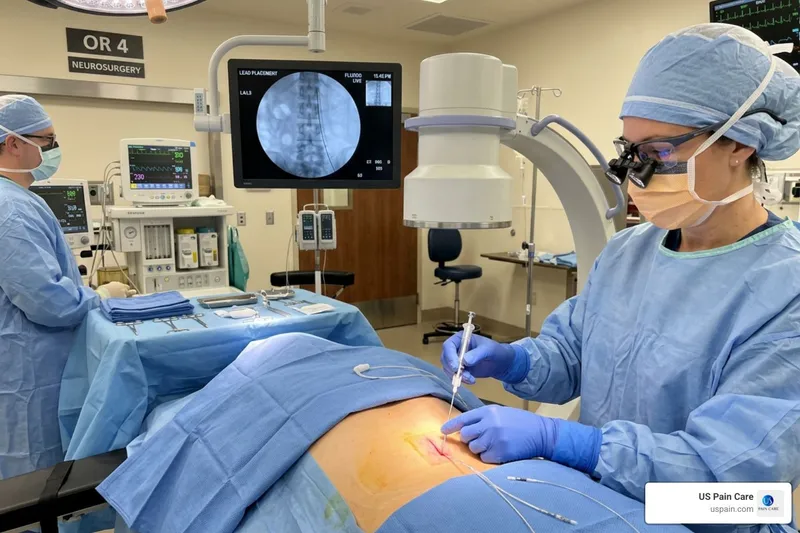
These procedures use imaging guidance to reach a precise spot through a needle or small incision. Recovery is usually much shorter than after open surgery.
Epidural Steroid Injection
Anti-inflammatory steroid medicine is placed in the epidural space around irritated spinal nerves, which may ease neck, back, arm or leg pain from sciatica, herniated discs or spinal stenosis. See epidural steroid injection.
Medial Branch Block
A small amount of numbing medicine is placed near the nerves to a facet joint. If pain eases, that joint is likely a pain source. See medial branch block.
Radiofrequency Ablation
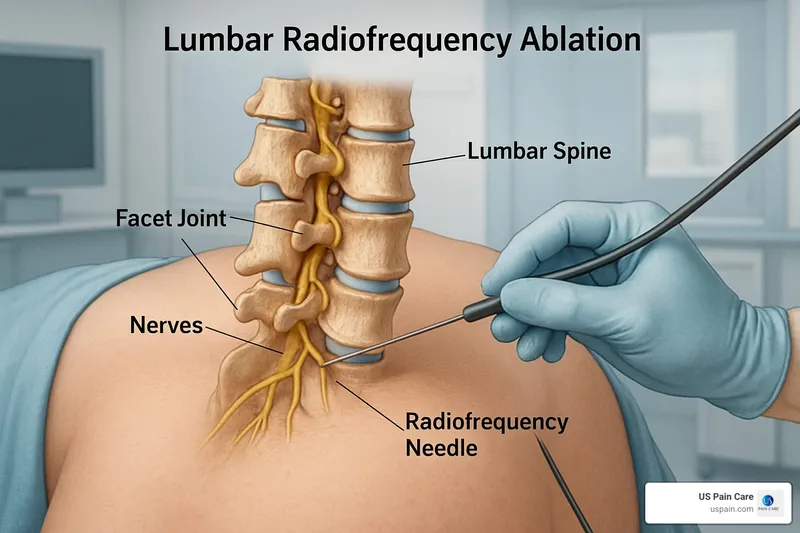
Heat from radio waves stops a small area of nerve from sending pain signals. The Cleveland Clinic radiofrequency ablation guide says relief typically lasts 6 to 12 months, sometimes longer, and the procedure can be repeated if the nerve regrows. See radiofrequency ablation.
The MILD Procedure
For lumbar spinal stenosis, small pieces of thickened ligament and bone are removed through a tiny incision to relieve pressure on nerves, without open surgery. See the MILD procedure.
Kyphoplasty
For painful spinal compression fractures, often from osteoporosis, a small balloon creates space inside the broken vertebra, which is then stabilized with bone cement. See kyphoplasty.
Who May Benefit
Advanced options may be considered for many kinds of long-standing pain, especially when the source can be identified. Your physician will look at your diagnosis, health history and goals.
Conditions where these options are often discussed include:
- Low back and neck pain
- Sciatica and nerve root pain
- Spinal stenosis
- Facet joint arthritis
- Knee pain from arthritis
- Complex regional pain syndrome
- Diabetes-related neuropathy
- Spinal compression fractures
Our condition guides explain several of these in detail, including sciatica, spinal stenosis, complex regional pain syndrome and neuropathy.
When They May Not Fit
An active infection, a bleeding problem, certain blood-thinning medicines or uncontrolled health conditions may rule out some procedures, at least for a time.
Understanding the Risks
Cleveland Clinic lists possible spinal cord stimulator risks such as infection and lead movement, and notes that complications after radiofrequency ablation are uncommon. Your physician will explain the risks of any option you consider.
What to Expect
Your path usually follows three broad steps. Each step is a conversation, and you are part of every decision.
I always ask patients what they most want to get back to, whether that is walking the dog or sleeping through the night. That goal shapes which option makes sense.
Step 1: Evaluation and Diagnosis
Your physician listens to how your pain started, what makes it better or worse and how it affects your life. NIAMS notes that most people do not need extra testing, but X-rays, CT or MRI may help when the source is unclear.
Step 2: Building Your Plan
Your physician explains which options fit your diagnosis, the likely benefits and risks of each, and what has to happen first, such as a diagnostic block or a stimulator trial.
Step 3: Treatment and Follow-Up
After treatment, follow-up visits track how you are doing. Your plan can be adjusted, repeated or changed based on your results.
When to See a Pain Specialist
NIAMS describes chronic back pain as pain that lasts longer than 12 weeks. Consider an evaluation if your pain has lasted that long, keeps coming back, travels into an arm or leg, or limits your work, sleep or daily activities.
It may also be time if you rely on pain medicine and want to explore non-opioid options, or if conservative care has not helped enough.
NIAMS advises seeing a doctor promptly for back pain with numbness or tingling, weakness in the legs, trouble urinating, fever, unplanned weight loss, or pain after a fall or injury.
Getting Care at US Pain Care
US Pain Care is a physician-led network of pain management practices in Arizona, California, Nevada, Texas, Oklahoma, Kansas and Georgia. Your visit starts with a review of your symptoms, your medical history and any imaging, along with an exam.
From there, your pain specialist can explain whether options such as nerve blocks, radiofrequency ablation, spinal cord stimulation or PRP fit your situation. Not every location offers every procedure, so ask your nearest location whether it offers the one you are interested in, such as the MILD procedure. Our guide to non-opioid interventional procedures explains how these treatments fit into a complete plan.
To get started, find a location near you, then book your appointment online or call 1-877-940-3501.
Book Your AppointmentTrusted Information
Medical references:
- NIAMS: Back Pain
- NIAMS: Back Pain Diagnosis, Treatment, and Steps to Take
- CDC: Clinical Practice Guideline for Prescribing Opioids for Pain, 2022
- Cleveland Clinic: Spinal Cord Stimulator
- Cleveland Clinic: Radiofrequency Ablation
- OrthoInfo (AAOS): Platelet-Rich Plasma (PRP)
Related US Pain Care resources: Spinal cord stimulation · Radiofrequency ablation · Platelet-rich plasma therapy · MILD procedure · Epidural steroid injection · Medial branch block · Advanced interventional pain management · Non-opioid interventional procedures.
This article is for general education and does not replace an individualized medical evaluation by your physician.
Frequently Asked Questions
Are these treatments safe for everyone?
No treatment fits everyone. Many advanced options are minimally invasive and carry fewer risks than open surgery, but they still have risks such as infection, bleeding or nerve irritation. Conditions like an active infection, a bleeding disorder or certain medicines may rule some out. Your physician reviews your history before recommending any procedure.
How are they different from pain medicine?
Pain medicines act throughout the body and usually ease symptoms for hours at a time. Advanced options aim at a specific pain source, such as a nerve or joint. For some people, this may make it possible to use less pain medicine, including opioids. Results vary, and any medication changes should be planned with your physician.
Do I need to try other treatments first?
Usually, yes. Most plans begin with conservative care, such as activity changes, physical therapy and medicines, for several weeks. Advanced options are typically considered when pain lasts or keeps returning despite that care. Some, such as spinal cord stimulation, also require a trial before a permanent device is placed.
How long does relief last?
It depends on the treatment and the person. Radiofrequency ablation typically eases pain for 6 to 12 months, sometimes longer, and can be repeated if the nerve regrows. Injections may help for weeks to months. Stimulators are designed for long-term use, though pain can change over time. Your physician can explain what is realistic for you.
What is a spinal cord stimulator trial?
It is a test run of a few weeks with temporary leads before any permanent device is placed. You track how your pain and daily activities change. A trial is usually considered successful if pain drops by at least half. If it does not help enough, you do not have to get the permanent device.
Will insurance cover advanced treatments?
Coverage depends on your plan and the procedure. Many procedures need prior approval, and few plans cover PRP. Ask your insurer what is covered, whether approval is needed and what your share of the cost will be before you schedule treatment.
How do I know which option is right?
A careful evaluation comes first. Your physician matches options to your diagnosis, health, goals and preferences, and explains the benefits and risks of each. Diagnostic steps, such as a medial branch block, can help confirm the pain source before a longer-lasting treatment is considered. You can find US Pain Care clinics in Nevada and six other states.