

Choosing the Best Essential Oil for Cramps
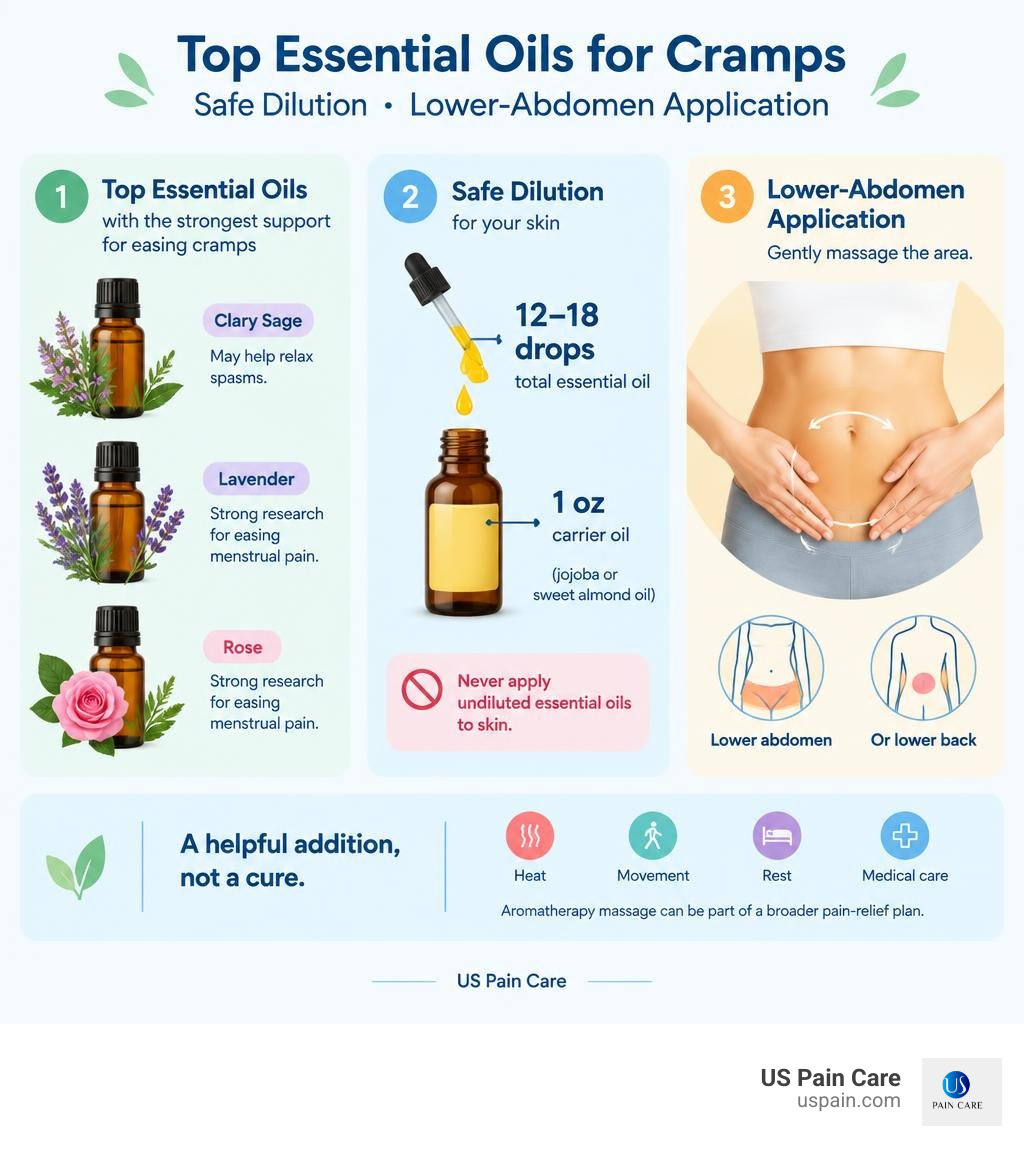
Clary sage is often the best essential oil for cramps because it may help relax spasms, while lavender and rose have the strongest research for easing menstrual pain when used in an abdominal massage blend. For a safe first try, mix 12 to 18 total drops of essential oil into 1 ounce of a carrier oil, such as jojoba or sweet almond oil, then gently massage the lower abdomen or lower back. Never apply undiluted essential oils to skin.
Essential oils are not a cure for severe period pain, endometriosis, or chronic pelvic pain. But aromatherapy massage can be a useful add-on to heat, movement, rest, and medical care. Small clinical studies suggest that blends containing lavender, clary sage, rose, cinnamon, or clove may reduce dysmenorrhea pain more than massage with carrier oil alone.
I’m Dr. Paul Lynch, a double board-certified pain management physician and anesthesiologist with 17 years of experience in comprehensive pain care. In this guide to the best essential oil for cramps, I will help you use aromatherapy as one practical, lower-risk part of a broader pain-relief plan.
Basic best essential oil for cramps vocab:
How Essential Oils Target Cramp Pain and Inflammation

Period cramps—medically known as primary dysmenorrhea—are driven by a natural biological surge. Right before and during your period, your uterine lining releases hormone-like chemical messengers called prostaglandins. These compounds trigger the smooth muscle of the uterus to constrict, temporarily cutting off oxygen supply to surrounding tissue and sending sharp pain signals to the brain. Around 45% of women experience moderate to severe menstrual pain, and a study of U.S. high school and college students found that 13% struggle with severe pain across more than half of their cycles.
When applied topically alongside gentle massage, botanical plant extracts provide relief through a dual mechanism:
- Transdermal Absorption and Muscle Relaxation: Small, fat-soluble terpene molecules cross the skin barrier to interact with local tissue. Compounds like linalool and menthol help ease local smooth muscle tension, calm inflammation, and promote microcirculation in the pelvic region.
- Olfactory Limbic Activation: Inhaling volatile aromatic compounds triggers neural responses in the brain’s emotional control center (the limbic system). This downregulates sympathetic nervous system arousal, lowers cortisol levels, and reduces your overall perception of pain.

Research confirms these biological interactions. Peer-reviewed scientific research on aromatherapy for menstrual pain demonstrates that therapeutic botanical blends consistently outperform unscented massage oils in reducing pain scores and shortening cramp duration. When integrated into a broader routine, aromatherapy serves as a safe entry point into our holistic pain management complete guide.
Top Options: Finding the Best Essential Oil for Cramps
While single botanical extracts offer targeted benefits, clinical trials highlight that synergy is key. Combining complementary antispasmodic, analgesic, and calming extracts into an aromatherapy blend addresses multiple symptoms at once—tackling abdominal tightness, lower back aches, bloating, and emotional fatigue.
Clary Sage: The Overall Best Essential Oil for Cramps and Spasms
Clary sage (Salvia sclarea) is widely considered the gold standard for menstrual discomfort. The oil’s potency comes from linalyl acetate, an ester that constitutes up to 75% of its chemical profile. Linalyl acetate acts as a potent natural antispasmodic, helping to relax involuntary uterine muscle contractions and soothe radiating pelvic tension.
In a landmark 2011 clinical trial, researchers evaluated women receiving aromatherapy abdominal massage with clary sage compared to a control group; those receiving the clary sage blend experienced a significant reduction in menstrual cramp severity. For individuals exploring non-pharmacological comfort, clary sage is one of the most reliable pain relief alternative therapies for cyclical discomfort.
Lavender: The Best Essential Oil for Cramps and Stress
Lavender (Lavandula angustifolia) is renowned for its high concentrations of linalool and linalyl acetate, which deliver proven analgesic and sedative effects. A double-blind clinical trial of 80 women suffering from primary dysmenorrhea demonstrated that an abdominal massage utilizing lavender oil produced significantly greater pain relief compared to a placebo oil massage.
Beyond its physical muscle-relaxing properties, lavender dampens central nervous system hyperarousal. Premenstrual syndrome (PMS) affects roughly one in four women, frequently presenting with irritability, migraine headaches, and sleep disruption. Inhaling lavender during your evening self-care routine promotes restful sleep and helps decrease pre-period anxiety.
Peppermint: Rapid Cooling and Muscle Tension Relief
Peppermint (Mentha x piperita) provides immediate, invigorating comfort due to its high menthol content. Menthol acts on cutaneous cold receptors (TRPM8 channels) to create a rapid cooling sensation that overrides local pain signaling through the body’s natural gate-control mechanism.
Peppermint helps ease abdominal bloating and muscular guarding. If you experience radiating discomfort into the hips and thighs, peppermint functions as an exceptional best essential oil for muscle tightness, breaking the cycle of defensive posture and physical stress.
Rose: Easing Dysmenorrhea Intensity and Flow
Rose essential oil (Rosa damascena) combines deep emotional comfort with tangible physical pain relief. Clinical investigations show that women with primary dysmenorrhea who receive aromatherapy abdominal massage featuring rose oil experience significant drops in cramp intensity compared to control groups.
In another clinical trial, an abdominal massage blend incorporating rose, lavender, cinnamon, and clove diluted in sweet almond oil markedly lowered pain severity, reduced cramp duration, and even decreased excessive menstrual bleeding volume compared to carrier oil alone. Rose enhances pelvic blood flow while lifting the heavy mood often associated with the first 48 hours of menstruation.
Sweet Marjoram and Fennel: Soothing Pelvic Spasms and Digestion
Sweet marjoram (Origanum majorana) and sweet fennel (Foeniculum vulgare) offer specialized relief for the gastrointestinal and pelvic cross-talk that makes periods uncomfortable. Sweet marjoram contains terpinen-4-ol and sabinene hydrate, which help dilate blood vessels and relax smooth muscle spasms.
Fennel is uniquely suited for digestive cramping, loose stools, and nausea. A 2003 clinical trial of 70 women found that fennel substantially reduced overall PMS symptoms, particularly nausea, digestive spasms, and pelvic cramping.
How to Safely Dilute and Apply Essential Oils for Cramps
Pure essential oils are highly concentrated chemical substances that should never be applied directly to the skin undiluted. Doing so can cause contact dermatitis, sensitization, and chemical burns. To safely use essential oils, always disperse them in a nourishing carrier oil.
Choosing Your Carrier Oil
- Jojoba Oil: Mimics the skin’s natural sebum, absorbs quickly, and will not clog pores.
- Sweet Almond Oil: Rich in vitamin E and fatty acids, offering excellent glide for slow, circular abdominal massage.
- Evening Primrose Oil: Packed with gamma-linolenic acid (GLA), making it a supportive base for hormonal balance.
Safe Dilution Guidelines
For topical abdominal and lower back application, a 2% to 3% dilution ratio is ideal:
- 2% Dilution (General comfort & sensitive skin): 12 drops of essential oil per 1 fluid ounce (30 mL) of carrier oil.
- 3% Dilution (Acute cramping flare-ups): 18 drops of essential oil per 1 fluid ounce (30 mL) of carrier oil.
Before widespread application, perform a patch test by applying a dime-sized drop of diluted oil to your inner forearm. Wait 24 hours to ensure no redness, itching, or irritation develops.
Step-by-Step Abdominal and Lower Back Massage
- Warm 1 teaspoon of your prepared blend between your palms.
- Rest your hands flat on your lower abdomen, just below the navel.
- Using light to moderate pressure, move your hands in slow, clockwise circular motions matching the path of the large intestine.
- Continue for 5 to 10 minutes, practicing slow diaphragmatic breathing.
- Reach around to massage remaining oil into your sacrum and lower lumbar area to alleviate radiating back tension.
Pairing aromatherapy massage with non-invasive self-care techniques is an empowering method for learning how to manage chronic pain without medication.
| Application Method | Preparation & Recipe | Best Suited For | Expected Onset |
|---|---|---|---|
| Abdominal Massage | 12–18 drops blend in 1 oz Sweet Almond Oil | Moderate to severe spasms, localized cramping | 15–30 minutes |
| Warm Compress | 3–5 drops blend mixed into 1 tsp carrier oil, added to a bowl of warm water; soak cloth | Deep, radiating pelvic and back aches | 10–20 minutes |
| Aromatic Bath Soak | 5–8 drops blend mixed with 1 tbsp carrier oil + 1 cup Epsom salt | Full-body muscle tension, PMS mood swings | 20–30 minutes |
| Portable Roll-On | 6 drops blend in 10 mL Jojoba Oil | On-the-go relief at work, school, or travel | 15–30 minutes |
Timing, Complementary Care, and Safety Precautions
Consistency and timing play a major role in managing dysmenorrhea. Prostaglandin production begins building 24 to 48 hours before your period starts.
For the most noticeable reduction in pain, begin applying your abdominal massage blend 1 to 2 days prior to your expected period. Initiating therapy early calms uterine muscle hyper-reactivity before peak cramping begins. Reapply your topical blend every 3 to 4 hours as symptoms dictate.
Enhancing Relief with Multimodal Synergy
Aromatherapy works best when paired with other supportive comfort measures:
- Targeted Heat Therapy: Applying an electric heating pad or hot water bottle over your freshly massaged abdomen increases local blood flow and accelerates the transdermal absorption of essential oil terpenes.
- Hydration & Magnesium: Magnesium glycinate helps relax smooth muscle tissue, while proper hydration prevents fluid retention and bloating.
- Gentle Movement: Restorative yoga postures, such as Child’s Pose or Reclined Bound Angle Pose, decompress the pelvic floor.
These integrative routines represent proven natural pain relief techniques that work alongside standard medical guidance.
Important Safety and Contraindications
- Pregnancy Warnings: If you are pregnant, suspected pregnant, or actively undergoing fertility treatments, avoid clary sage and sweet fennel. These oils contain emmenagogic properties that can stimulate uterine muscle activity.
- Photosensitivity: If your blend contains cold-pressed citrus oils (such as bergamot, grapefruit, or lemon), avoid exposing treated skin to direct sunlight or UV tanning beds for at least 12 hours.
- Never Ingest Oils: Essential oils are highly concentrated lipophilic compounds; swallowing them poses severe risks of mucosal irritation and internal toxicity.
- Underlying Conditions: If you suspect your cramps stem from secondary dysmenorrhea (such as endometriosis, adenomyosis, or uterine fibroids), seek comprehensive medical evaluation.
Frequently Asked Questions About Essential Oils for Cramps
How quickly do essential oils provide relief for menstrual cramps?
When properly diluted and massaged into the lower abdomen or lower back, essential oils typically begin providing noticeable comfort within 15 to 30 minutes. Peak symptom relief generally occurs between 45 and 60 minutes post-application, with soothing effects lasting approximately 3 to 4 hours.
Can essential oils replace conventional pain medication for severe cramps?
Essential oils are highly effective for mild to moderate discomfort and serve as a valuable complementary therapy. However, for debilitating dysmenorrhea or chronic pelvic conditions like endometriosis, essential oils should not replace medical evaluation, prescription therapies, or physician-directed treatments. They are best utilized as part of a multimodal comfort strategy.
Which essential oils should be avoided during pregnancy or hormone-sensitive conditions?
Clary sage, sweet fennel, sweet birch, wintergreen, and pennyroyal should be strictly avoided during pregnancy due to their potential to stimulate uterine contractions or alter hormone pathways. Individuals with estrogen-receptor-positive conditions should consult their healthcare provider before using phytoestrogenic oils like fennel or clary sage regularly.
Conclusion: Finding Lasting Comfort and Relief
Menstrual cramps do not have to disrupt your life each month. By harnessing the antispasmodic properties of clary sage, the calming power of lavender, the invigorating cooling of peppermint, and the balancing benefits of rose, you can create a personalized, evidence-backed self-care ritual.
Genuine comfort stems from an integrated approach—combining topical aromatherapy with gentle heat, mindful hydration, and restorative rest. If you want to explore more ways to support joint, nerve, and muscular comfort across your body, explore our comprehensive guide on the best oils for pain.
At US Pain Care, we are committed to helping you navigate acute and chronic discomfort through advanced, whole-person, physician-led care. If severe pelvic or abdominal pain continues to interfere with your quality of life, reach out to our team of specialists to find a personalized path toward lasting relief.