

Understanding the Causes Behind Your Sore Throat Pain
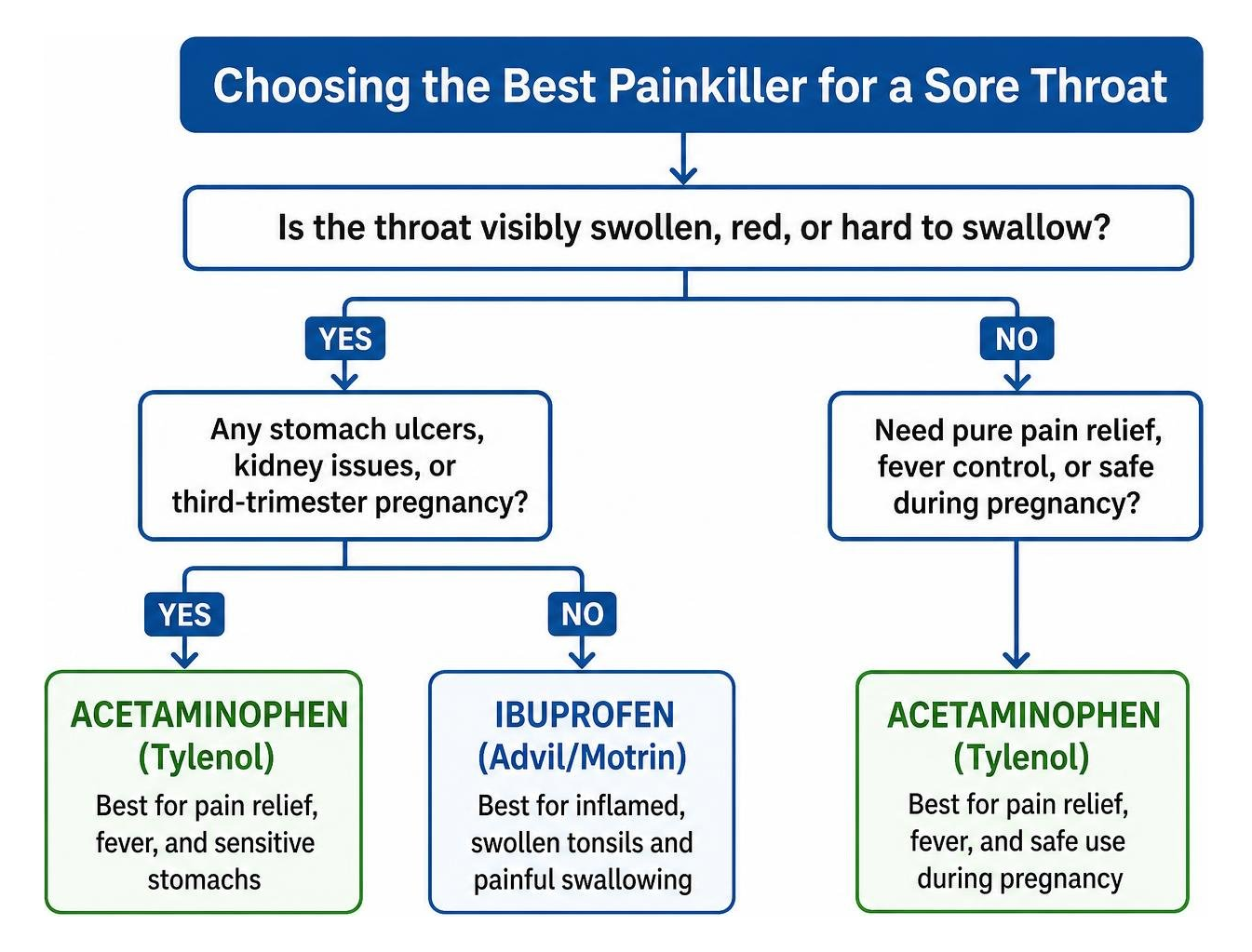
For quick and effective relief, nonsteroidal anti-inflammatory drugs (NSAIDs) like ibuprofen are generally considered the best painkiller for a sore throat because they directly target tissue inflammation and reduce painful swallowing. If you have stomach sensitivities, kidney concerns, or are managing a high fever alongside throat irritation, acetaminophen serves as an effective, stomach-friendly alternative.
While over-the-counter analgesics ease discomfort, a sore throat (pharyngitis) stems from several distinct triggers. Pinpointing the root cause helps determine the most effective overall management strategy.
Viral Infections
The vast majority of sore throats in both adults and children are viral. Common culprits include:
- Rhinoviruses and coronaviruses (the common cold)
- Influenza (the flu)
- Respiratory Syncytial Virus (RSV)
- COVID-19
- Epstein-Barr virus (mononucleosis)
Viral pharyngitis typically presents alongside nasal congestion, coughing, mild body aches, and a low-grade fever. Viral sore throats resolve on their own within 5 to 7 days as your immune system clears the infection. Antibiotics do not work against viruses; treatment centers entirely on symptom management with oral analgesics, hydration, and soothing home remedies.
Bacterial Infections (Strep Throat)
Group A Streptococcus is the primary bacterial cause of sore throats. Strep throat is most prevalent in children ages 5 through 15, though adults can also contract it. Unlike viral infections, strep throat rarely causes cough or runny nose. Classic symptoms include:
- Sudden, severe throat pain
- Painful swallowing (odynophagia)
- High fever
- Swollen, tender anterior cervical lymph nodes
- Bright red tonsils with white patches or streaks of pus (exudate)
- Tiny red spots on the roof of the mouth (petechiae)
A rapid strep test or throat culture is required for an accurate diagnosis. Confirmed strep requires prescription antibiotics (such as penicillin or amoxicillin) to prevent complications like rheumatic fever, though over-the-counter painkillers remain necessary during the first 24 to 48 hours for immediate pain relief.
Non-Infectious Causes
Throat discomfort does not always stem from an active pathogen. Common non-infectious causes include:
- Postnasal Drip: Seasonal allergies or sinus irritation cause mucus to trickle down the back of the throat, triggering chronic tickling, coughing, and morning soreness.
- Gastroesophageal Reflux Disease (GERD): Stomach acid washing up into the esophagus and larynx (laryngopharyngeal reflux) creates a burning sensation, chronic hoarseness, and a persistent lump-in-the-throat feeling.
- Dry Air and Mouth Breathing: Indoor heating during cold months dries mucous membranes, leading to raw morning throat irritation.
- Vocal Strain: Yelling, singing, or talking loudly overextends the laryngeal muscles.
- Environmental Irritants: Exposure to cigarette smoke, vaping aerosols, industrial pollutants, or chemical fumes directly inflames pharyngeal tissues.
Choosing the Best Painkiller for a Sore Throat: Ibuprofen vs. Acetaminophen
Systemic oral analgesics target sore throat pain internally, reducing systemic discomfort and easing painful swallowing.
| Medication | Primary Mechanism | Best For | Typical Adult Dose | Max Daily OTC Dose | Key Precautions |
|---|---|---|---|---|---|
| Ibuprofen (Advil, Motrin) | NSAID (COX inhibitor); reduces prostaglandins & inflammation | Inflamed, swollen tonsils; painful swallowing; strep throat | 200–400 mg every 4–6 hrs | 1,200 mg / 24 hrs | Take with food; avoid in kidney disease, ulcers, or late pregnancy |
| Acetaminophen (Tylenol) | Central analgesic & antipyretic; blocks pain signals | Pure pain relief; fever reduction; sensitive stomachs | 650–1,000 mg every 4–6 hrs | 3,000–4,000 mg / 24 hrs | Avoid exceeding limits; limit to 2,000 mg/day in liver disease; avoid alcohol |
| Aspirin (Bayer) | Salicylate NSAID; anti-inflammatory & blood thinner | Adult inflammatory pain (rarely first-line) | 325–650 mg every 4 hrs | 4,000 mg / 24 hrs | Never give to anyone under 19 (Reye’s syndrome risk); high bleeding risk |
For a deeper dive into medical literature, review this scientific evaluation on comparing Advil, Tylenol, and aspirin for throat pain.
Ibuprofen: Is an NSAID the Best Painkiller for a Sore Throat?
Nonsteroidal anti-inflammatory drugs (NSAIDs) like ibuprofen work by inhibiting cyclooxygenase enzymes (COX-1 and COX-2). This blocks the production of prostaglandins—the lipid compounds responsible for triggering swelling, localized heat, and tissue sensitivity.
Because pharyngitis involves vascular dilation and tissue swelling in the pharyngeal wall, ibuprofen’s anti-inflammatory properties directly reduce the localized puffiness that makes swallowing excruciating. Clinical guidelines from the American Academy of Family Physicians recommend NSAIDs like ibuprofen over acetaminophen for throat pain associated with strep throat, as comparative trials show superior reduction in swallowing-related discomfort.
Standard Dosing:
- Adults and children 12 years and older: 200 mg to 400 mg (1 to 2 tablets) every 4 to 6 hours as needed.
- Maximum OTC ceiling: Do not exceed 1,200 mg in 24 hours unless directed by a physician.
- Always take ibuprofen with a meal, snack, or glass of milk to protect the stomach lining from gastrointestinal irritation.
Acetaminophen: Gentle Pain and Fever Relief Without NSAID Risks
Acetaminophen acts primarily within the central nervous system to elevate the overall pain threshold and reset the hypothalamic heat-regulating center. While it excels at lowering high fevers and dampening generalized aches, it exhibits minimal peripheral anti-inflammatory activity.
If your sore throat is accompanied by systemic chills or body aches—or if you have gastrointestinal sensitivities that prevent you from taking NSAIDs—acetaminophen serves as a gentle, reliable alternative.
Many multi-symptom cold medications incorporate acetaminophen alongside antitussives and decongestants, such as the FDA drug label for TYLENOL Extra Strength Severe Cough and Sore Throat Liquid, which provides 1,000 mg of acetaminophen and 30 mg of dextromethorphan HBr per 30 mL dose.
Standard Dosing:
- Regular Strength: 650 mg (2 pills) every 4 to 6 hours as needed.
- Extra Strength: 1,000 mg (2 pills) every 6 hours as needed.
- Maximum Daily Limit: Do not exceed 3,000 mg to 4,000 mg in 24 hours. Exceeding this threshold can lead to severe, irreversible liver toxicity.
Why Aspirin Is Rarely Recommended for Throat Pain
While aspirin (acetylsalicylic acid) was once a medicine cabinet staple, healthcare professionals rarely recommend it as a first-line option for acute sore throat pain today.
Aspirin carries a significantly higher risk of gastric ulceration, gastrointestinal bleeding, and platelet inhibition than ibuprofen or acetaminophen. Most critically, aspirin is strictly contraindicated in infants, children, and teenagers recovering from viral infections (such as the flu, chickenpox, or a common cold) due to its association with Reye’s syndrome—a rare but often fatal disorder characterized by acute encephalopathy and fatty liver failure.
How to Select the Best Painkiller for a Sore Throat Based on Your Symptoms
Matching your medication to your specific clinical presentation ensures optimal relief:
- Severe, Sharp Swallowing Pain: Choose ibuprofen. Its anti-inflammatory action shrinks swollen throat membranes faster than non-NSAID options.
- Sore Throat with High Fever and Fatigue: Choose acetaminophen or ibuprofen. Both are effective antipyretics.
- Breakthrough Pain (Pain Returning Between Doses): You can safely stagger or alternate ibuprofen and acetaminophen. Because they are processed through different metabolic pathways (ibuprofen via the kidneys; acetaminophen via the liver), alternating them every 3 hours provides continuous relief without exceeding the daily ceiling of either drug.
Targeted Relief: Throat Lozenges, Numbing Sprays, and Non-Medication Remedies
Oral medications take 30 to 45 minutes to absorb and reach peak systemic effect. For immediate, on-the-spot numbing, topical treatments and non-pharmacologic remedies offer fast, targeted relief.
Medicated Lozenges and Sprays
Topical throat products deliver local anesthetics directly to the irritated mucosa:
- Benzocaine: A fast-acting surface anesthetic that temporarily desensitizes nerve endings in the pharynx. Products like those described in the DailyMed drug details on Chloraseptic Sore Throat Max Lozenges contain 15 mg of benzocaine and 10 mg of menthol per lozenge to numb tissue and ease swallowing.
- Menthol: Provides a cooling sensation that distracts sensory nerves and temporarily suppresses cough reflexes.
- Phenol Sprays: Provide rapid, broad surface numbing when sprayed directly toward the posterior pharyngeal wall.
Safety Note: Avoid giving hard lozenges to children under 6 years due to choking hazards, and never use benzocaine products excessively, as rare cases of methemoglobinemia (reduced blood oxygenation) have been reported.
Evidence-Backed Home Care Measures
- Warm Saltwater Gargle: Dissolve ½ teaspoon of salt in 8 ounces (240 mL) of warm water. Gargle for 15 to 30 seconds and spit it out. Salt creates an osmotic gradient that draws excess fluid out of inflamed pharyngeal tissues, easing swelling and loosening thick mucus.
- Raw Honey in Warm Tea: Honey coats the mucous membranes, functioning as a natural demulcent to soothe irritated tissue. Never give honey to infants under 12 months due to infant botulism risks.
- Cool-Mist Humidifier: Running a humidifier in your bedroom prevents dry indoor air from irritating raw, exposed pharyngeal nerves overnight.
- Hydration: Sip room-temperature water, clear broths, and non-caffeinated herbal teas. Keeping tissues hydrated prevents dry crusting and supports tissue repair.
- Voice Rest: Avoid shouting, whispering, or singing to prevent mechanical laryngeal irritation.
Special Considerations: Safety Precautions and When to See a Doctor
Before selecting a pain reliever, review these important health and safety considerations:
- Pregnancy: Acetaminophen is widely regarded as the preferred oral analgesic throughout all trimesters when used at the lowest effective dose. NSAIDs like ibuprofen must be avoided during the third trimester because they can cause premature closure of the fetal ductus arteriosus and reduce amniotic fluid levels.
- Liver Disease & Alcohol Use: Individuals with chronic hepatic impairment, cirrhosis, or regular consumption of 3 or more alcoholic drinks daily should restrict acetaminophen to no more than 2,000 mg per day and consult their physician first.
- Kidney Disease & Heart Conditions: NSAIDs inhibit renal blood flow and cause sodium retention. Individuals with chronic kidney disease, uncontrolled hypertension, congestive heart failure, or active peptic ulcer disease should avoid ibuprofen.
- Pediatric Dosing: Always use weight-based dosing syringes rather than household teaspoons for children’s liquid formulations. Do not give aspirin to individuals under 19 years old.
Prescription Corticosteroids for Severe Pain
For severe, debilitating pharyngitis where swallowing liquids becomes difficult, a physician may prescribe a single oral dose of a corticosteroid, such as dexamethasone (10 mg). Clinical trials indicate that a single steroid dose significantly reduces severe pain and shortens the time to swallowing relief within 24 hours by rapidly suppressing inflammatory cytokines.
When to Seek Immediate Medical Evaluation
Most sore throats run their course smoothly, but you should seek urgent medical attention if you experience any of the following red-flag symptoms:
- Difficulty breathing or shortness of breath
- Inability to swallow your own saliva or fluids (drooling)
- Severe inability to open your mouth fully (trismus)
- A muffled, “hot potato” speaking voice
- Asymmetrical swelling, visible bulge, or severe unilateral tonsil pain (signs of a peritonsillar abscess)
- Stiff neck, mental confusion, or high fever unresponsive to medication
- Throat pain lasting longer than 7 to 10 days without improvement
Frequently Asked Questions About Sore Throat Pain Relievers
Can you alternate ibuprofen and acetaminophen for a severe sore throat?
Yes. Alternating ibuprofen (200–400 mg) and acetaminophen (500–650 mg) every 3 hours is a safe, established method for managing breakthrough pain or persistent fevers. Because one is cleared through the kidneys and the other through the liver, this approach delivers consistent pain relief while staying within the daily safety limits of each medication.
When are antibiotics necessary instead of painkillers for a sore throat?
Antibiotics are only effective against bacterial infections like group A strep and bacterial tonsillitis. They do not work against viral pharyngitis, colds, or flu. Taking antibiotics for viral illnesses exposes you to unnecessary side effects (such as diarrhea, stomach upset, or allergic reactions) and contributes to global antibiotic resistance. Antibiotics should only be started after a rapid swab or throat culture confirms a bacterial infection.
How long does a typical viral sore throat last?
A standard viral sore throat usually peaks in discomfort around days 2 to 3 and fully resolves within 5 to 7 days. If your symptoms steadily worsen after day 4 or persist beyond a week without improvement, consult a healthcare provider for an evaluation.
Conclusion
A sore throat can disrupt your day, but selecting the right over-the-counter medication makes recovery much more comfortable. For targeted relief of severe swelling and painful swallowing, ibuprofen remains the most effective first-line option. If stomach sensitivities, kidney concerns, or pregnancy rule out NSAIDs, acetaminophen provides reliable pain and fever relief. Pairing oral medications with topical benzocaine lozenges, warm saltwater gargles, and plenty of fluids will help you manage symptoms while your body heals.
Finding lasting comfort means understanding how systemic medications work within your body. For a comprehensive look at everyday pain relief strategies, explore our full medical guide on choosing the best pain reliever. At US Pain Care, our clinical team delivers comprehensive, physician-led pain management solutions designed to help you regain your quality of life. If persistent throat pain or chronic discomfort continues to impact your wellness, reach out to our team to explore tailored care options.
{“@context”: “https://schema.org”, “@graph”: [{“@type”: “Article”, “headline”: “Best Painkiller for a Sore Throat Guide | US Pain Care”, “description”: “Learn the best painkiller for a sore throat, when ibuprofen or acetaminophen helps, and when to seek care. Read US Pain Care’s guide.”, “author”: {“@type”: “Person”, “name”: “Paul Lynch”}, “publisher”: {“@type”: “Organization”, “name”: “US Pain Care”, “logo”: {“@type”: “ImageObject”, “url”: “https://firebasestorage.googleapis.com/v0/b/ai-templates.appspot.com/o/bot%2FalTvOGuAQFWrD2hChGTd%2Flogo%2FUS-PAIN-MAIN-LOGO-FINAL.png?alt=media&token=6a86d9b0-0182-4ade-97a8-b742dd4b6a77”}}, “datePublished”: “2026-09-17T02:59:56+00:00”, “dateModified”: “2026-09-17T03:00:05.413054”, “mainEntityOfPage”: {“@type”: “WebPage”, “@id”: “https://uspain.com/knock-out-sore-throat-discomfort-with-the-right-over-the-counter-medicine/”}, “image”: “https://images.bannerbear.com/direct/4mGpW3zwpg0ZK0AxQw/requests/000/162/231/327/8A5gBlRXpzo5kpe0Qn2x19qkE/e67e2271920774c6bfcdc42bc3285398be286a30.jpg”}, {“@type”: “FAQPage”, “mainEntity”: [{“@type”: “Question”, “name”: “What is the best painkiller for a sore throat?”, “acceptedAnswer”: {“@type”: “Answer”, “text”: “Nonsteroidal anti-inflammatory drugs (NSAIDs) like ibuprofen are generally considered the best painkiller for a sore throat because they target tissue inflammation and reduce painful swallowing. Acetaminophen is an effective, stomach-friendly alternative for people with stomach sensitivities, kidney concerns, or a high fever.”}}, {“@type”: “Question”, “name”: “What are the most common causes of a sore throat?”, “acceptedAnswer”: {“@type”: “Answer”, “text”: “Most sore throats are caused by viral infections such as the common cold, flu, RSV, COVID-19, or mononucleosis. Other causes include bacterial infections like strep throat and non-infectious issues such as postnasal drip or GERD.”}}, {“@type”: “Question”, “name”: “How long does a viral sore throat usually last?”, “acceptedAnswer”: {“@type”: “Answer”, “text”: “Viral sore throats typically resolve on their own within 5 to 7 days as the immune system clears the infection. Treatment focuses on symptom relief with pain relievers, hydration, and soothing home remedies because antibiotics do not work against viruses.”}}, {“@type”: “Question”, “name”: “How can you tell if a sore throat might be strep throat?”, “acceptedAnswer”: {“@type”: “Answer”, “text”: “Strep throat often causes sudden severe throat pain, painful swallowing, high fever, swollen tender neck lymph nodes, red tonsils with white patches or pus, and tiny red spots on the roof of the mouth. Unlike viral infections, it rarely causes cough or runny nose.”}}, {“@type”: “Question”, “name”: “Does strep throat require antibiotics?”, “acceptedAnswer”: {“@type”: “Answer”, “text”: “Confirmed strep throat requires prescription antibiotics such as penicillin or amoxicillin to prevent complications like rheumatic fever. A rapid strep test or throat culture is needed for an accurate diagnosis.”}}]}]}