

Choosing the Best NSAID for Headache Relief
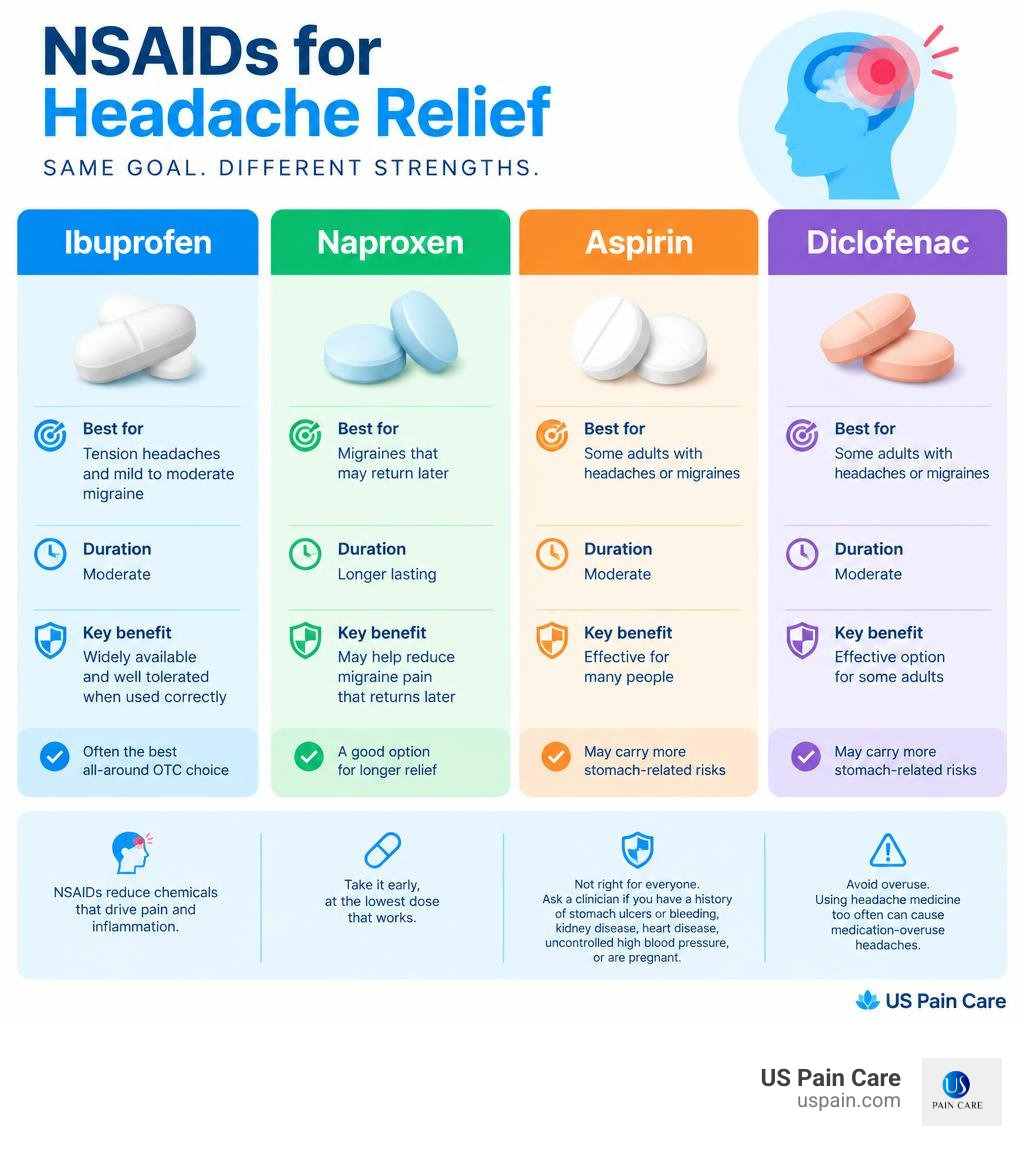
For many adults, ibuprofen is the best NSAID for headache because it works well for both tension headaches and mild to moderate migraine, is widely available, and has a relatively favorable safety profile when used correctly. Take it early in the attack, at the lowest dose that works. Other effective options include:
- Ibuprofen: Often the best all-around OTC choice for acute headache or migraine.
- Naproxen: May last longer and can help reduce migraine pain that returns later.
- Aspirin or diclofenac: Effective options for some adults, but may carry more stomach-related risks.
NSAIDs reduce the body chemicals that drive pain and inflammation. They can be useful, but they are not right for everyone. Avoid or ask a clinician before using them if you have a history of stomach ulcers or bleeding, kidney disease, heart disease, uncontrolled high blood pressure, or are pregnant. Using headache medicine too often can also cause medication-overuse headaches.
I’m Dr. Paul Lynch, a double board-certified pain management physician and anesthesiologist with 17 years of experience helping people make safer, evidence-based choices about pain relief, including finding the best NSAID for headache. The comparison ahead can help you match an option to your symptoms and health risks rather than simply reaching for the strongest pill.
Similar topics to best nsaid for headache:
How Anti-Inflammatory Medications Relieve Head Pain
Headaches are not just annoying interruptions to your day; they are complex neurological and vascular events. Global migraine prevalence alone affects roughly 14% to 15% of the population, accounting for 4.9% of global ill health measured in years lived with disability. Whether you are dealing with a vice-like tension-type headache or a throbbing migraine attack, inflammatory pathways play a central role in amplifying that pain.
Non-steroidal anti-inflammatory drugs (NSAIDs) work primarily by inhibiting cyclooxygenase enzymes, specifically COX-1 and COX-2. Under normal conditions, these enzymes convert arachidonic acid into prostaglandins—lipid compounds that promote inflammation, dilate blood vessels, and sensitize peripheral pain receptors.
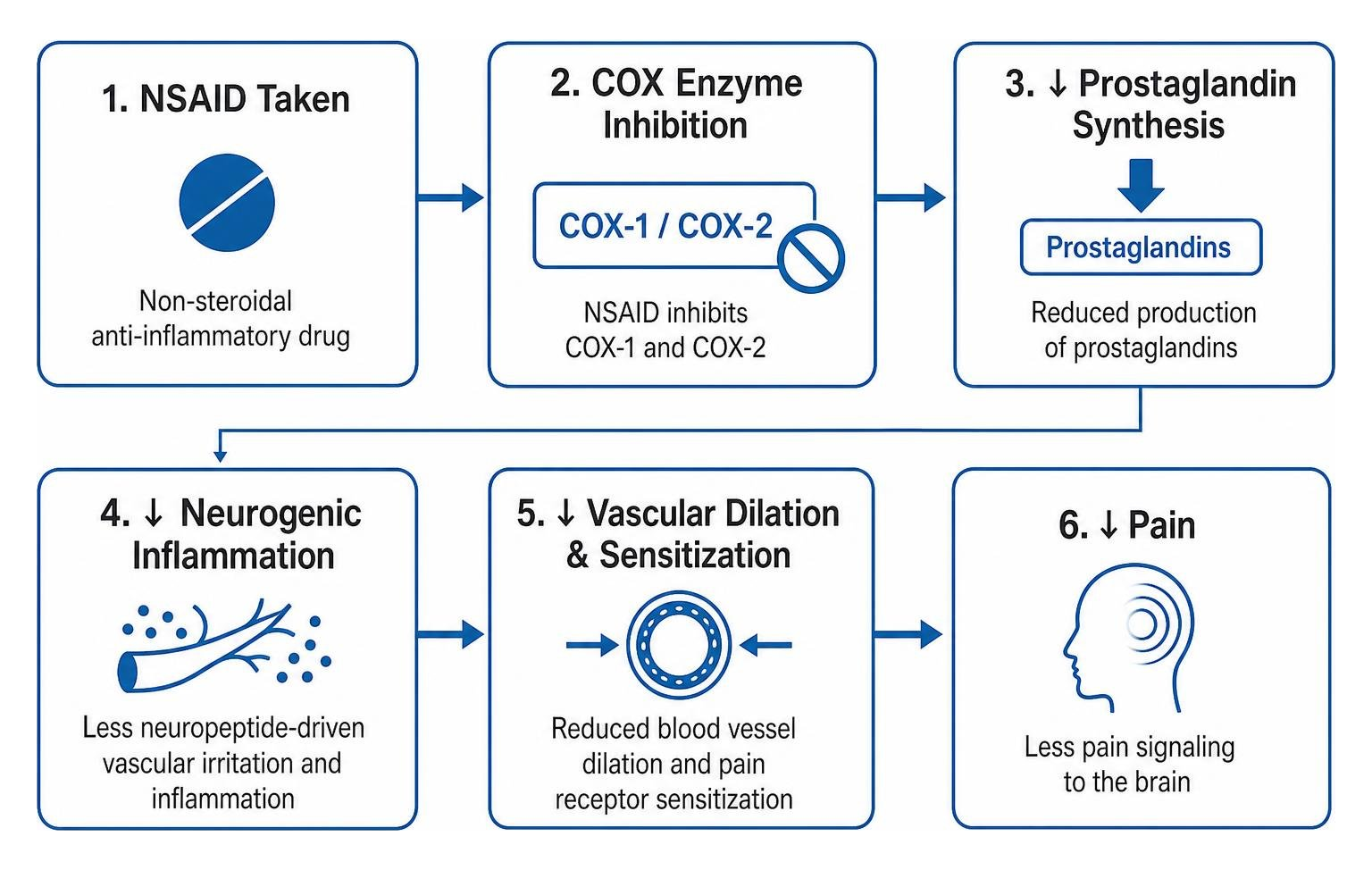
When an acute headache begins, activation of the trigeminovascular system triggers neurogenic inflammation. Neuropeptides cause local cranial blood vessels to dilate and become irritated, sending intense pain signals directly into your brainstem.
By blocking COX enzymes, NSAIDs dramatically lower prostaglandin synthesis, calming this localized vascular storm. This dual action makes targeted inflammation medication one of our most dependable non-opioid pain solutions for managing acute cranial discomfort without the cognitive fog or dependency risks associated with narcotics.
Comparing Options to Find the Best NSAID for Headache Relief
Not all anti-inflammatory drugs behave the same way once they enter your bloodstream. Some kick in rapidly to quench acute pain, while others offer a steady, extended release that prevents a migraine from returning twelve hours later.
When evaluating these medications, clinical guidelines such as the International Headache Society global practice recommendations provide clear roadmaps for selecting agents based on pain severity, speed of onset, and cardiovascular or gastrointestinal risks. Exploring the ultimate guide to strongest otc pain relievers can also give you a broader understanding of how these medications compare.
| Medication | Typical Adult Acute Dose | Onset of Action | Duration of Action | Best Used For | Primary Safety Considerations |
|---|---|---|---|---|---|
| Ibuprofen | 400 mg – 600 mg | 20–30 minutes (faster with solubles) | 4–6 hours | Acute tension headache, mild-to-moderate migraine | Lowest liver toxicity risk; moderate GI irritation with frequent use. |
| Naproxen Sodium | 500 mg – 550 mg | 30–60 minutes | 8–12 hours | Long-lasting migraines, preventing headache recurrence | Favorable cardiovascular safety profile; higher GI ulceration risk over time. |
| Aspirin | 500 mg – 1000 mg | 30 minutes (effervescent is faster) | 4–6 hours | Moderate migraine attacks, early-onset tension pain | Antiplatelet effect increases bleeding risk; avoid in children/teens (Reye’s syndrome). |
| Diclofenac Potassium | 50 mg | 15–30 minutes (liquid/powder forms) | 6–8 hours | Severe acute migraine attacks | Higher cardiovascular thrombotic risk; prescription required in many formulations. |
Ibuprofen: The Best NSAID for Headache and Migraine Attacks
For the vast majority of people facing an acute episode, ibuprofen remains the gold-standard first-line therapy. Clinical trials synthesized in the WHO Expert Review on Ibuprofen for Migraine demonstrate that a 400 mg target dose provides significant headache pain relief in approximately 50% of treated migraine attacks.
While 200 mg caplets can alleviate minor tension discomfort, evidence indicates that a single 400 mg dose provides noticeably higher rates of complete pain freedom at the two-hour mark.
Rapid-acting soluble formulations (such as ibuprofen sodium dihydrate, liquid-filled capsules, or effervescent drinks) absorb faster through the stomach lining, making them ideal when a sudden migraine threatens your afternoon.
Beyond its efficacy, ibuprofen boasts an exceptional safety record among anti-inflammatories. Research demonstrates that the incidence of acute liver injury among ibuprofen users is just 1.6 per 100,000—the lowest among eight commonly studied NSAIDs. Overall, it combines accessible cost, swift action, and strong gastrointestinal tolerability.
Naproxen Sodium for Long-Lasting Headache Relief
If your migraines tend to linger for days or creep back just as your initial medication wears off, naproxen sodium is often the preferred clinical choice. With an elimination half-life of roughly 12 to 17 hours, naproxen delivers sustained pain relief that outlasts shorter-acting alternatives.
A standard acute dose of naproxen sodium (500 mg to 550 mg) works exceptionally well for menstrual migraines and prolonged tension episodes. Furthermore, large observational studies highlight that naproxen possesses a more favorable cardiovascular risk profile compared to higher doses of diclofenac or selective COX-2 inhibitors.
In clinical headache medicine, combining oral naproxen sodium (550 mg) with a triptan (such as sumatriptan 50 mg to 100 mg) is one of the most effective combinations for aborting stubborn, severe migraine attacks while slashing the recurrence rate within 24 hours.
Aspirin and Diclofenac for Acute Pain Episodes
Aspirin (acetylsalicylic acid) is a classic compound that still packs a heavy punch. Dosed at 1000 mg—often as an effervescent or dispersible formulation—aspirin is recognized by international headache guidelines as an effective, low-cost migraine abortive agent. However, in large randomized trials, rates of significant adverse reactions reached 18.7% for aspirin, compared to 13.7% for ibuprofen and 14.5% for acetaminophen. Its irreversible inhibition of blood platelets also makes it less ideal for patients with bleeding risks.
Diclofenac potassium (typically dosed at 50 mg) is another potent tool. Because potassium salts dissolve and absorb rapidly, diclofenac liquid sachets or tablets enter the bloodstream quickly, offering rapid relief during acute pain episodes. However, because systemic diclofenac carries higher cardiovascular warnings and gastrointestinal ulceration rates with long-term use, it is best reserved for short-term, acute relief rather than everyday headaches.
Proper Dosing, Timing, and Safety Considerations
Winning the battle against head pain comes down to two vital factors: timing and dosing discipline.
The golden rule of acute headache management is early intervention. At the very first sign of headache onset—or during the prodrome phase before severe throbbing sets in—take your chosen NSAID with a full glass of water. Waiting until your pain reaches an agonizing 8 out of 10 often leads to gastric stasis, where your digestive tract slows down and absorbs oral medications much less efficiently.
When using these medications, always adhere to a lowest-effective-dose strategy:
- Ibuprofen: 200 mg to 400 mg per dose; do not exceed 1200 mg per day for over-the-counter self-care (or up to 2400 mg under direct physician supervision).
- Naproxen Sodium: 220 mg to 550 mg initially, repeating 220 mg after 8 to 12 hours if necessary, not exceeding 660 mg daily over the counter.
- Aspirin: 500 mg to 1000 mg every 4 to 6 hours as needed, with a maximum daily limit of 4000 mg.
To avoid medication-overuse headache (rebound headache), limit acute NSAID use to no more than 2 to 3 days per week, or fewer than 10 days per month. Exceeding these limits can actually transform occasional episodic headaches into daily chronic pain. For additional strategies on managing sudden flare-ups safely, review our guide to non-opioid solutions for acute pain.
Cardiovascular, Gastrointestinal, and Renal Warnings
While anti-inflammatories are sold without a prescription in every pharmacy, they are serious medications that demand respect.
- Gastrointestinal Health: Prostaglandins protect the mucosal lining of your stomach. By suppressing them, NSAIDs can cause irritation. Symptomatic upper gastrointestinal ulcers, gross bleeding, or perforation occur in approximately 1% of patients treated with NSAIDs for 3 to 6 months, and in about 2% to 4% of patients treated for a full year. Always take your medication with food or milk to buffer your stomach.
- Renal Function: NSAIDs decrease renal blood flow by inhibiting vasodilatory prostaglandins in the kidneys. People with pre-existing renal impairment, dehydration, or those taking diuretics must exercise extreme caution to prevent acute kidney stress.
- Cardiovascular System: With the exception of low-dose aspirin, systemic NSAIDs can elevate blood pressure and slightly increase the risk of thrombotic cardiovascular events, particularly in individuals with pre-existing heart disease or uncontrolled hypertension.
Choosing the Best NSAID for Headache Symptoms in Sensitive Patients
Special health circumstances require individualized care:
- Pregnancy and Nursing: NSAIDs are strictly contraindicated during the third trimester of pregnancy due to the risk of premature closure of the fetal ductus arteriosus and renal dysfunction in the fetus. Acetaminophen is generally the preferred first-line OTC analgesic during pregnancy under obstetric guidance. Conversely, during breastfeeding, ibuprofen is considered an exceptional choice because it has minimal transfer into breast milk.
- Older Adults (65+): Age-related reductions in kidney filtration and higher rates of cardiovascular conditions make conservative dosing vital. Older adults managing persistent, systemic aches and pains alongside headaches often benefit from non-pharmacologic interventions or topical therapies alongside lower oral doses.
Frequently Asked Questions About Headache Relief
Is ibuprofen or acetaminophen better for a severe headache?
It depends on the underlying mechanism of the headache. Acetaminophen acts primarily in the central nervous system to block pain signaling and reduce fever, making it gentler on the stomach and safer for people with ulcers or kidney disease.
However, because acetaminophen lacks peripheral anti-inflammatory properties, ibuprofen is often more effective for moderate-to-severe migraines and tension headaches that involve neurovascular inflammation and muscle tenderness.
How quickly should I take an NSAID after a headache starts?
Take your medication as soon as you recognize the headache starting. During the early pain phase, cranial blood vessels and nerve pathways are far more responsive to anti-inflammatory inhibition.
If you delay treatment until the headache is severe, your stomach’s ability to empty and absorb the pill slows down, reducing the medication’s effectiveness and leaving you suffering longer than necessary.
Can taking NSAIDs too often make headaches worse?
Yes. Taking acute headache medications—including NSAIDs, triptans, and combination caffeine pills—too frequently can cause medication-overuse headaches (MOH).
When you take NSAIDs more than 10 to 15 days per month, your brain’s pain-filtering receptors adapt, triggering a rebound headache as soon as each dose wears off. If you find yourself reaching for pain relievers several times a week, it is time to consult a physician about preventive therapies rather than relying solely on abortive pills.
Conclusion
Finding the right anti-inflammatory to stop a headache does not have to be a guessing game. For most acute tension episodes and sudden migraines, ibuprofen provides an ideal balance of fast action, clinical efficacy, and gastrointestinal safety. If you battle long-lasting attacks, naproxen sodium offers extended coverage, while aspirin and diclofenac serve as powerful acute alternatives.
However, medication from a bottle is only one piece of the puzzle. If frequent headaches, migraines, or chronic neck and cranial pain are disrupting your life, our team at US Pain Care is here to help. We provide advanced, physician-led chronic pain management, mental health support, and whole-person, patient-first care designed for individuals who have not found lasting relief through traditional paths.
Take control of your comfort today—discover the best pain reliever and comprehensive treatment plan for your long-term health by scheduling a consultation with our specialists.